Tips & Techniques: Outdoor Ceramics
As the winter weather continues to pile snow and ice outside, we caught up with Studio Manager August Brosnahan and Studio Technician Sarah Harlan to learn more about ceramics and the elements.
The winter weather continues with no end in sight, bringing with it blustery days and piles of snow in our doorways. While we might stay warm by our kilns, the ceramic pieces that we keep outside are fully exposed to the elements. Below, August and Sarah share some tips on how to make ceramic work with outdoor installation in mind.
High winds, impact from falling debris, and the creep of soil can all lead to damage for outdoor ceramics, but August and Sarah both stated that water in all its forms was the most important factor in a piece’s longevity outside. “The guiding principle of outdoor ceramics is that the sculpture needs to be completely sealed from the elements,” August said, “or let whatever it does absorb go very quickly. In winter especially, ice and water need to exit the piece quickly or never enter in the first place.” Because water expands and contracts so much with temperature fluctuations, water retention can lead to cracking, among other issues.
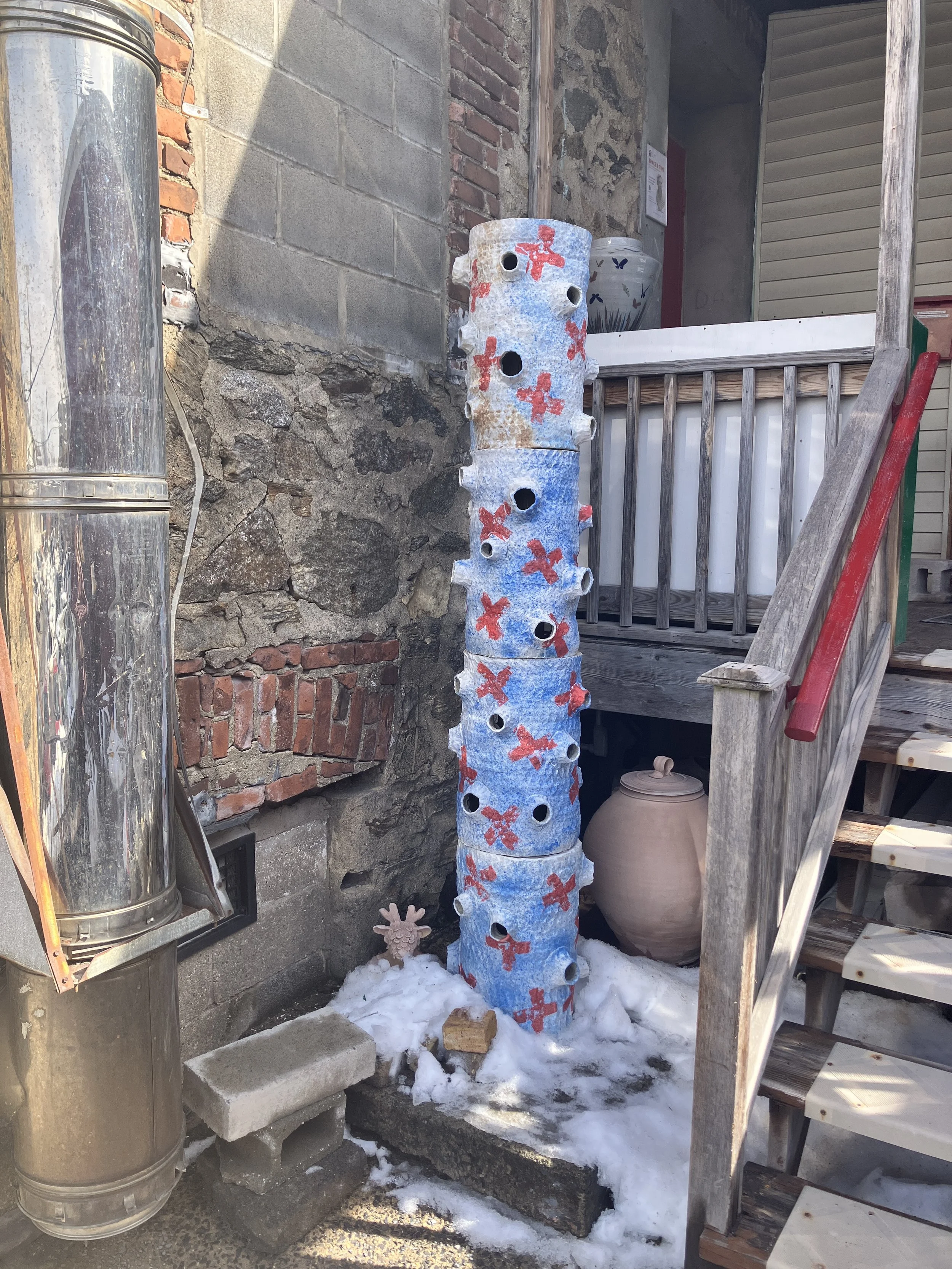
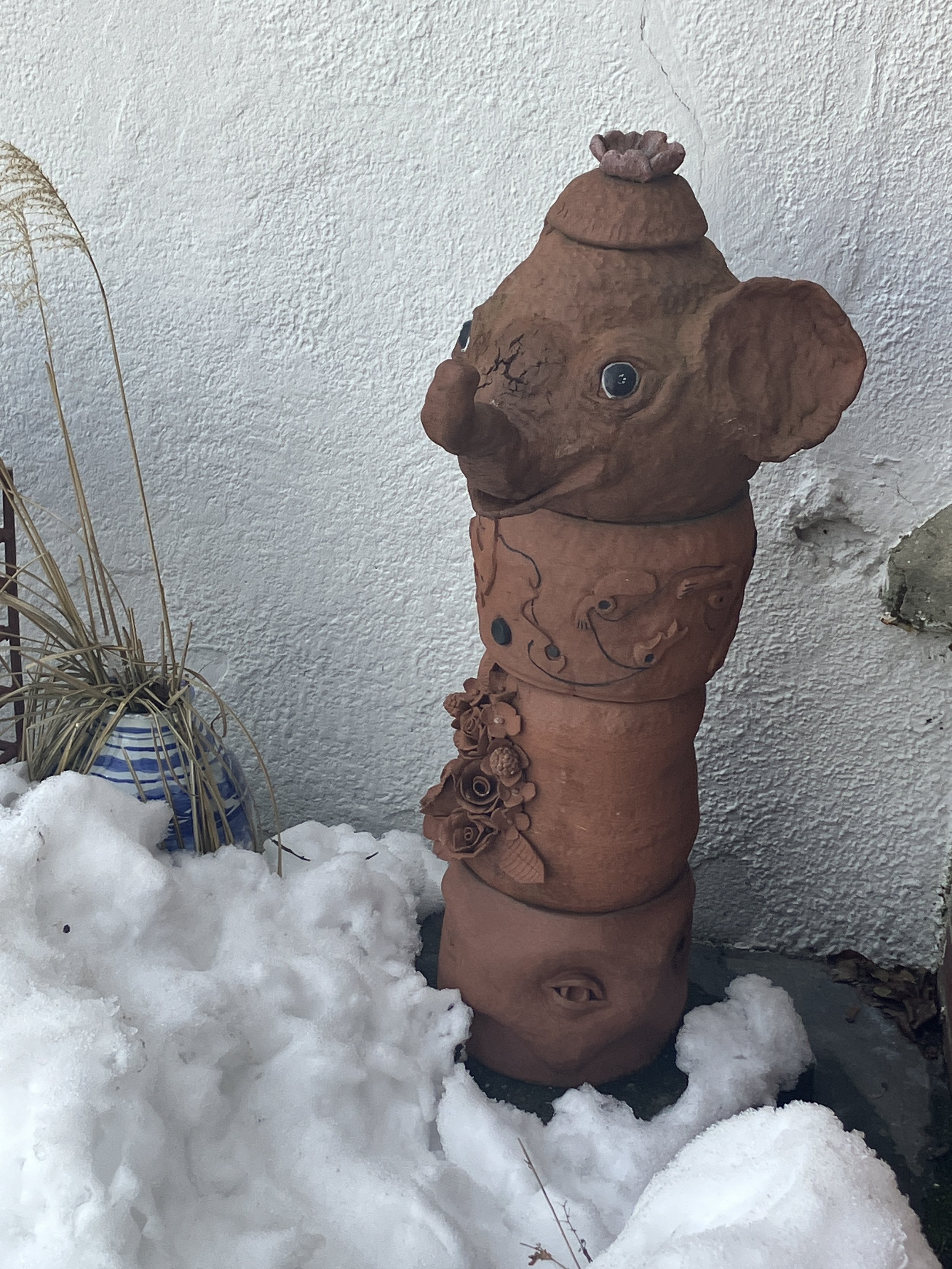
“For example,” August shared, “the tree that I made that now lives by the porch is not sealed, and it has holes in the bottom. So when I installed it, I added a thick layer of caulking to lift the piece up, and made channels in the caulking to encourage the water to flow out and away from the piece. Bisque sculptures that aren’t fully vitrified that then sit in water eventually disintegrate.” August’s tree sculpture, pictured below, was made for the first annual staff exhibition in the spring of 2025, and it has lived outside ever sense.
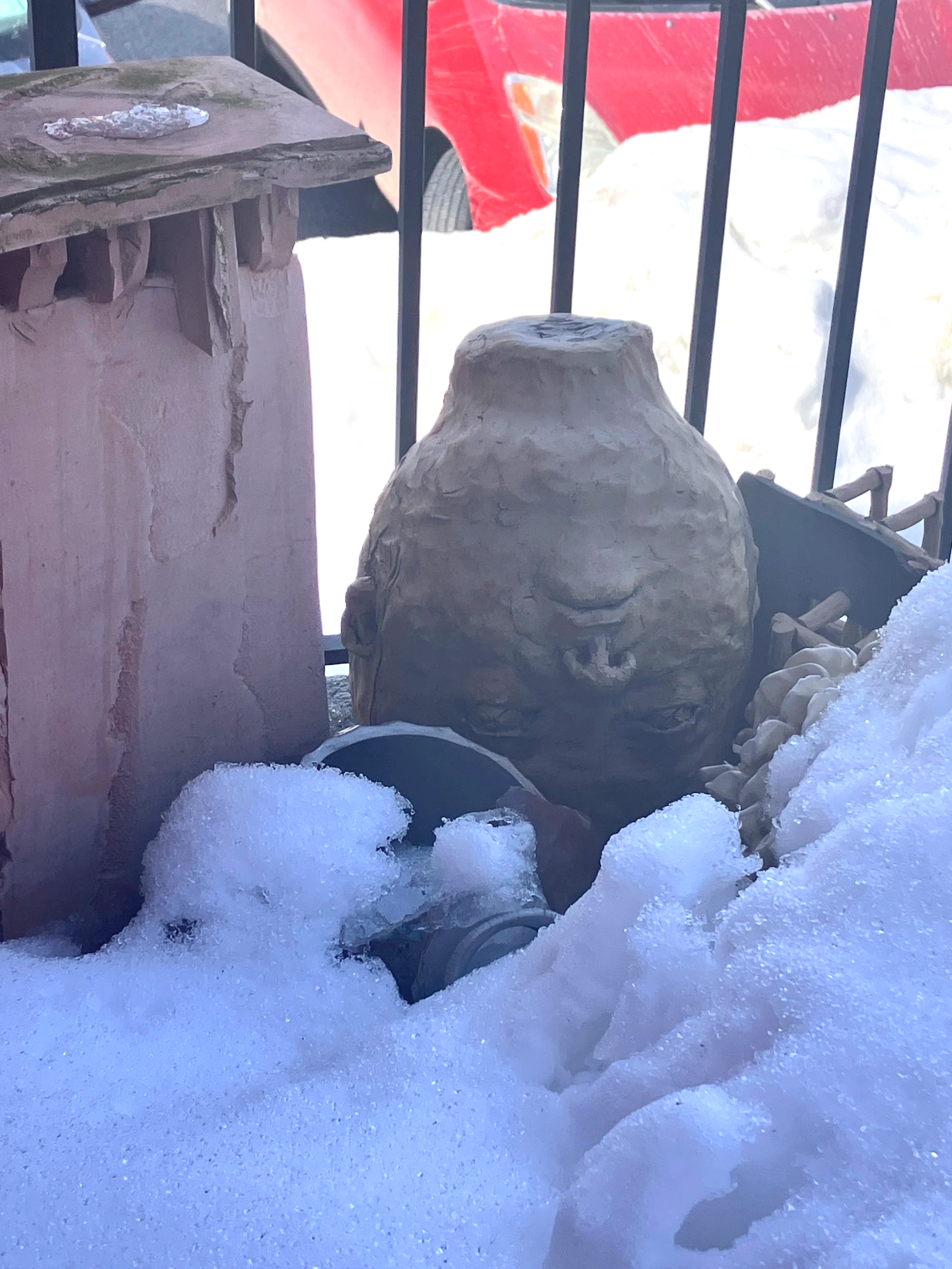
With massive sculptures like August’s tree, sometimes outside is the only place they’ll fit. This was Sarah’s experience with one of her own works: “I made a large-scale sculpture in undergrad, and didn’t have anywhere to store it, so I put it on my porch,” Sarah said, “Even though it wasn’t made for outdoors (it isn’t glazed on the bottom, so it’s not fully sealed), because it was fired to Cone 10 and fully vitrified, it’s surviving well. And I like how it looks on the porch. So, you can take risks if you’re willing to take the loss.” If you are going to install pieces outside that were not made with the elements in mind, you can minimize impact by placing them in a covered area (like a porch), getting them off the ground to improve drainage, and, if possible, bringing them inside for the winter, when temperature fluctuations can be at their worst.
Of course, if you know your piece is going to live outside, planning for that ahead of time is a better bet for avoiding loss. A very controllable factor, in addition to the glazing of the work, is the type of clay you work with. “Outdoor planters are made from terracotta because they expel moisture well, they’re a looser clay body,” Sarah noted, “You can use a tighter clay body if it has a lot of grog in it and you’re sealing it well. The grog is calcined clay, or clay that has already been fired and then broken down into small pieces, which support the strength of your clay body.” Working with strong clay from the get-go, and ensuring that it is fired at a high enough temperature for the clay body to fully vitrify, can help your ceramics withstand the storms.
“Plan for how the Earth will interact with your work. Nooks will invite plants to settle in, glossy glazes can contrast with the nature around it.” - August Brosnahan