Instructor Spotlight: Resident Artist Alvaro Villa
Second-year Resident Artist Alvaro Villa reflects on teaching ceramics and finding the language of making.
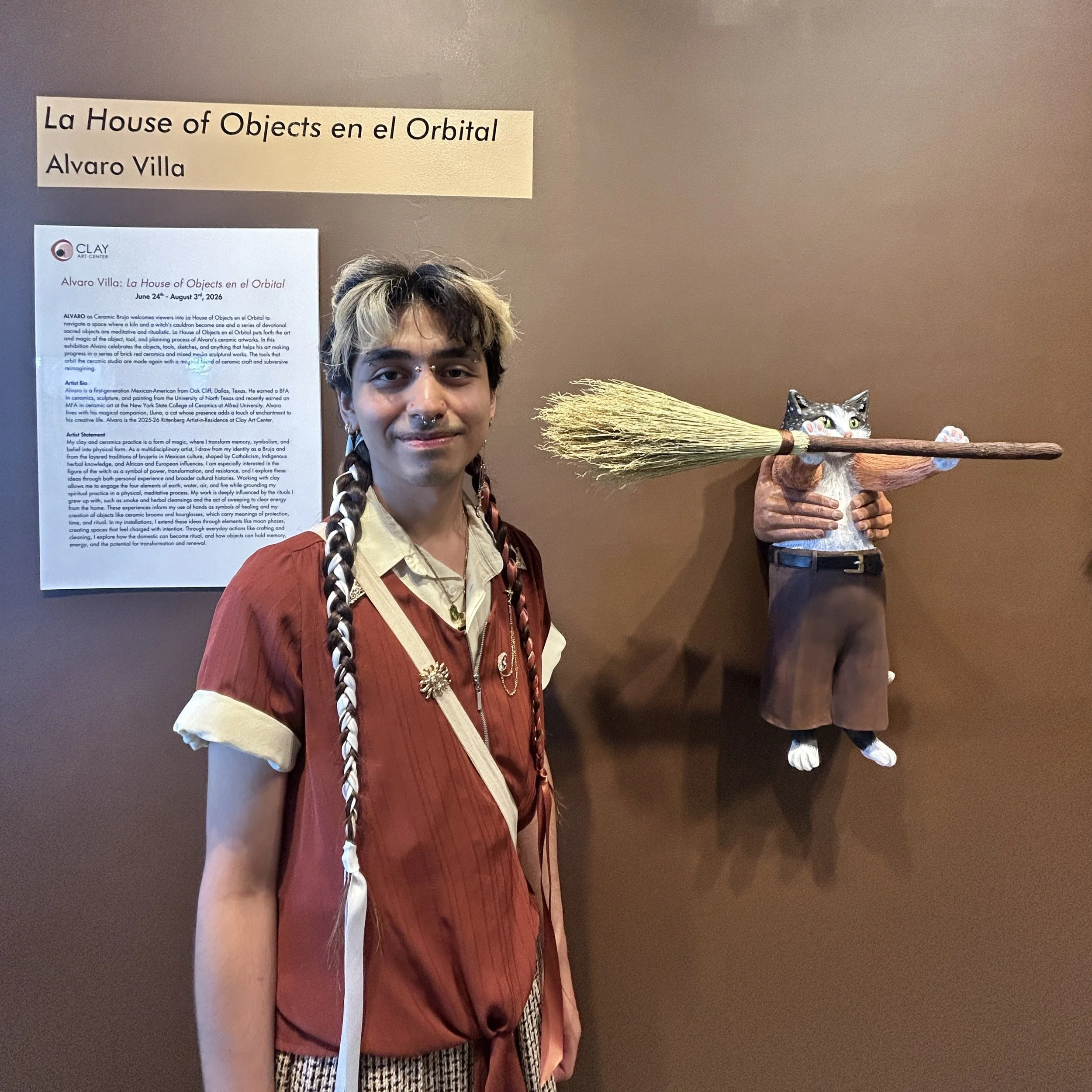
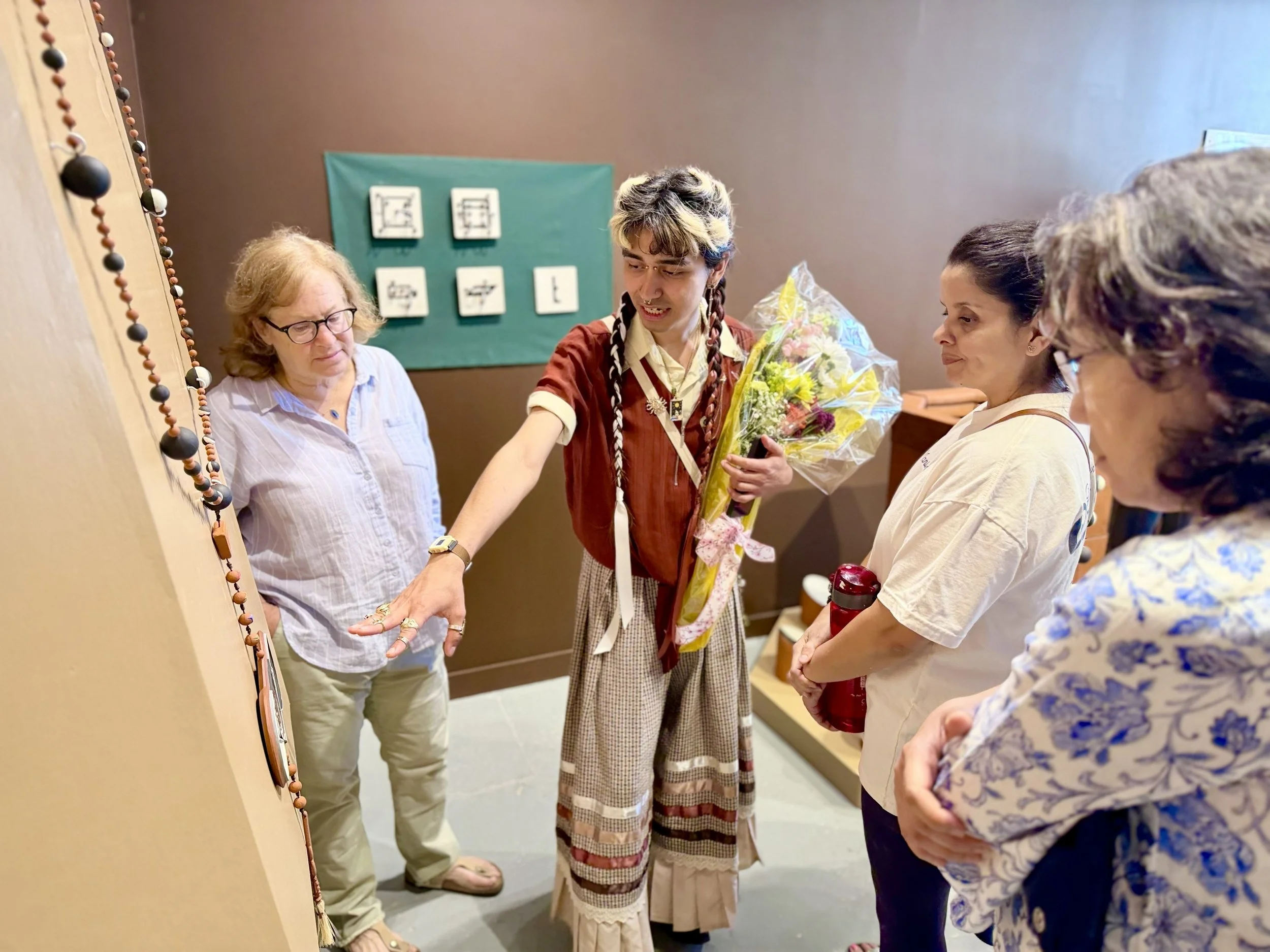
Here at Clay Art Center, our dedicated teachers make all the difference. Experts in their craft, they foster a supportive environment where students can experiment and stretch beyond their comfort zones. In addition to guiding students through the basics of wheel-throwing and handbuilding, many of our teachers also have their own signature specialty, whether in form, function, or surface decoration. This includes our Resident Artists, who bring their talent, insight, and enthusiasm to the studios at Clay Art Center as teachers as well as artists. In the interview below, second-year Resident and instructor Alvaro Villa shares what he loves about teaching, and the symbiosis he finds between his work in the classroom and his own artistic practice.
Q: Could you share how you approach teaching a clay project?
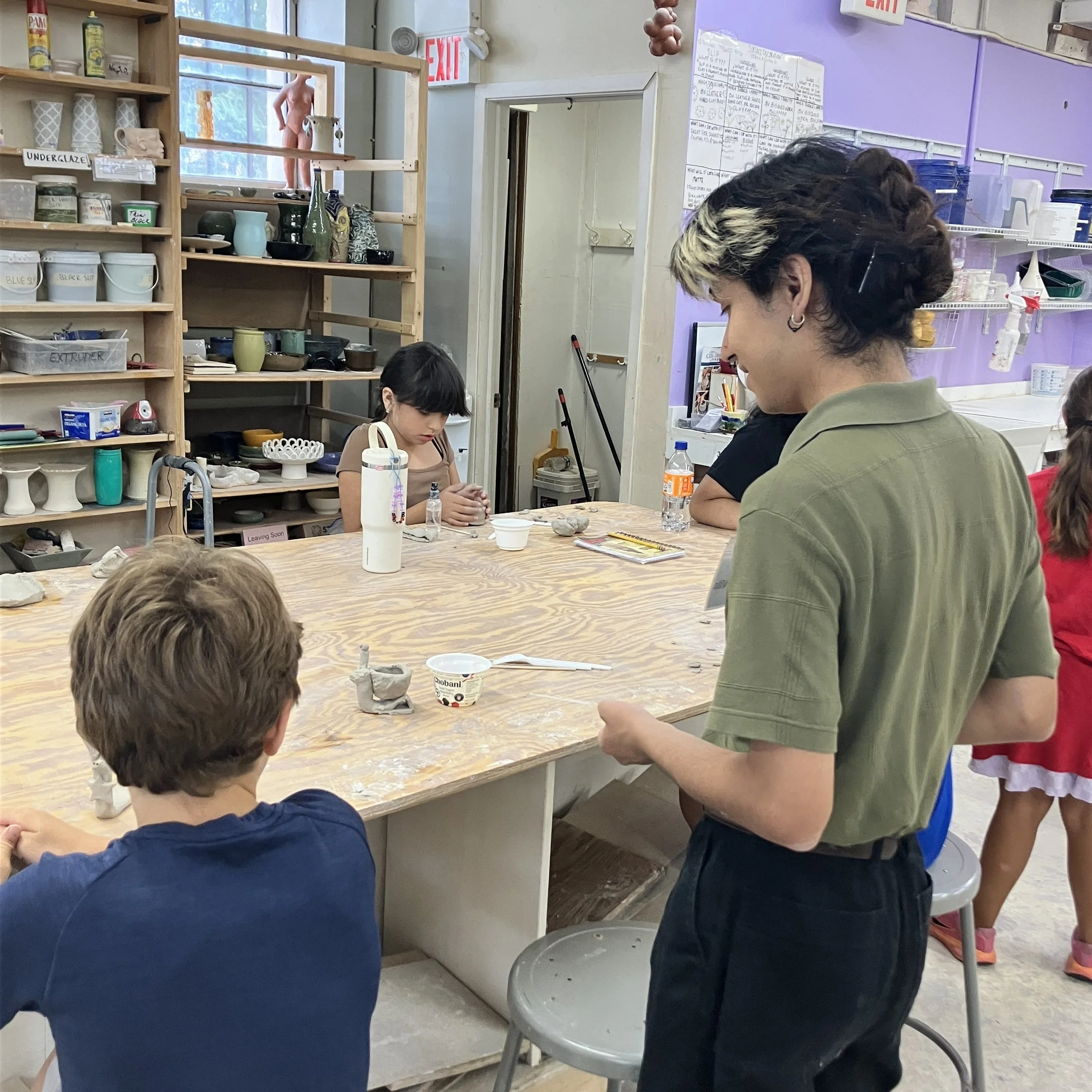
I like to approach it wanting to teach a specific technique first. I come up with a specific demo project that they can use the technique on, but they bring their own ideas, too. It’s fun to see how different the same project from different students can turn out.
Q: What is your favorite thing about clay to teach?
My favorite thing to teach is making patterns, like for slab-building. It’s like sewing clothes from a pattern, you trace the pattern, cut it out, and stitch it up together, but with clay. I like teaching students to use the pattern, and then to build off of it. I’ve found that it’s even more successful when I bring in templates that people can take parts of and then build off of. It gives them a starting point and the confidence to make.
Q: What is your favorite part about teaching?
I don’t know that it’s teaching-specific, but I enjoy the social aspect, when people bring their personal life into the clay. That’s the magic moment. The in-between when the technique meets the personal. And that way, I get to learn my students’ stories, which I love.
Q: How does teaching inform your art practice?
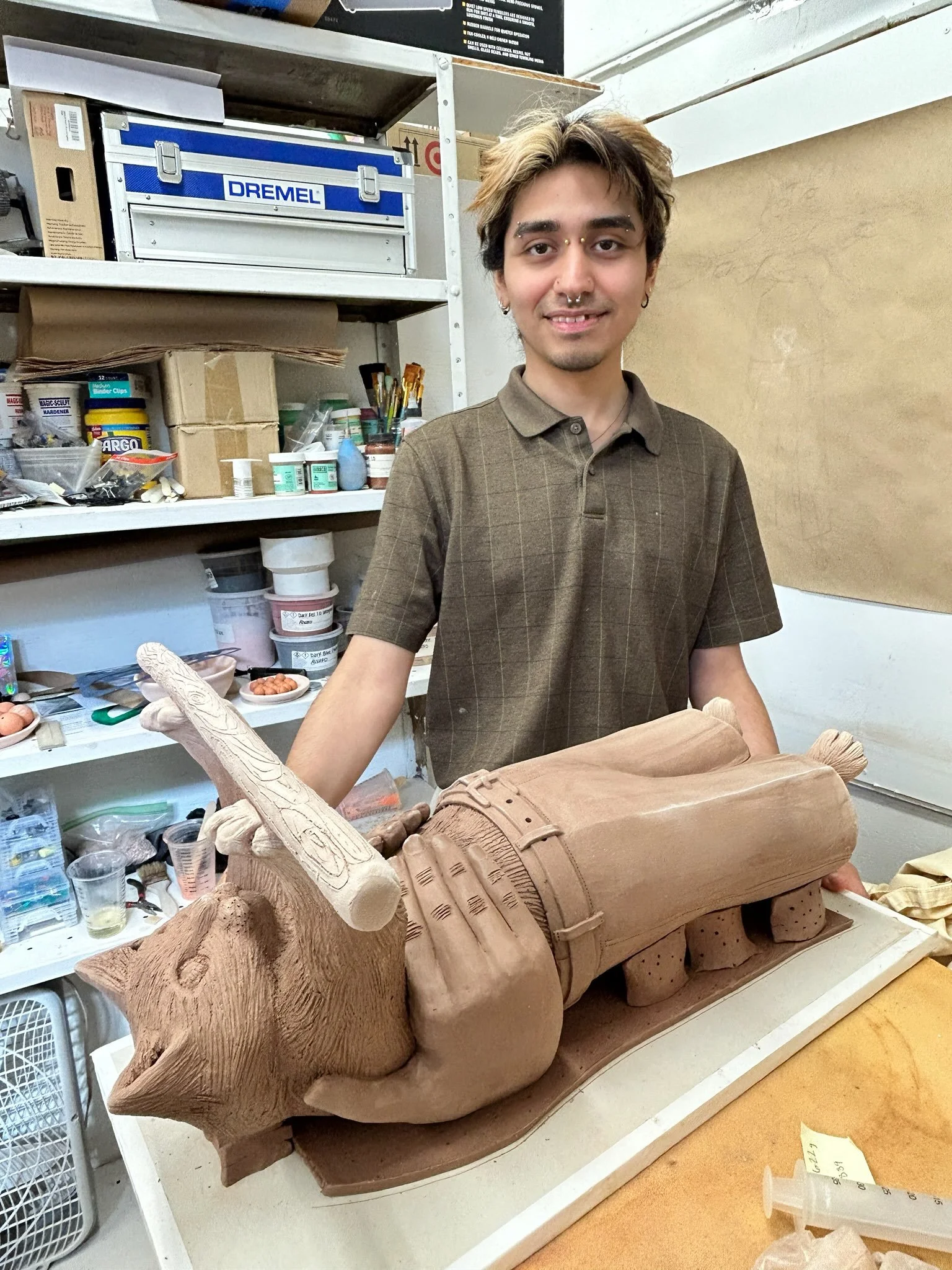
Teaching helps me because, in my personal studio, I’m so in my own world and head. When I teach, it relieves the pressure because I’m focusing on the students. Being out of my head a little bit allows me to think of new ideas, things I want to bring back to my studio. I also strip down my ideas to basic forms in order to teach them, and those basic forms allow me to think about things on that level, and then build them back up into more complicated projects.
Q: What advice would you give someone who wants to teach ceramics?
Take the project ideas that you have, that people have already done, and find the kid version of it. Even if you’re teaching adults. Find the simplest version of something, and then find the language of making it. Those key terms that are always repeated, like “scratch and attach”, “spray your work”, “smooth it over” help students find a rhythm and make it accessible. You just need to calibrate the project to your students.
Another big thing is to strip down the tools as well. I have some really fancy tools, but finding cheaper, more accessible alternatives is important. Like for the kids I was teaching, I had a giant spray bottle that I like to use that the kids literally couldn’t hold, so we got smaller, kid-sized bottles for scratch-and-attaching, and it made such a difference. Think about the tools you use and find ways to make them more accessible. Things that you can gather for yourself to create the same result.
You can take a handbuilding class with Alvaro this fall at Clay Art Center in Handbuilding for All Levels, Tuesdays, 10:00am-1:00pm. Register today, or explore other classes with our dedicated instructors this fall.