Mementos of Places Called Home: Breana Ferreira on Hispanic Heritage Month
Hispanic Heritage Month Featured Shop Artist Breana Ferreira shares about her approach to clay and keeping things deeply personal.
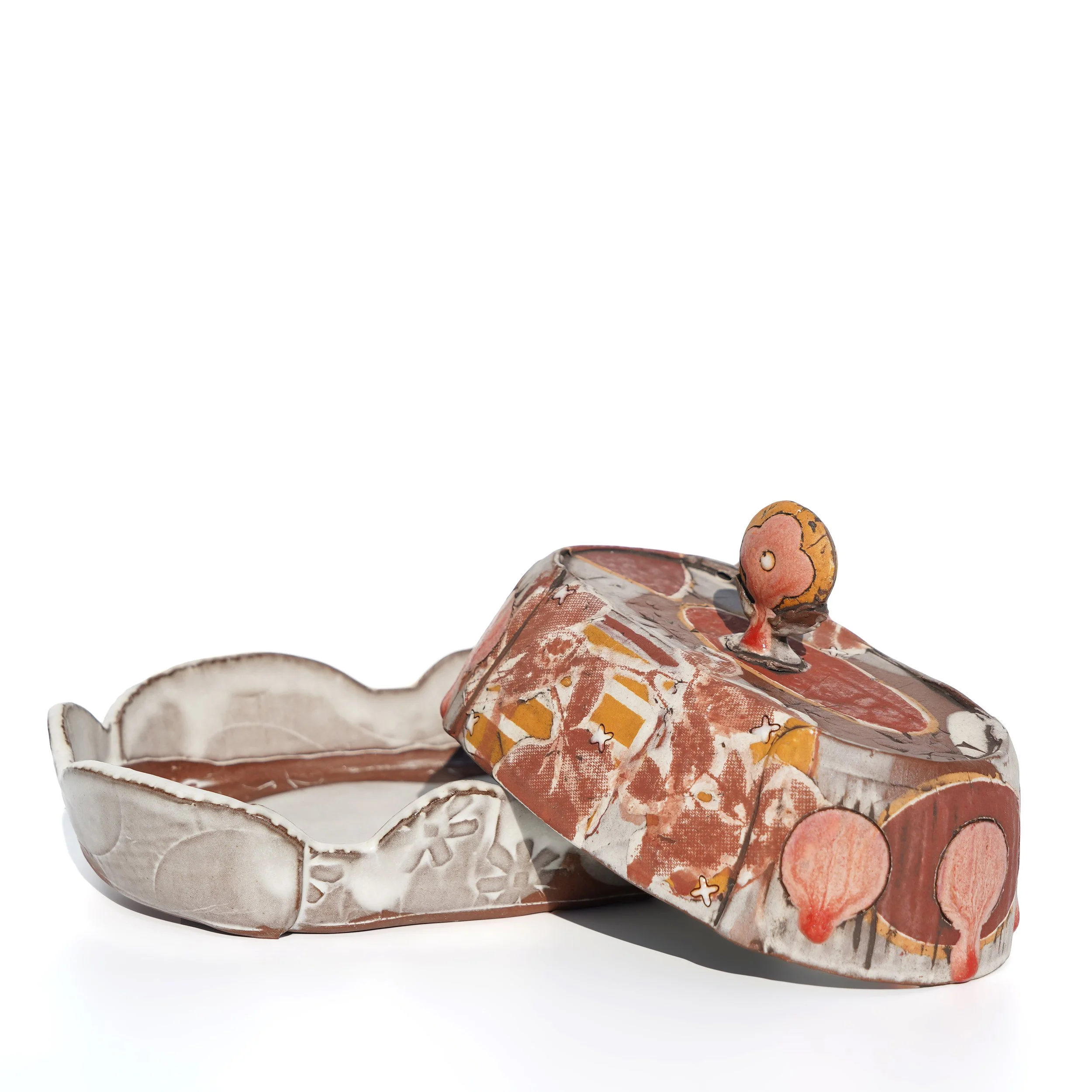
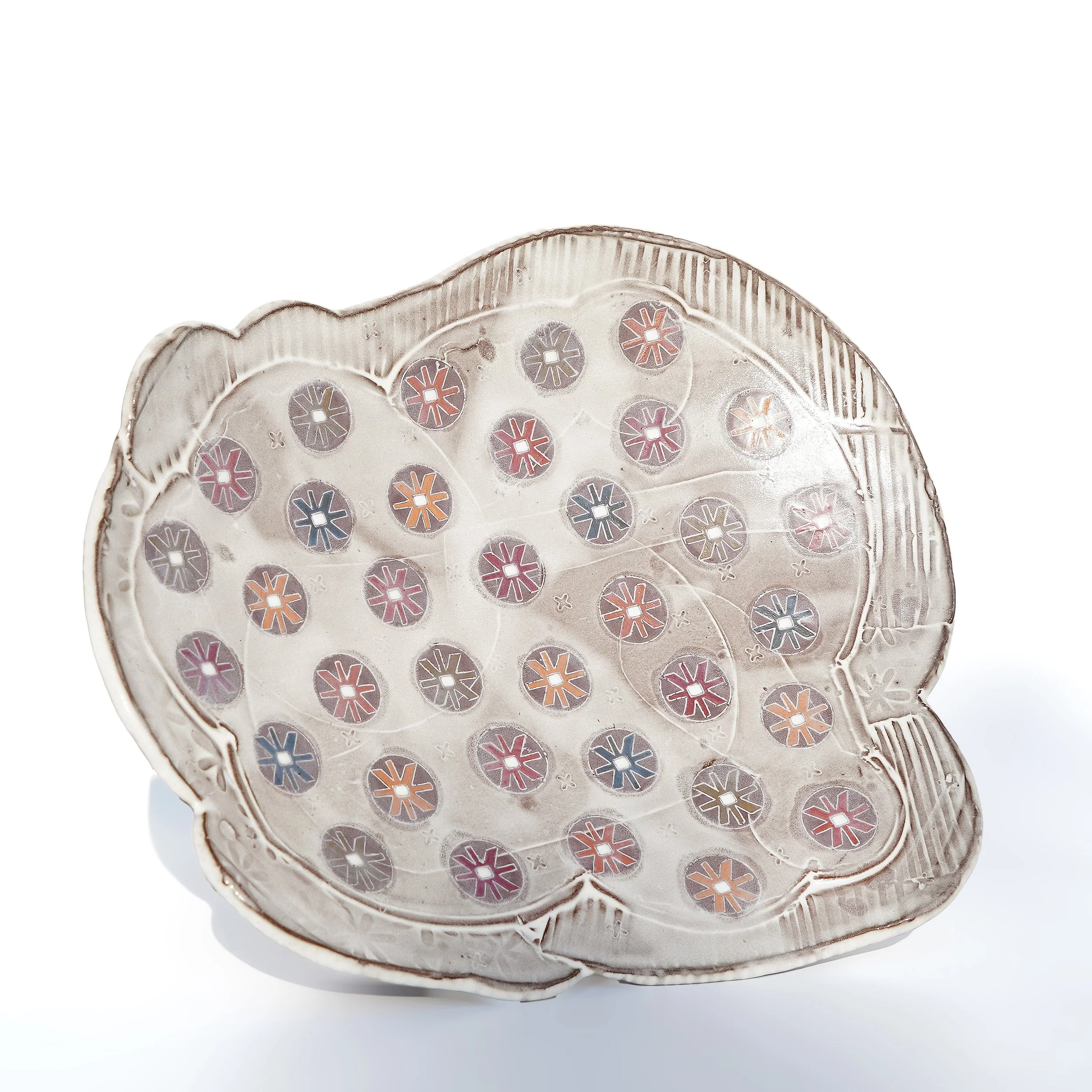
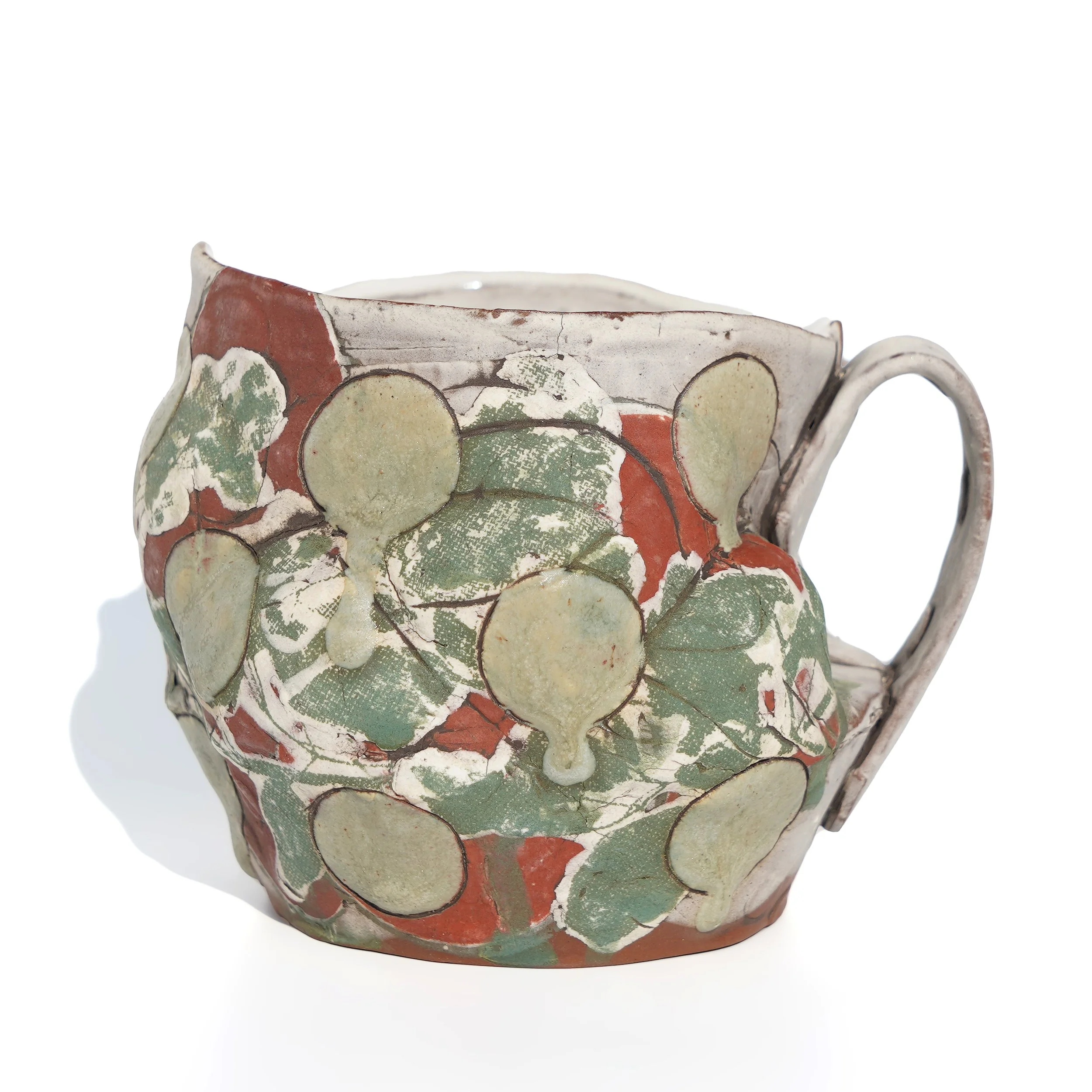
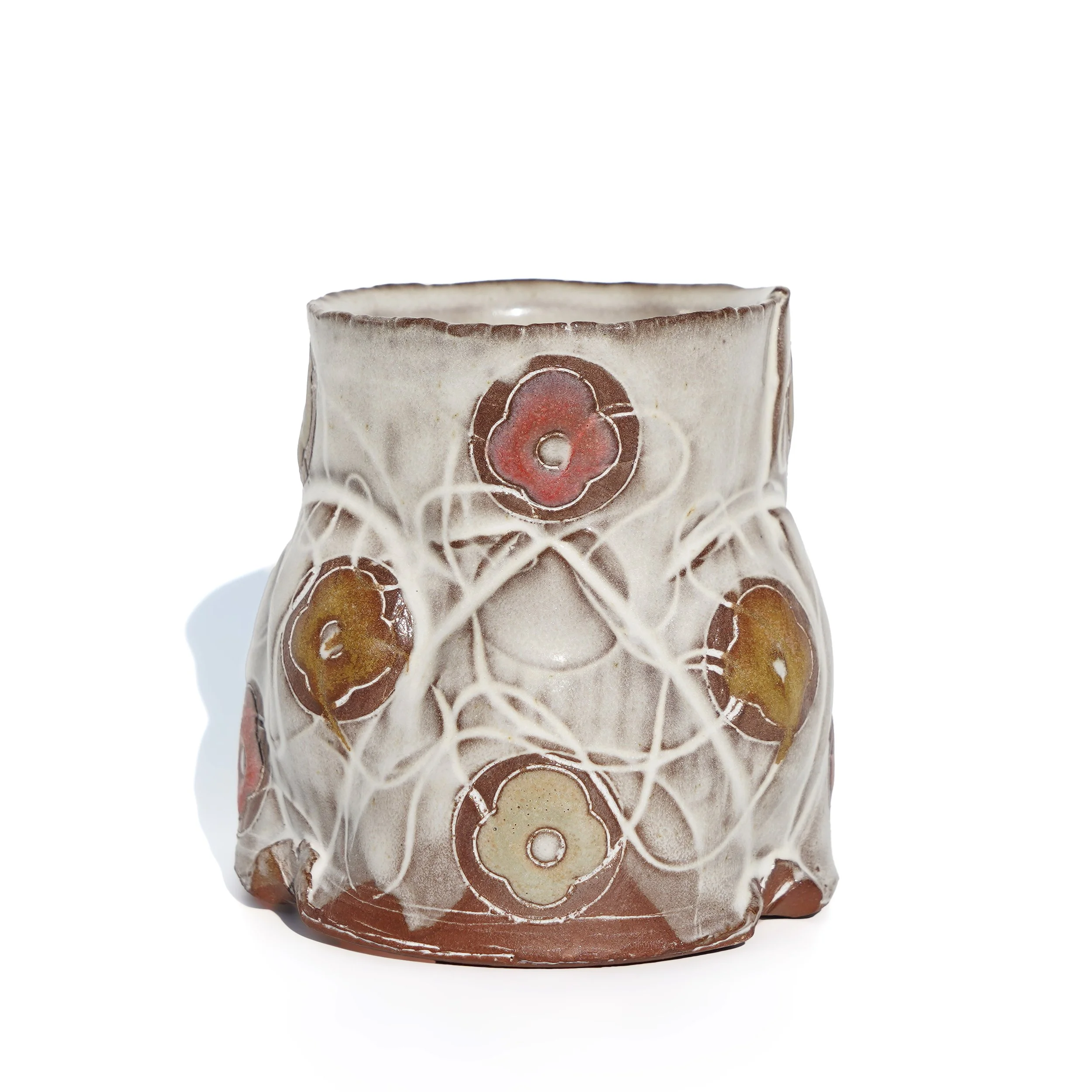
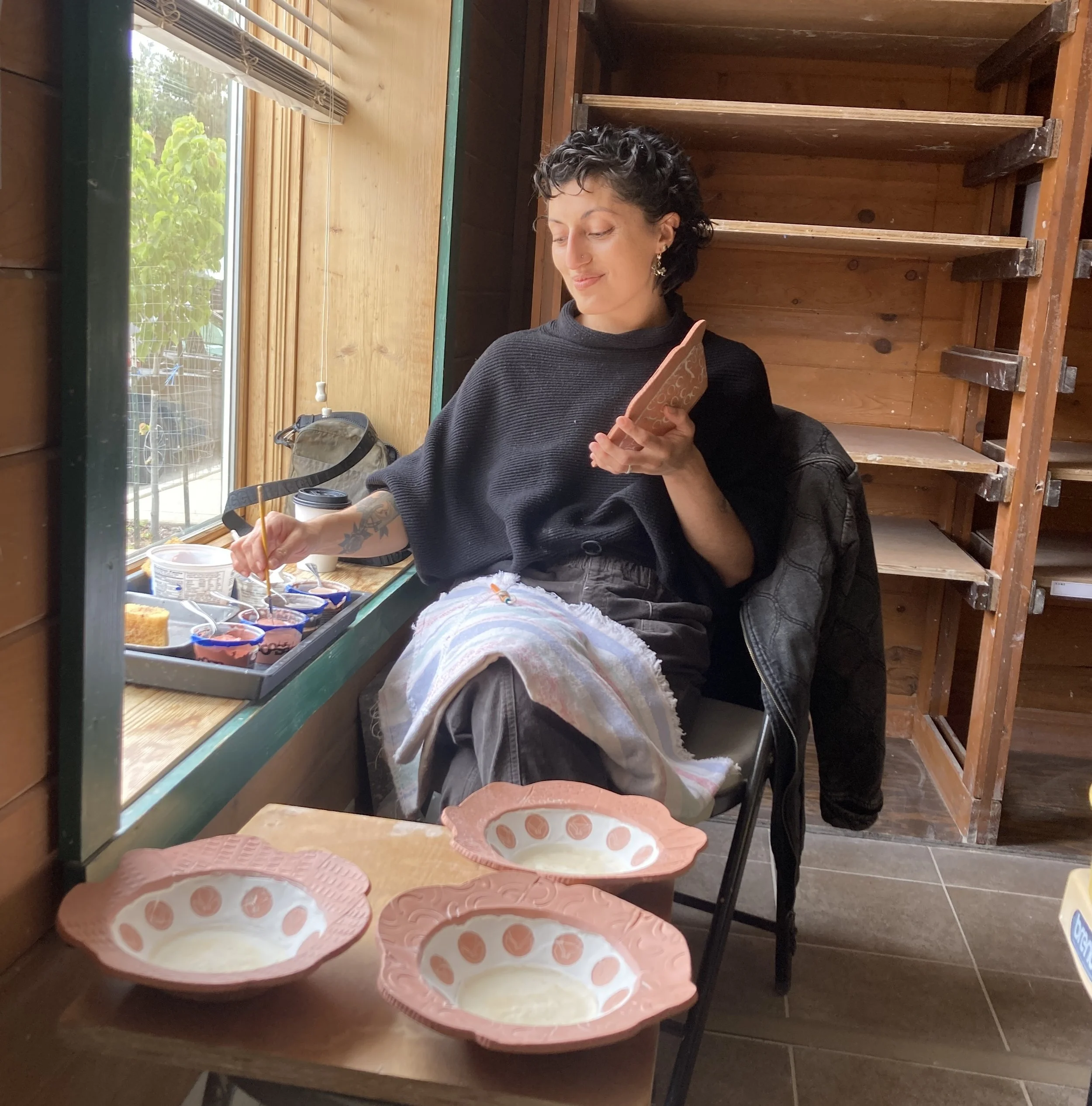
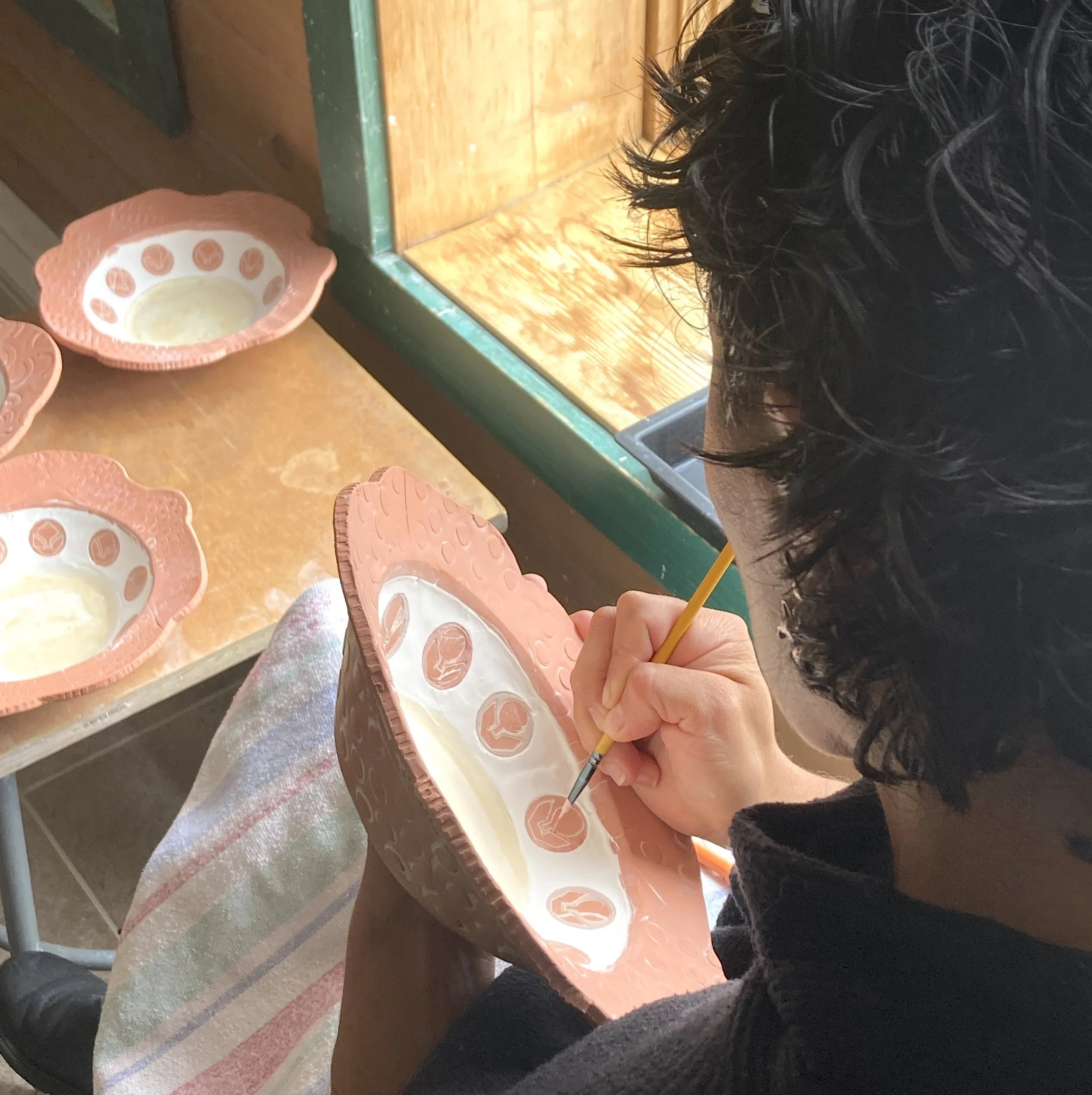
In celebration of Hispanic Heritage Month, Clay Art Center is delighted to present work by Featured Shop Artist Breana Ferreira, guest-curated by Artist-in-Residence Alvaro Villa. Ferreira’s work features multi-layered and textured surfaces that come alive with colorful motifs and imagery, all shaped by personal narrative and memory. Born and raised in Southern California, Ferreira received her BFA in Ceramics from the University of North Texas. Her process focuses on the integration of traditional ceramic practices with the two-dimensional arts, often inspired by found objects and chance encounters. Ferreira has worked as an educator and Resident Artist at organizations across the country, and was recently selected as one of the Ceramic Monthly 2026 Emerging Artists. Currently working as the Programs Coordinator at Red Lodge Clay Center, Ferreira makes her functional ware and sculptural still-lifes surrounded by the Beartooth Mountains of Red Lodge, Montana. Read on to learn more about Ferreira’s process and how she incorporates the big themes of home and cultural heritage alongside the mundanity of life’s little pleasures in her work.
Q: When did you first begin working with clay? What drew you to the medium in the first place?
I first started working with clay in Spring of 2019 when I made the decision to switch my major from Visual Arts Studies to Studio Art in Ceramics. As a first-generation student with a mission and a pretty solidified interest in the Visual Arts from the get-go, my intent was to discover a medium I would be confident in dedicating my education to through what introductory opportunities my university had to offer. Ceramics was by far the most frustrating and engaging of them all. When I quickly came to realize that not only would this craft challenge me in both spirit and skill, but that I could also integrate just about any other art practice of intrigue, I knew that this labor of love could fulfill my lifetime. I fell frustratingly in love with Ceramics before I had the chance to fall in love with the community and the culture that came with it.
Q: How does your identity and Hispanic heritage impact your work (if it does)?
Personally speaking, being an American of multi-cultural roots has made for a muddied and melancholy sense of identity. Through a history that encouraged and praised the assimilation of American ways, I've become painfully aware of how disconnected I am from any clear sense of preserved cultural heritage. However, I've also become equally fixated on identifying the most resilient of roots that have survived, no matter how mundane. More specifically, I look to my maternal grandparents and their journey from Guatemala to Southern California. The morsels that they carried over connect me to an almost detached history and have an increasing influence on my practice. I look with intent at the observed parallels between my pots and my grandfather’s pan dulce, to my use of darker clay bodies and a color palette that references that of preserved pre-columbian vessels, to the creation of aged and layered surfaces that reference the preserved, foraged, and upcycled goods that embody the nature of the places I call home.
Q: On your website, you describe how the simple joy of finding a wiffle ball on the streets of Chicago inspired your wiffle ball/polka dot series. Do found objects and chance experiences often find their way into your work? How do you find balance between spontaneity and planning when creating?
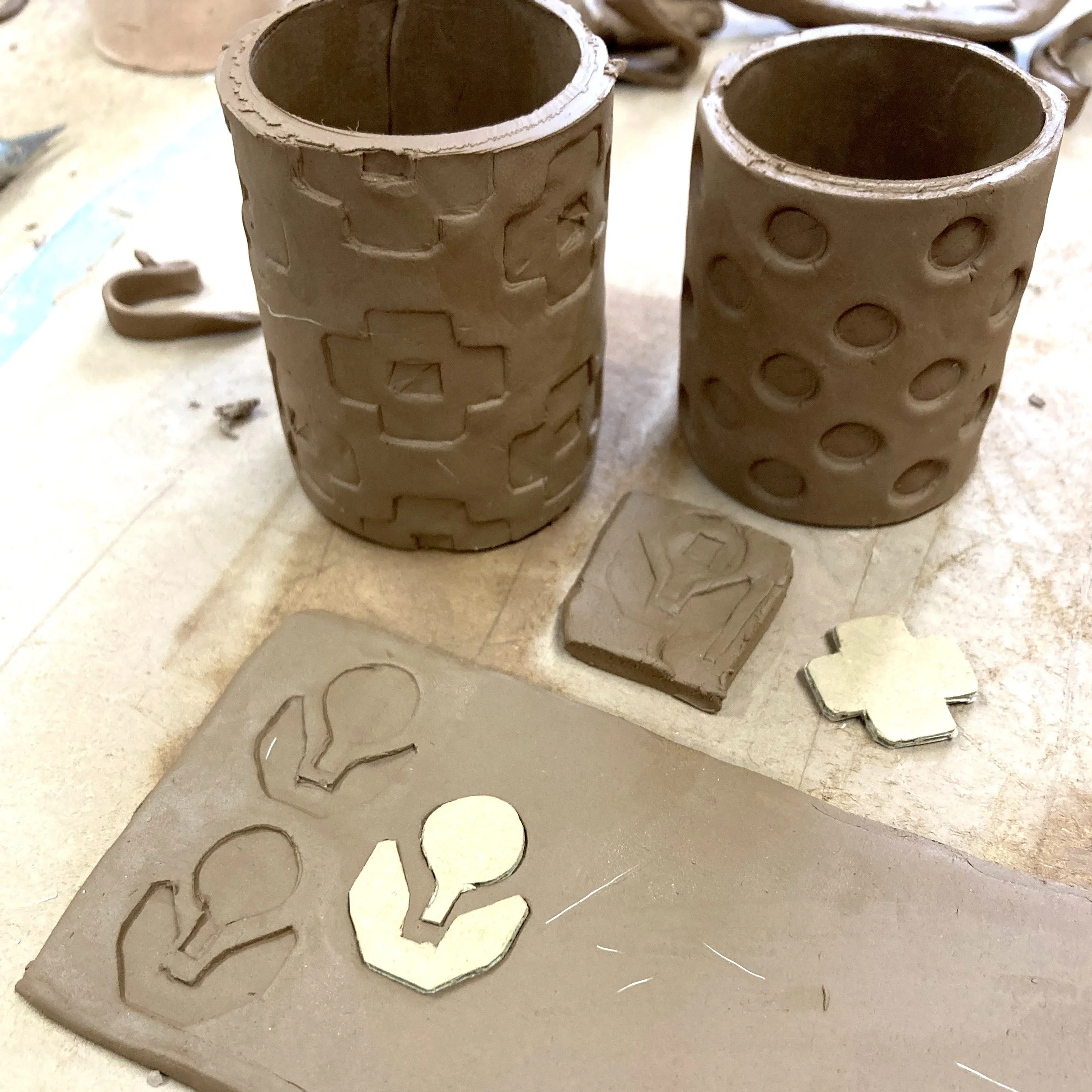
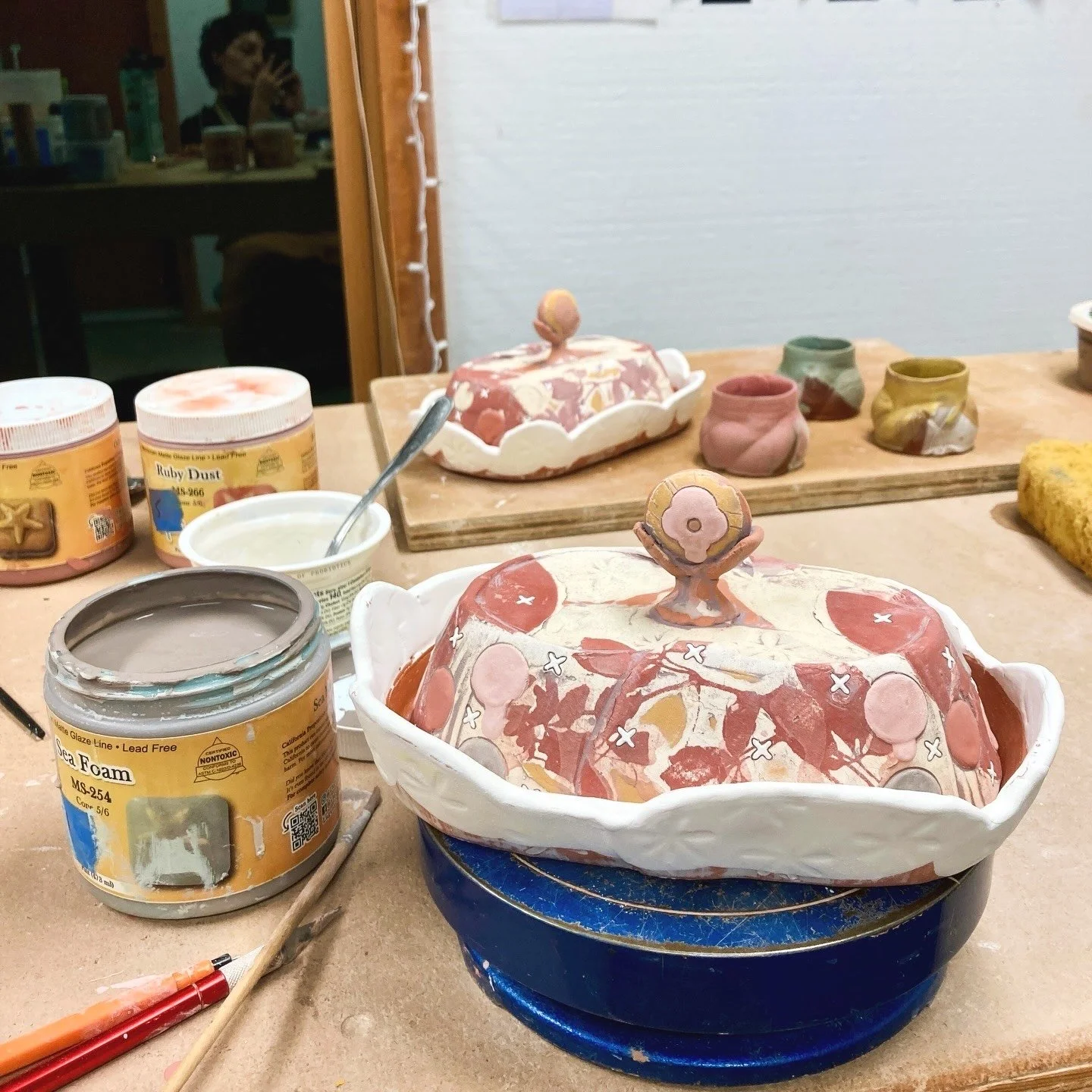
The found objects, collected imagery, and moments of happenstance within my days are predominantly what influence future iteration in my studio. Every texture is created from a new piece of acquired trash, my color combinations often shift with the seasons, and I only ever construct form that is of relevance to my immediate lifestyle. For instance, I have recently adopted a fantastic habit of indulging in toast as a sweet treat and therefore have been joyously making butter dishes for the first time.
Vessel and sculpture alike, so much of my practice is rooted in a slow sense of rhythm and repetition that accompanies a foundation composed of parameters to play within. I curate an evolving toolbox of textures, imagery, and motifs to then intuitively impress, collage, and carve to inherently create a sense of variety within unity. As a maximalist who craves the securities of structured play, my layered process has gifted me with a practice that results in a series of evolving self-portraits that exist equally as mementos of places called home and as odes to the mundane.”
Q: In your artist statement, both memory and preservation loom large. Can you share more about how they impact your approach to clay?
“Many of the things that I would deem beautiful tend to always have a way of embodying the bittersweet nature of time lost or time in an attempt to be repaired or preserved. I find it tragically beautiful the way we pocket objects of sentiment and attempt to preserve moments in time as a means of coping with impermanence. You could argue that crafting clay into ceramic is simply a means of coping with this inevitable change by crafting moment and memory into something that provides the illusion of permanence and control. My practice revolves around preserving all evidence of the clay's response with the intent to capture the dialogue between material, hand, texture, and tool. I’m intrigued most by preserving and enhancing memory within an object as it's being created. To me, this preservation of memory is a most fitting representation of what it’s like learning to cope with life and loss.”
Q: What is one piece of advice you would share with someone just starting out with clay?
“Develop the self-awareness to understand how you like to play and build the confidence to grant yourself the grace and patience to do so fully and at your own pace. I think as we better understand ourselves with time, we can also better understand what opportunities to seek out and how to speak with intent and consideration for both our strengths, our weaknesses, and our ambitions. With this awareness, take advantage of every opportunity that meets your standards and advocate for yourself, your peers, and your students every chance you get. Half of the journey in the arts is enriched by the connections you make with the people around you and the energy you pour into the life you choose to live outside of the studio walls.”
You can shop Breana’s work online and in the Gallery at Clay Art Center.