Handled With Care: The Joy of Exploration
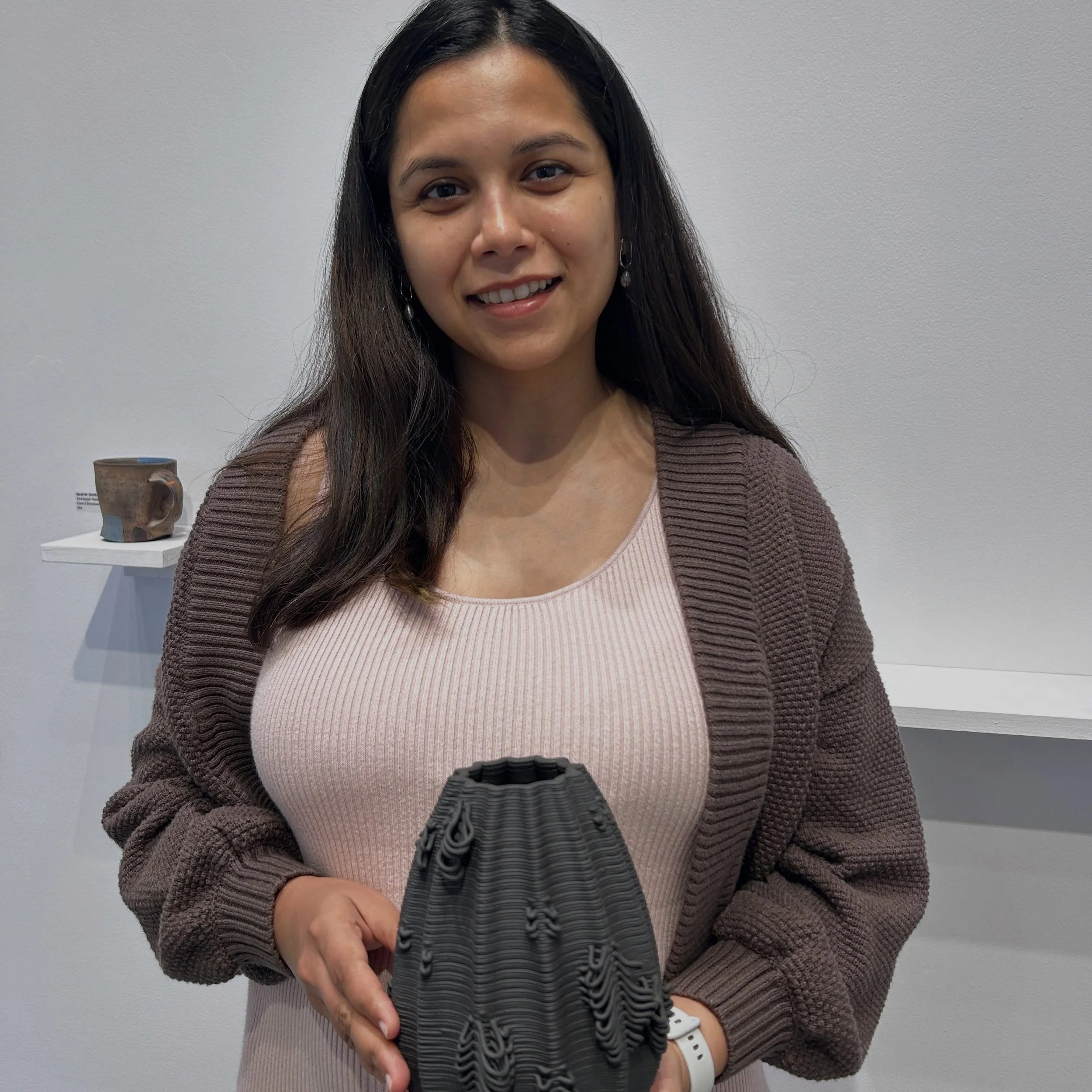
This year’s Functional Fall exhibition, Handled With Care, features small- to medium-scale works that revel in surface, decoration, and detail. Learn more about the work of exhibiting artists Yutong Liao and Vasudha Maiya below.
Each fall, the Clay Art Center Gallery hosts an open-call exhibition focused solely on functional work, showcasing artists from all over the country and at all stages in their careers. For this year’s fourth Functional Fall exhibition, the call-for-entry requested small- to medium-scale works that play with the wide-ranging possibilities of ceramic surface design and detail. Whether through layering, carving, stamping, slip, glaze, luster, pattern, or just about anything else you could imagine, the pieces in the show reward close attention and invite visitors to return to them again and again. We caught up with two of the artists represented in the exhibition, Yutong Liao and Vasudha Maiya, to talk influences, process, next big things, and happiness and success in clay.
Yutong Liao Connects Through Clay
Q: What draws you to clay as a medium?
“I discovered clay while experiencing burnout at my previous corporate job and desperately wanting to feel ‘useful’ again. Being able to produce something that can be used in daily life, even when I was just beginning to throw on the wheel, was fascinating to me. In my corporate job, what I do day to day felt so removed from the users of my product, but when I gift or sell a pot I made, I get to see the immediate joy of the receiver, and that made me feel so much more connected to my purpose as a human. As I spent more time with clay, it became apparent to me that what I really enjoyed was decorating, more so than perfecting the piece for its functionality - I cared less about whether the handle of the mug is comfortable or not, and more about whether the handle looked purposeful in combination with the mug's body. Nowadays I often struggle with how much time I spend on decorating a functional piece, knowing that the monetary value is largely associated with the function and not with the visuals. Yet I cannot convince myself to stop working on decorations just because the return on investment diminishes as I spend more time on surface details, because chasing efficiency feels like admitting that monetary value takes precedence over the joy I experience as I decorate to my heart's desire. The juxtaposition of functionality versus visuals is now the core theme of my exploration in clay.”
Q: What is your process like as you approach a piece?
“For most of my pieces, I have a rough idea of what it should look like before I start. I like the challenge of making the thing I set out to make, rather than ‘listening to the clay’. This often means I make test tiles to get the color or texture right before starting on the actual piece.”
Q: In your statement, you pose the question "what makes you truly happy?" What about working with clay makes you happy?
“So many things - I enjoy working with my hands and touching clay directly, I love being able to keep a piece damp and working on it without a time limit. I appreciate how clay can be reused again and again before firing. Clay is a medium that embodies many meditative qualities that help me slow down and connect my mind with my hands.”
Q: Does your background in tech inform your ceramic work? If it does, how so?
“My tech job is what made me realize I didn't really want a job that I don't truly enjoy. While this background doesn't directly influence the visual appearance of my work, it is context for understanding some of the ideas I want to convey. For over a decade, I've worked hard to pursue a path that would get me good grades, then get me into a good university, then get me into a good-paying job. And I did so without confronting if this path of traditional success made me happy, and it turns out, it didn't. It was so hard to leave it all behind because I was trained to think that I am not worth anything if I'm not contributing to society in a way measurable by the money I earn. Even now that I've left the tech industry, I still struggle with this indoctrinated thought sometimes when I juggle efficiency versus enjoyment in the making process. I think it's a universal struggle for many artists, and I want to explore this dilemma further in my work.”
Q: What is one piece of advice you would give someone just starting out with clay?
“Make what you enjoy making :)”
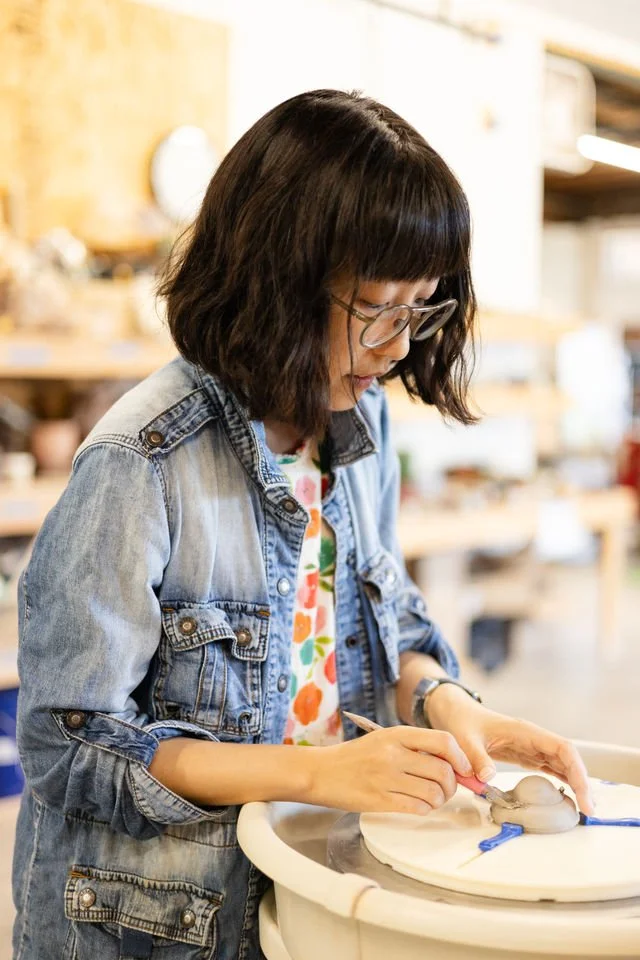
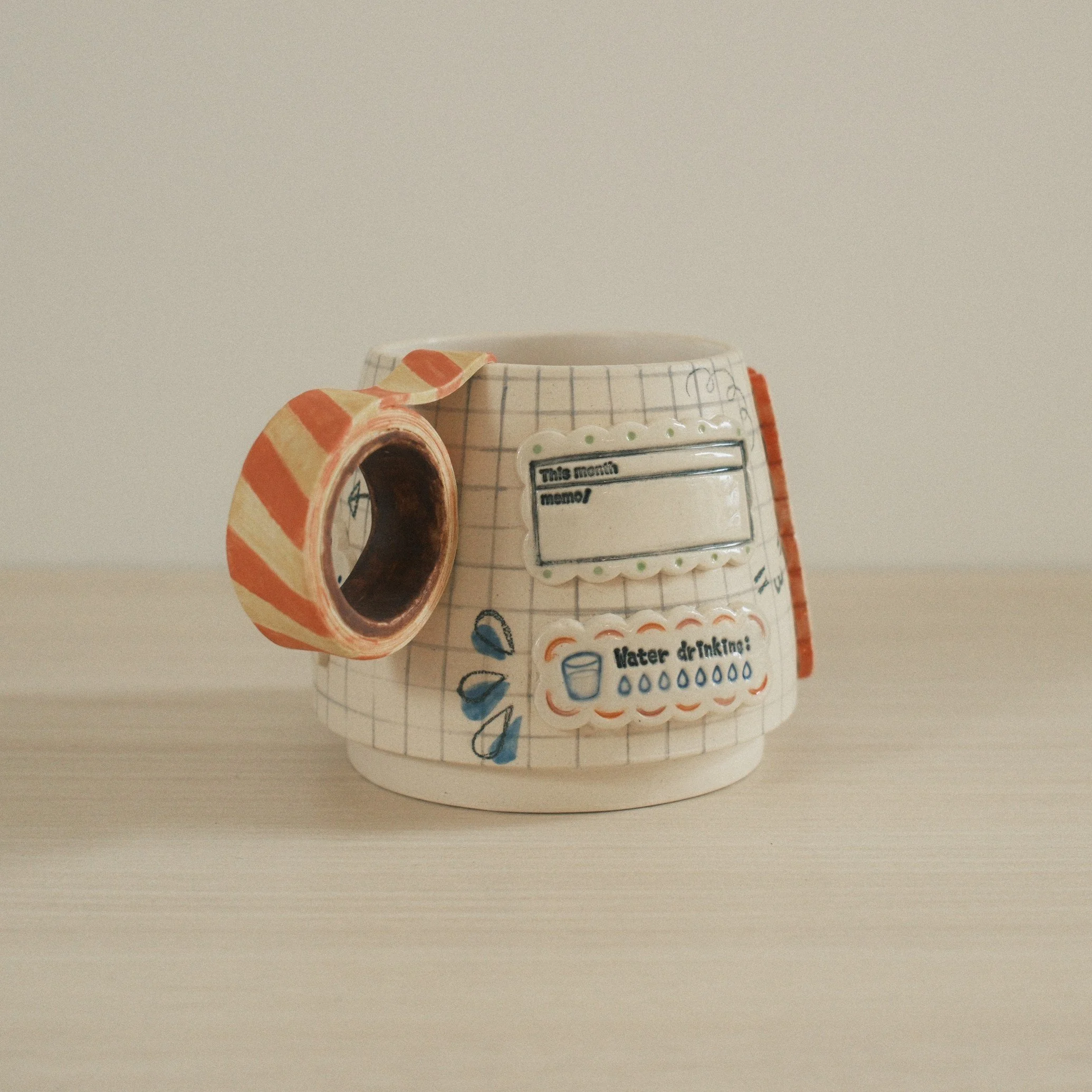
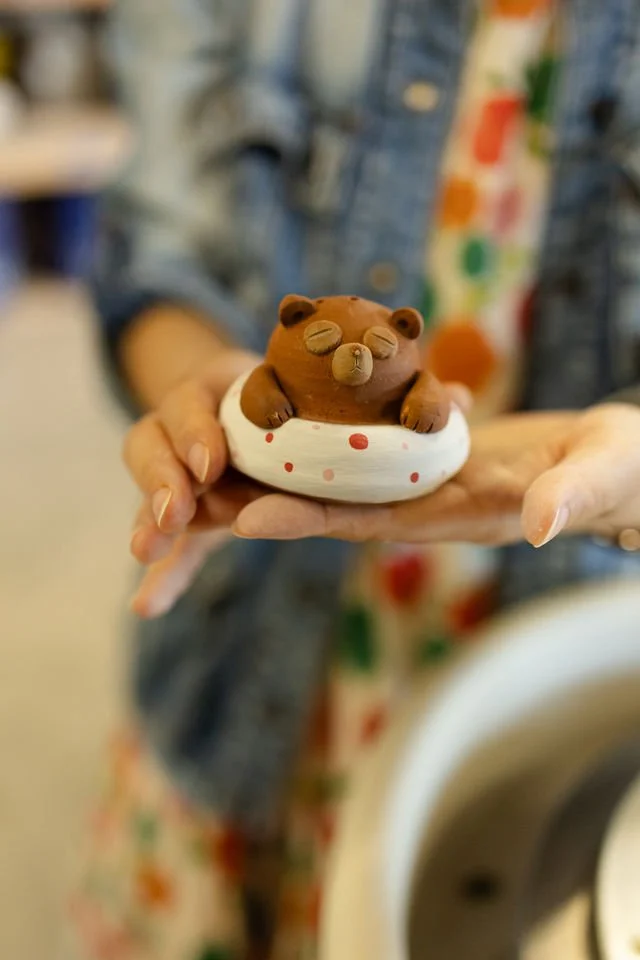
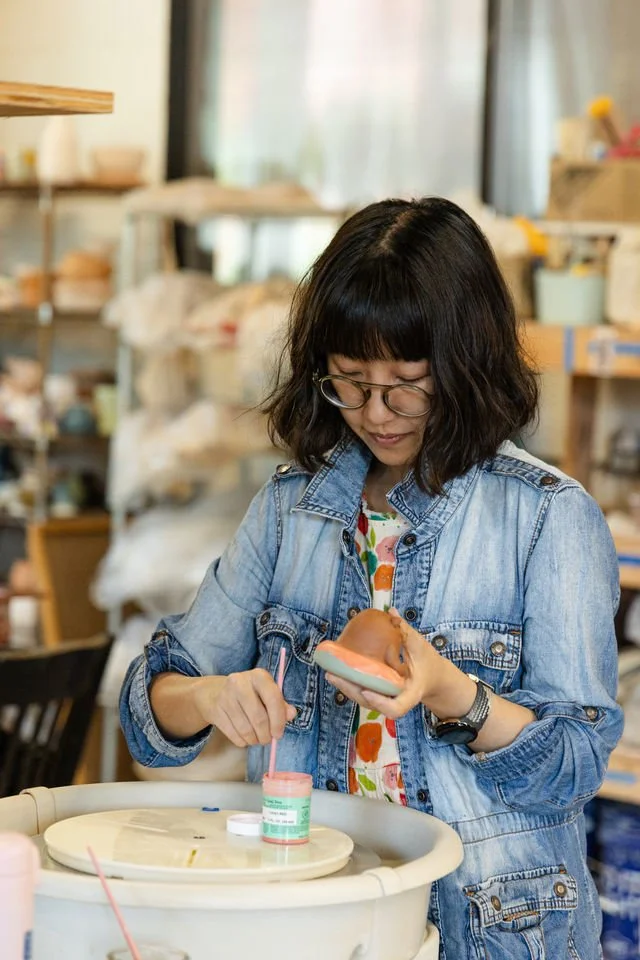
First, third, and fourth photo by Masha Oster(@capturedsea)
Vasudha Maiya Explores Form, Geometries, and Growth
Q: How does your work as an architect influence your ceramic work and process, if it does?
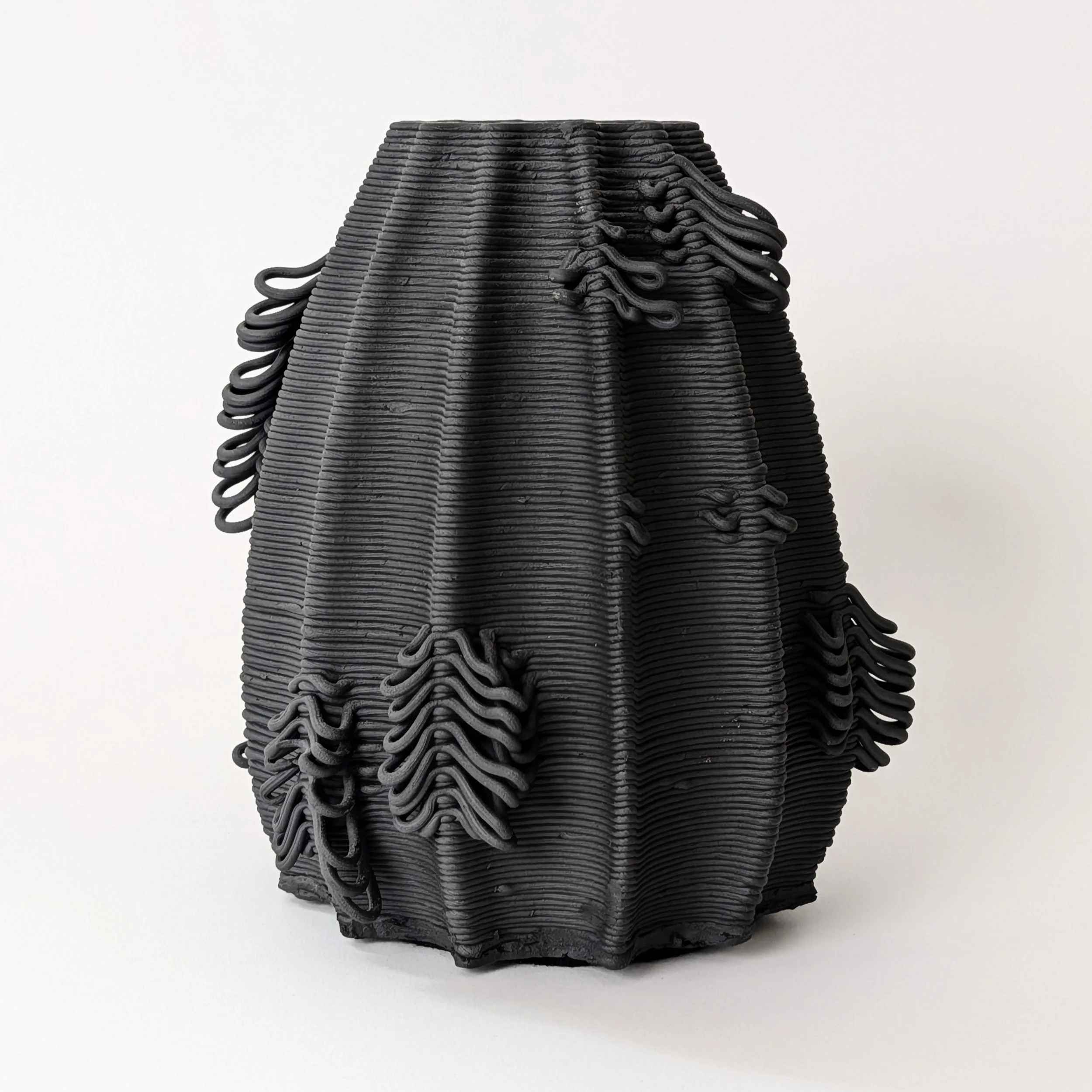
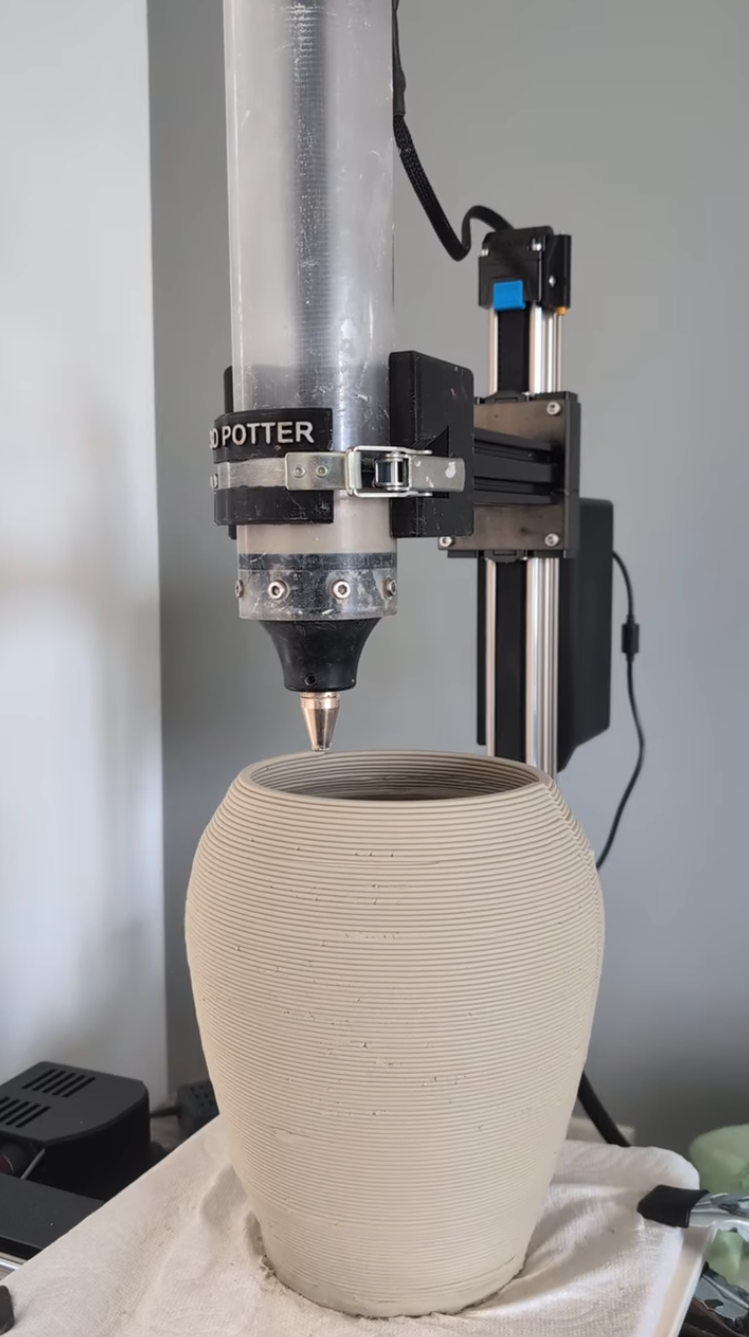
”My ceramic practice is rooted in my architecture training. I learned to use ceramic printing to develop scaled models while studying additive manufacturing for building construction at the University of California, Berkeley. The notion of “growing” pieces of art interested me and I began exploring new forms and geometries with it. When designing my pieces, I still think in terms of the core structure and additive layers, much like when designing buildings, but I very much enjoy working at an object scale where I can hold a piece within my hand and get very tactile.”
Q: For you, what defines a "successful" ceramic piece?
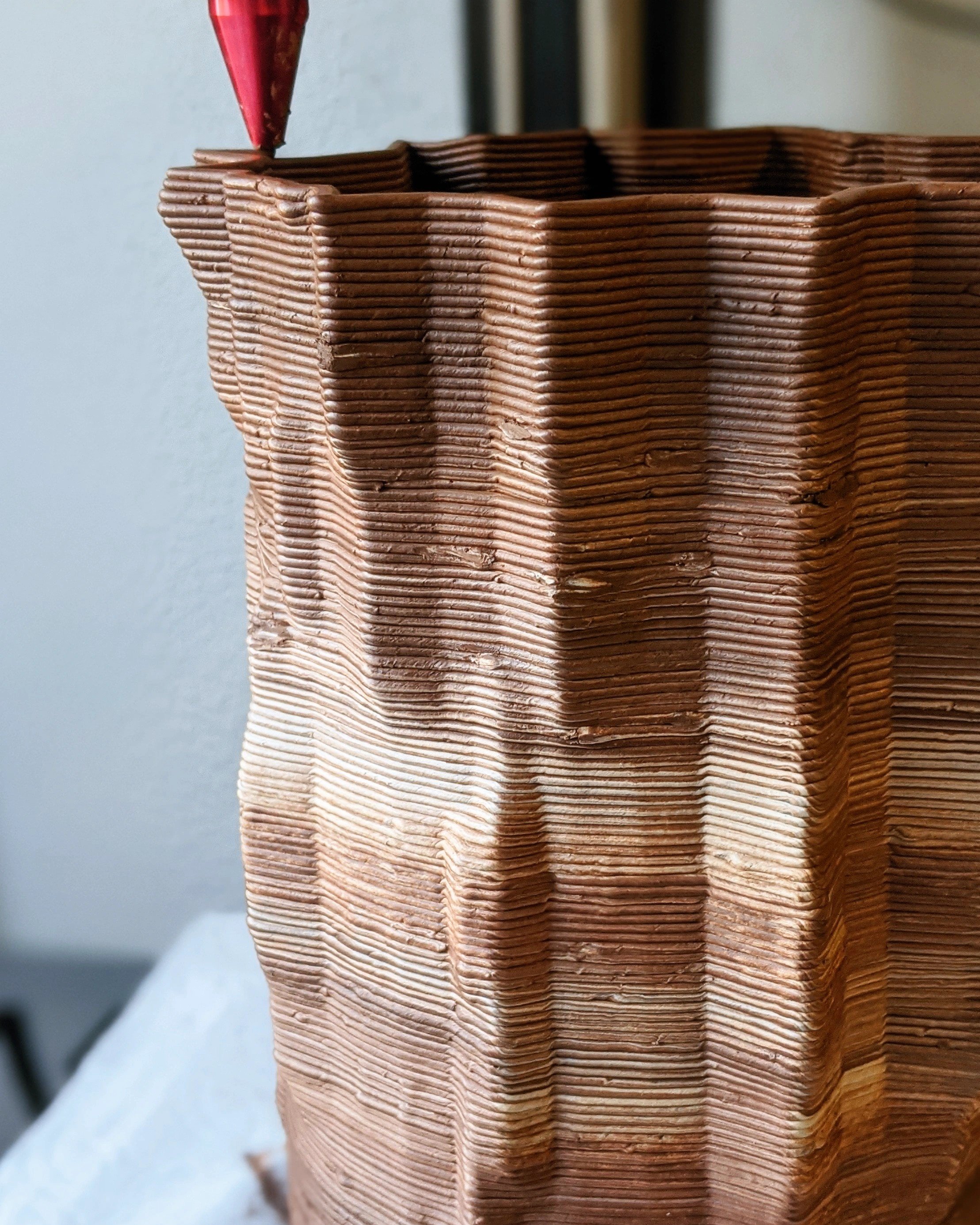
”I’m satisfied when I feel like I’ve explored something new and created something truly beautiful. It usually involves a lot of experiments on the way before I land on the “successful” piece. I’m always looking to capture a unique quality in the way the printed clay loops bend and droop, how light catches the piece to bring out the surface textures, and the way gradients of clay form as the piece grows. Ultimately, each piece should mean something. I like for my work to be reminiscent of patterns in nature and feel dynamic and alive.”
Q: What is one piece of advice you would give to someone who is interested in using a clay 3D printer?
”3D printing with clay is super fun, but it comes with a learning curve. You need to learn to design in a 3D modeling program, generate g-codes, and maintain your 3D printer. This can sound intimidating, but the trick is to start simple with very minimal forms, then add more complexity through textures, loops, and eventually push the geometries with gravity. I recommend exploring the design by sketching on paper before beginning the printing process as it helps you think through the form and the essence of what the piece wants to be.”
Q: Do you have any new projects on the horizon that you'd like to share about?
”I’ve been thinking about interesting ways to blend ceramics and architecture. I want to use ceramic pieces within the built environment as tiles, vessels, or walls. By arranging multiple pieces that come together like a puzzle to form, for example, a whole wall, it can bring about movement and texture on a larger scale and make a space interesting. Right now, I’m exploring tiles with nature-inspired themes and integrating ceramics with new materials like wood and vegetation to form partition screens or sculptural walls.”