Fifteen Years of Impact: Projects Made Possible by the Common Sense Fund
Over the past 15 years, the Common Sense Fund has facilitated so much for our clay community, including keystone Clay Art Center programs, community engagement and beautification projects, and collaborations with nationally recognized ceramic artists.
Clay Art Center is delighted to honor the Common Sense Fund, a family foundation that has been supporting Clay Art Center programs for 15 years, at this year’s Hand In Hand Annual Benefit and Auction. Founded in 1983 in honor of Sy and Sybil Schwartz, the Common Sense Fund operates with the mission to make arts education accessible and to promote environmental conservation. Today, the board includes Adlyn Loewenthal (Trustee and President), Ted Loewenthal (Trustee, Secretary, and Chair of Climate Change Committee), Eric Schwartz (Trustee and Treasurer), Debra Fram (Trustee and Chair of Arts Committee), David Schwartz (Trustee), and Carolyn Schwartz (Trustee). Their unwavering support of Clay Art Center has made so much possible, from staff expansion through capacity-building grants, to backing for the building of our ADA accessible Yellow Studio, to internships and camp assistantships for local students building their resumes and developing professionally, and so much more. Below, you can learn more about some of the many projects the Common Sense Fund has supported over the years.
Around the World in Clay
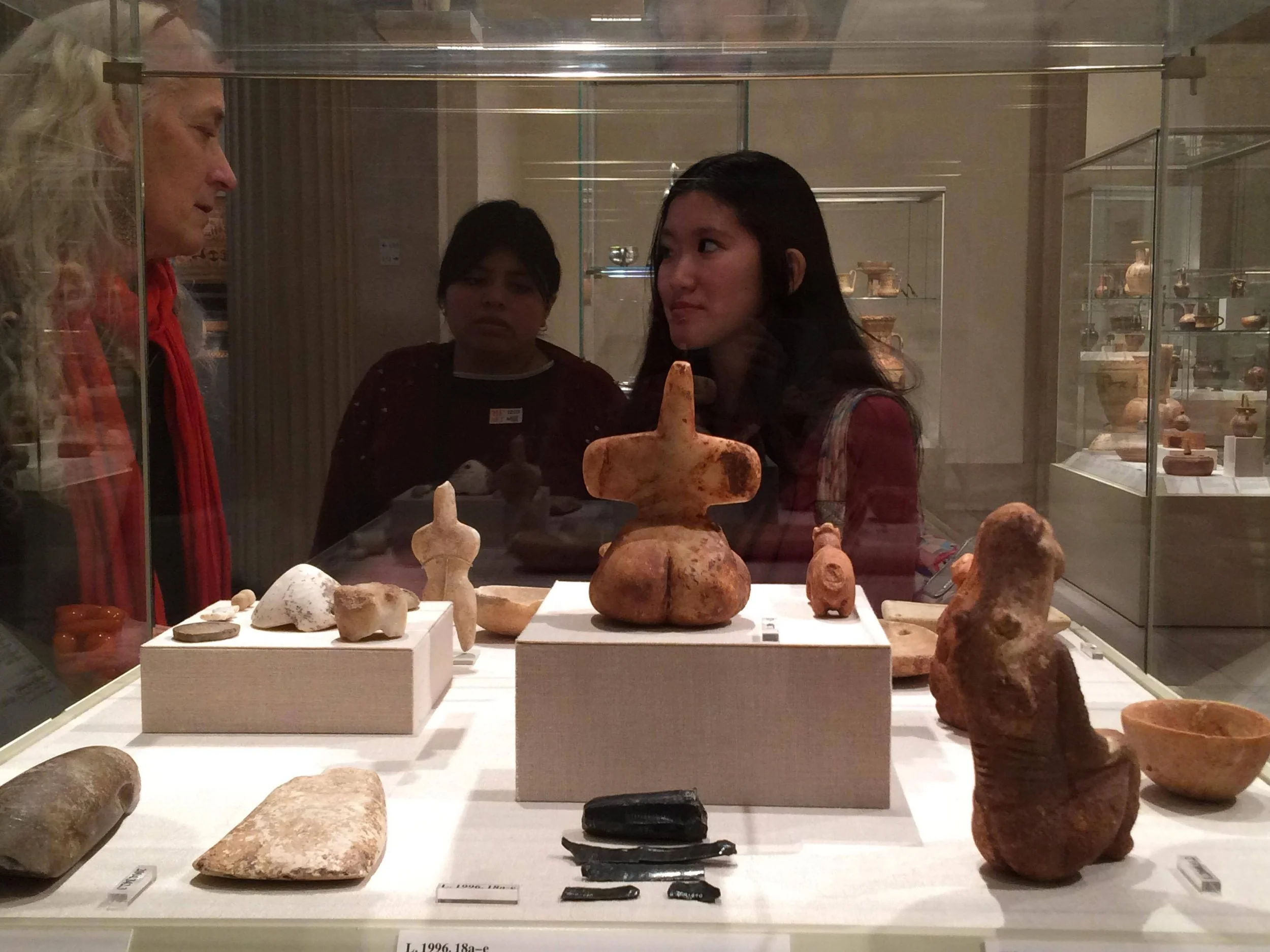
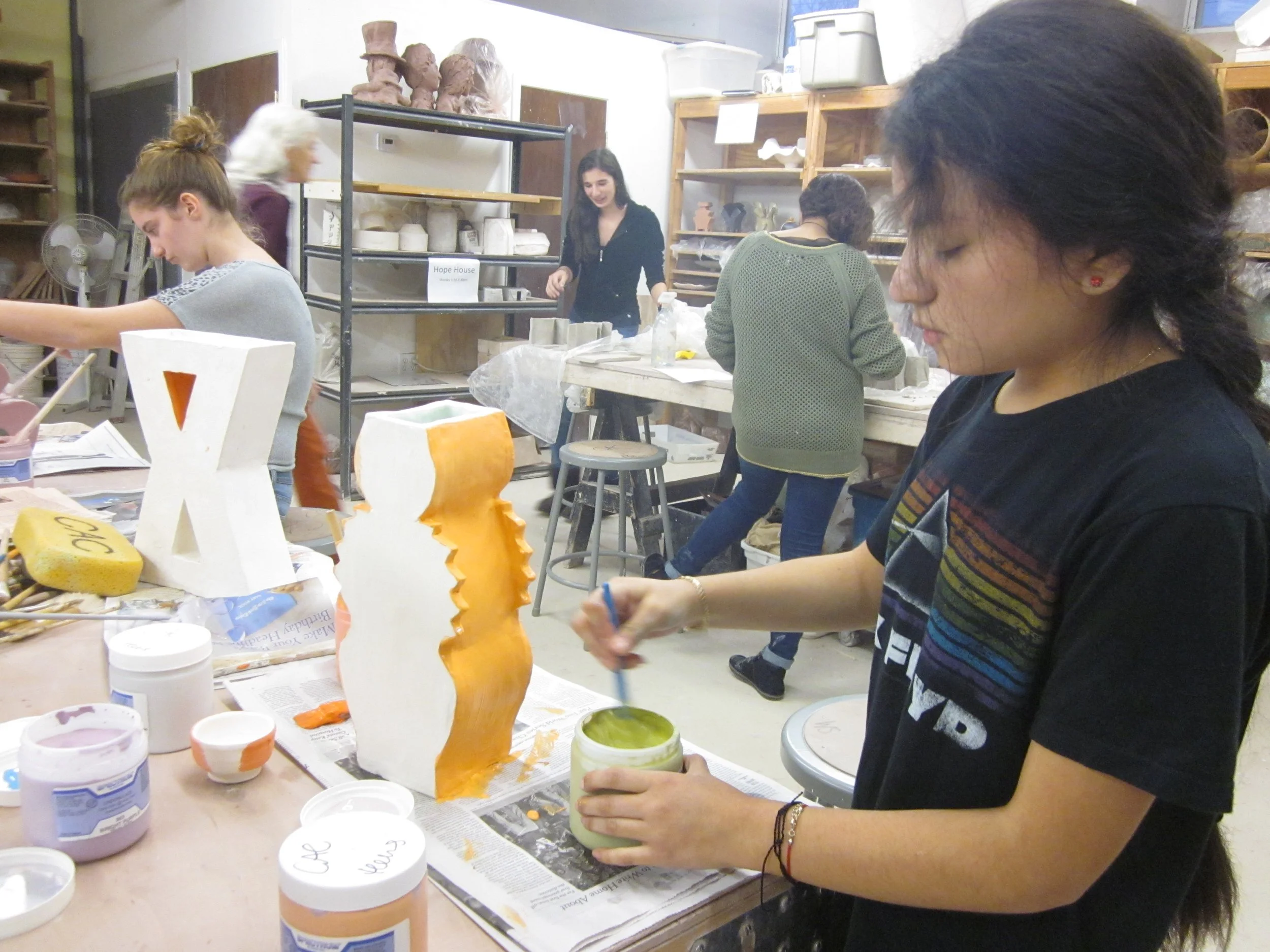
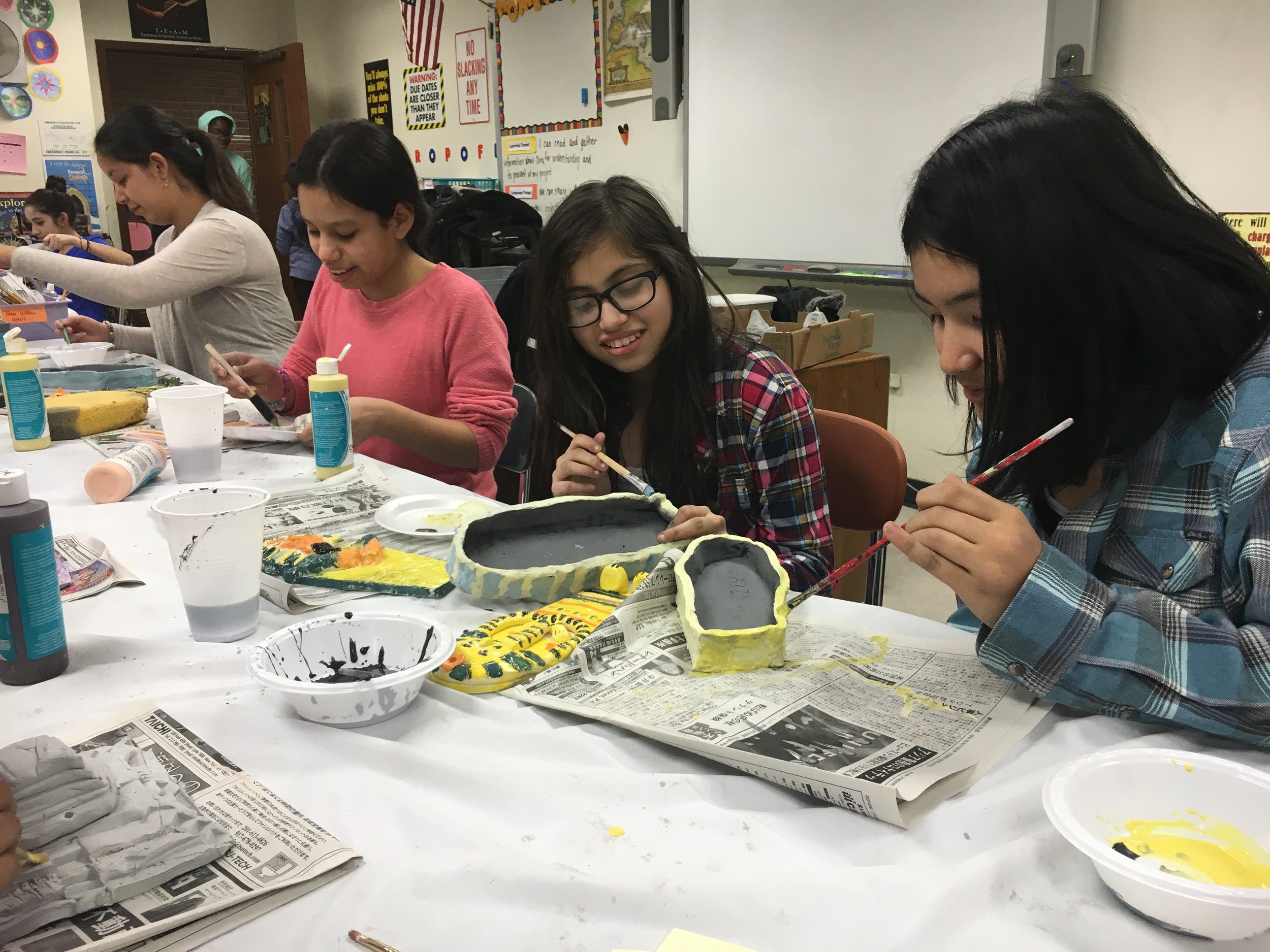
Each school year, Clay Art Center welcomes Port Chester public school students ages 7-18 to the studios for an afterschool program focused on creative development and the wide world of ceramic possibilities. These classes offer a safe place for students to express themselves and explore their imagination, all while engaging with the deep cultural history of clay. The Common Sense Fund first partnered with Clay Art Center to offer afterschool clay classes for middle and high school students in 2011 with the mission to address some of the widespread defunding and downsizing of arts education in schools. The classes found a youth audience excited to dig into clay, and over the years the program hit its stride and continued to evolve to meet the changing needs of students, growing to include field trips to the Metropolitan Museum of Art, artist talks, and end-of-semester shows. Ten years later, amidst the aftershocks of the Covid-19 pandemic and lockdown, the Around the World in Clay program expanded to serve elementary school students for the first time, giving them the opportunity to connect with themselves and world history through the tactile exploration of clay. Today, Around the World in Clay serves students in grades 2-12, with more classes than ever to meet the demand, and a number of Around the World in Clay students have gone on to teach the very classes that initially interested them in clay.
Artist Michael Strand Brought Elbowls to Port Chester
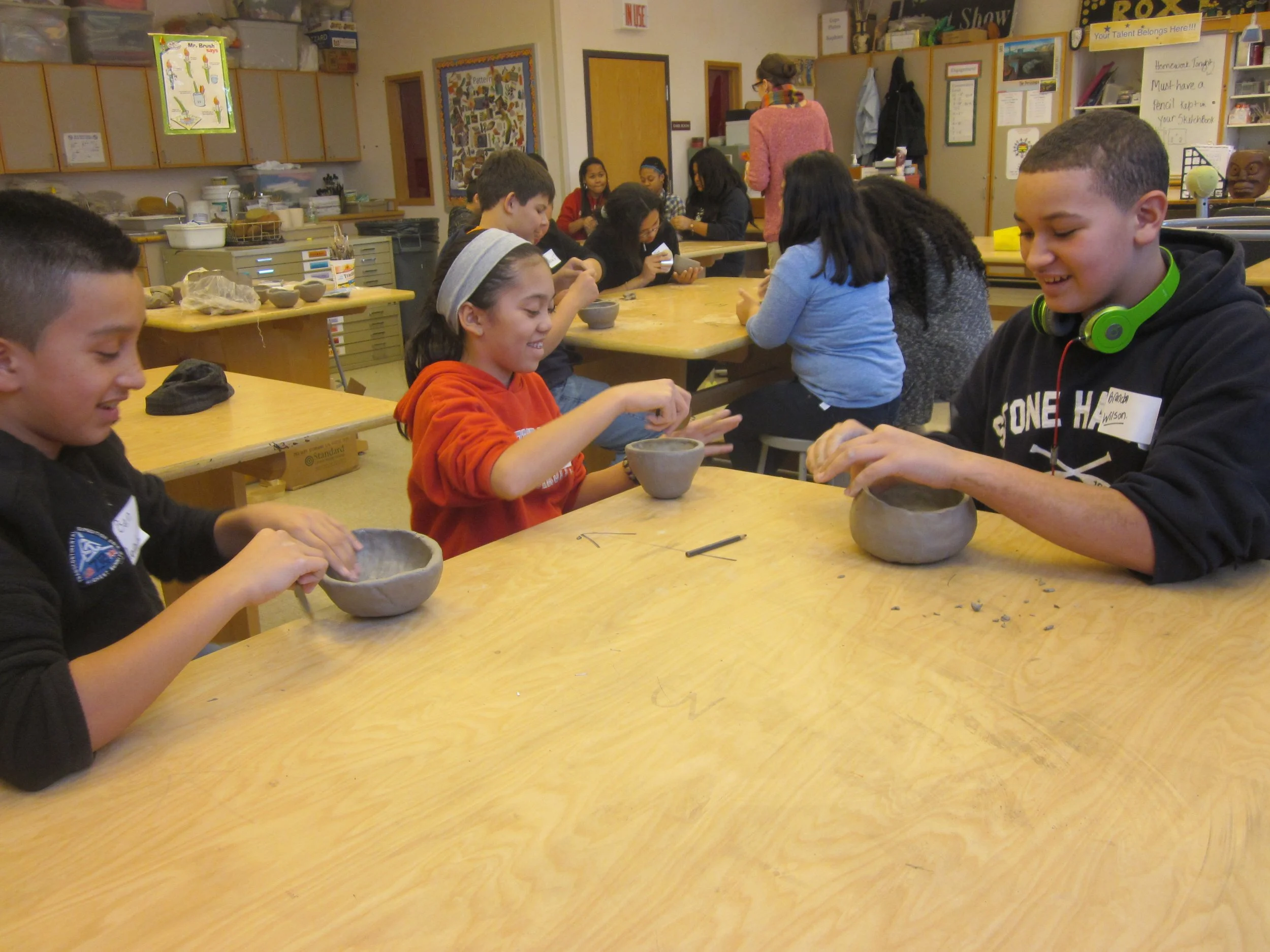
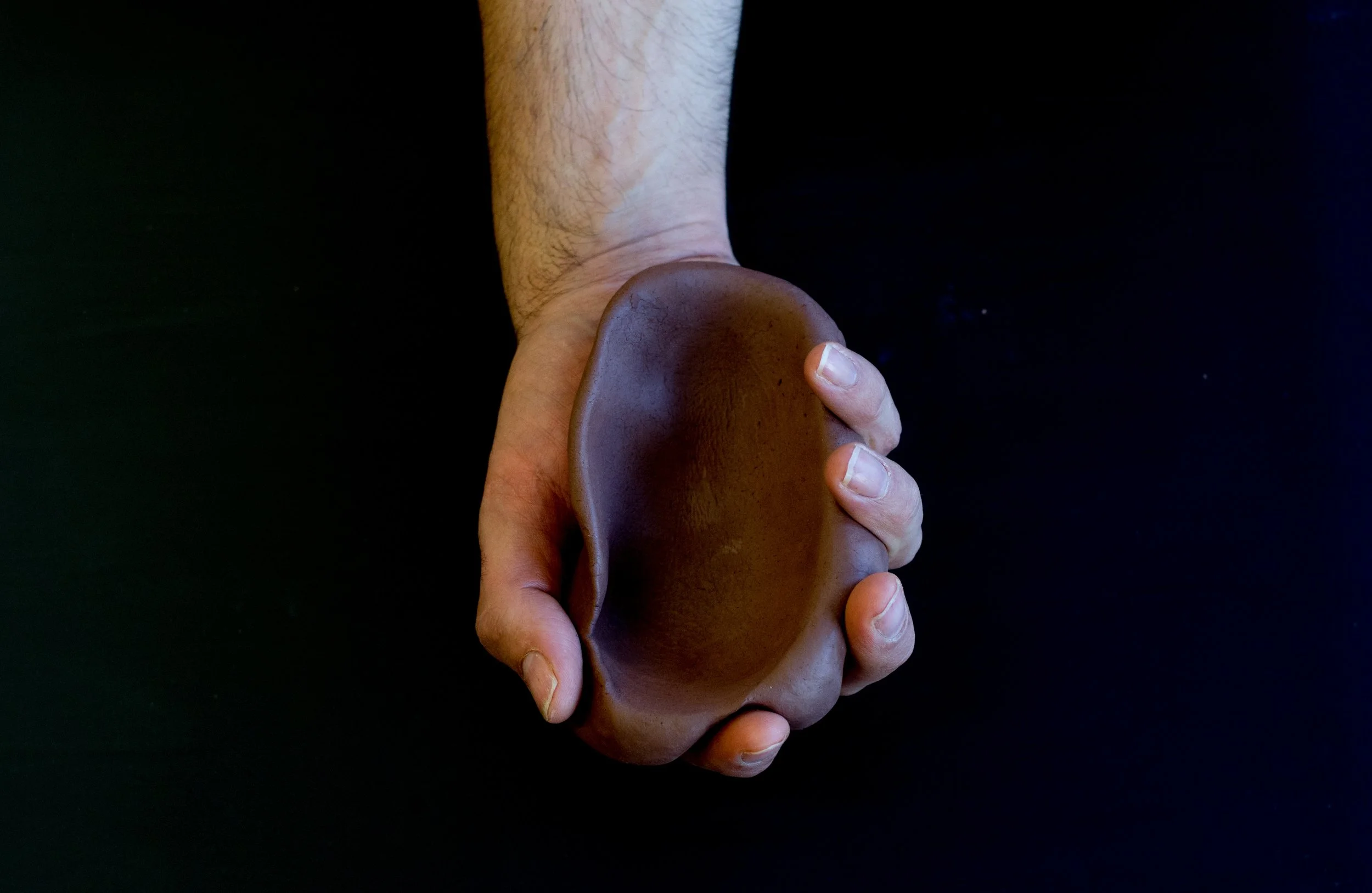
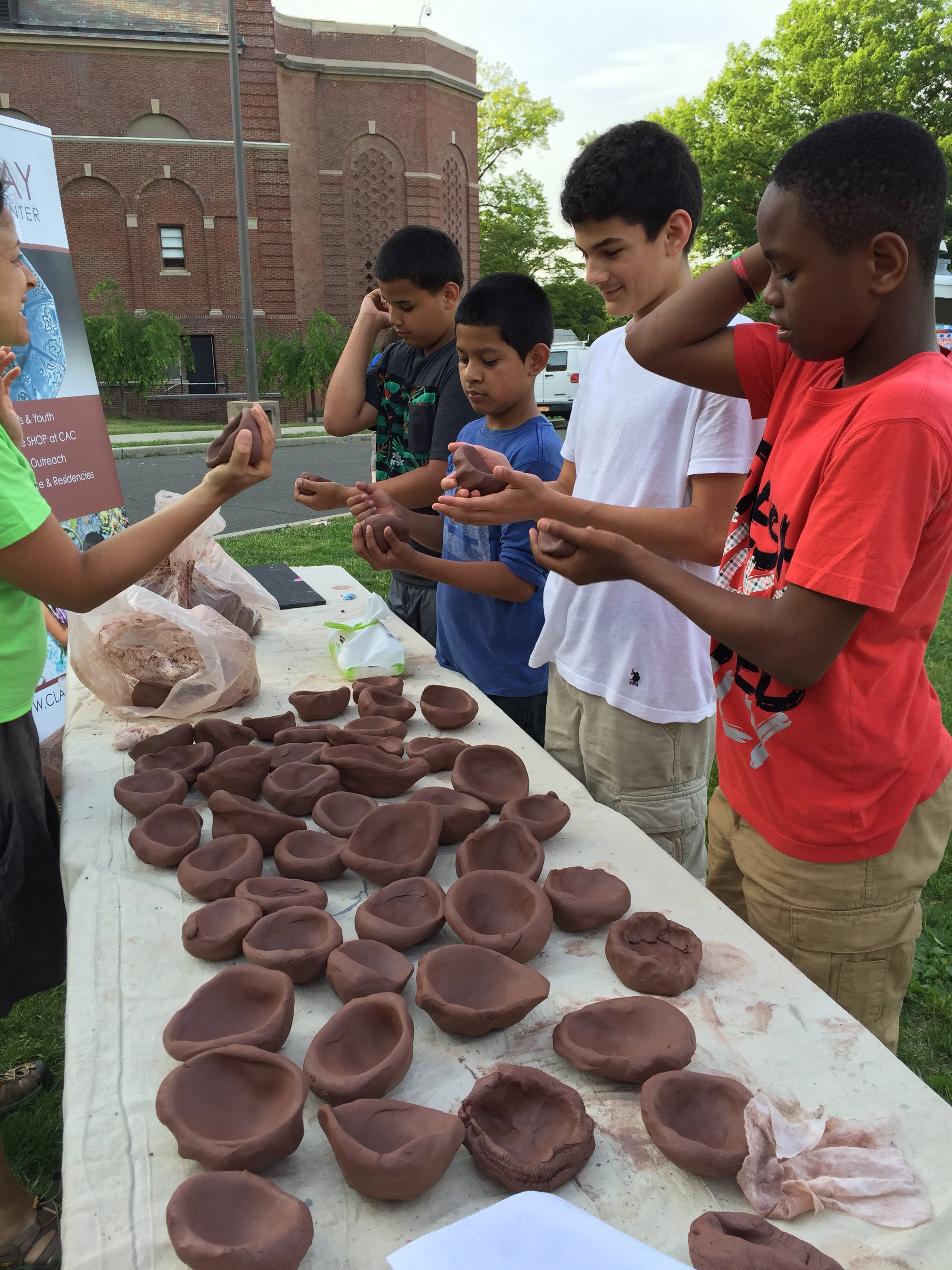
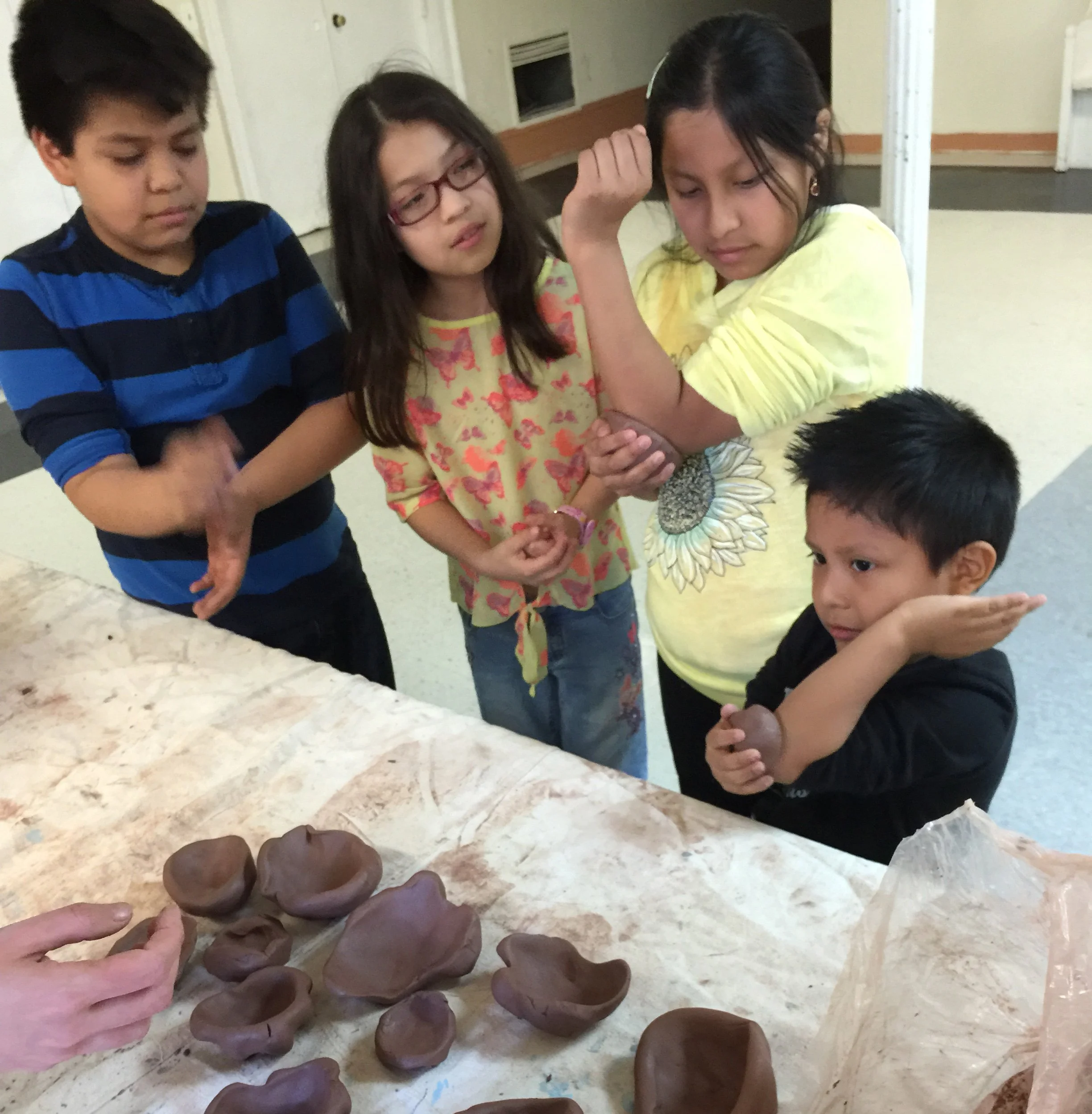
In 2015, Clay Art Center partnered with ceramicist Michael J. Strand to bring Port Chester: Melting Pot(s) to our community. Strand is Professor of Art and Head of Visual Arts at North Dakota State University, and puts his background as a functional potter to use as an activist, engaging the public in conversations about finding shared ground and catalyzing social change. With support from the Common Sense Fund, Strand led workshops with organizations throughout Port Chester and with the entire Port Chester High School student body to create “elbowls”.
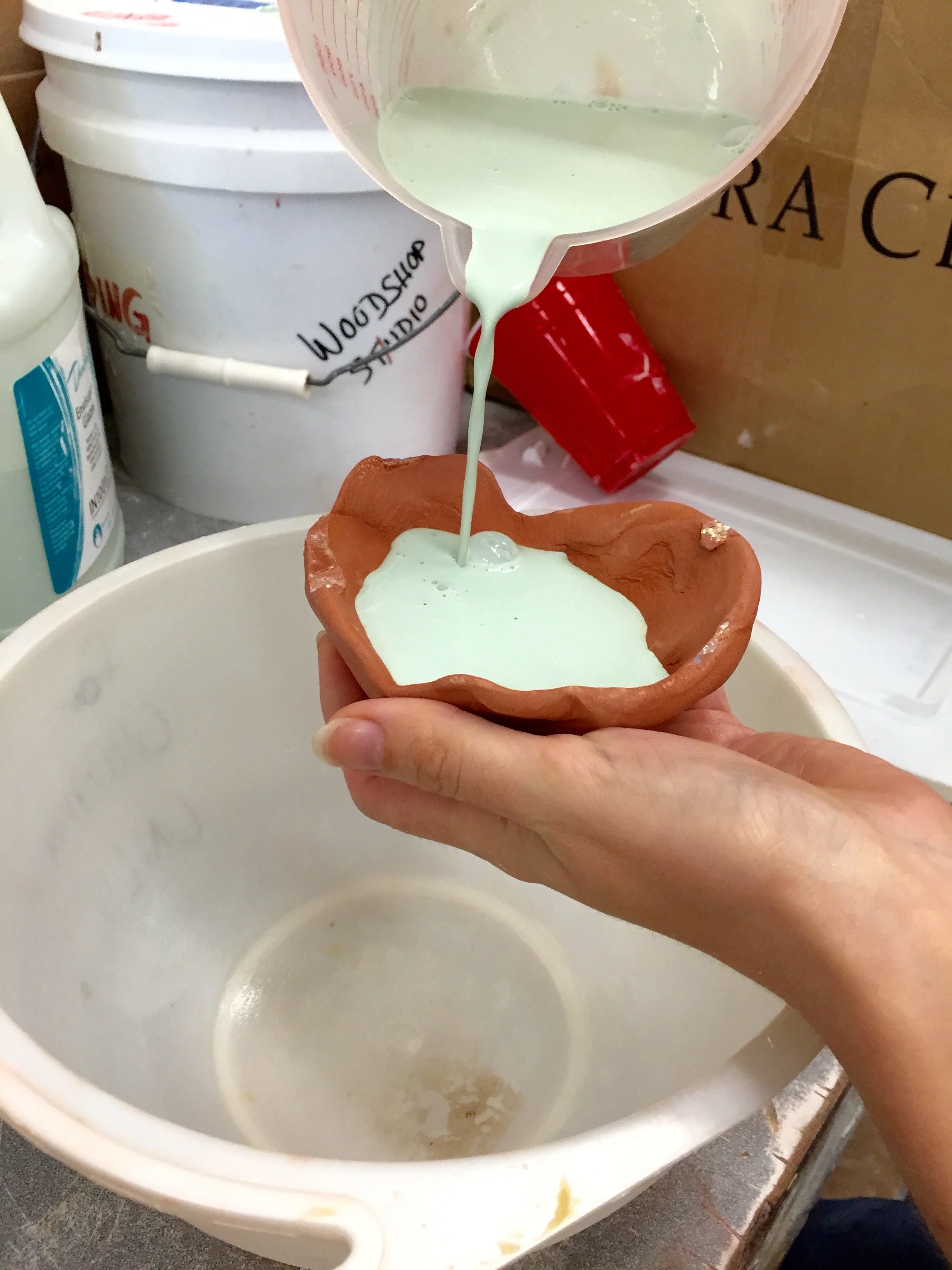
In order to form an elbowl, a one pound ball of clay is held in the palm of one hand while the opposite arm is bent, extending the curve of the elbow outward. The sphere of clay is then quickly pounded onto the point of the elbow, forming a deep indentation and creating a functional bowl. At the same time, the opposite hand that pounds the clay leaves an impression of the palm and fingers on the outside of the bowl. The pieces are not refined any further, preserving the unique mark of the maker. Workshops to create these one-of-a-kind elbowls were paired with guided conversations about personal identity, public history, the symbolic power of food and shared customs, and communal reflection. In a culminating exhibition, more than 1,300 elbowls were displayed in the Gallery, and families could take an elbowl from the wall displays and then tour Clay Art Center, meeting Around the World in Clay students and sampling food made from community recipes.
Community Mosaic Installations
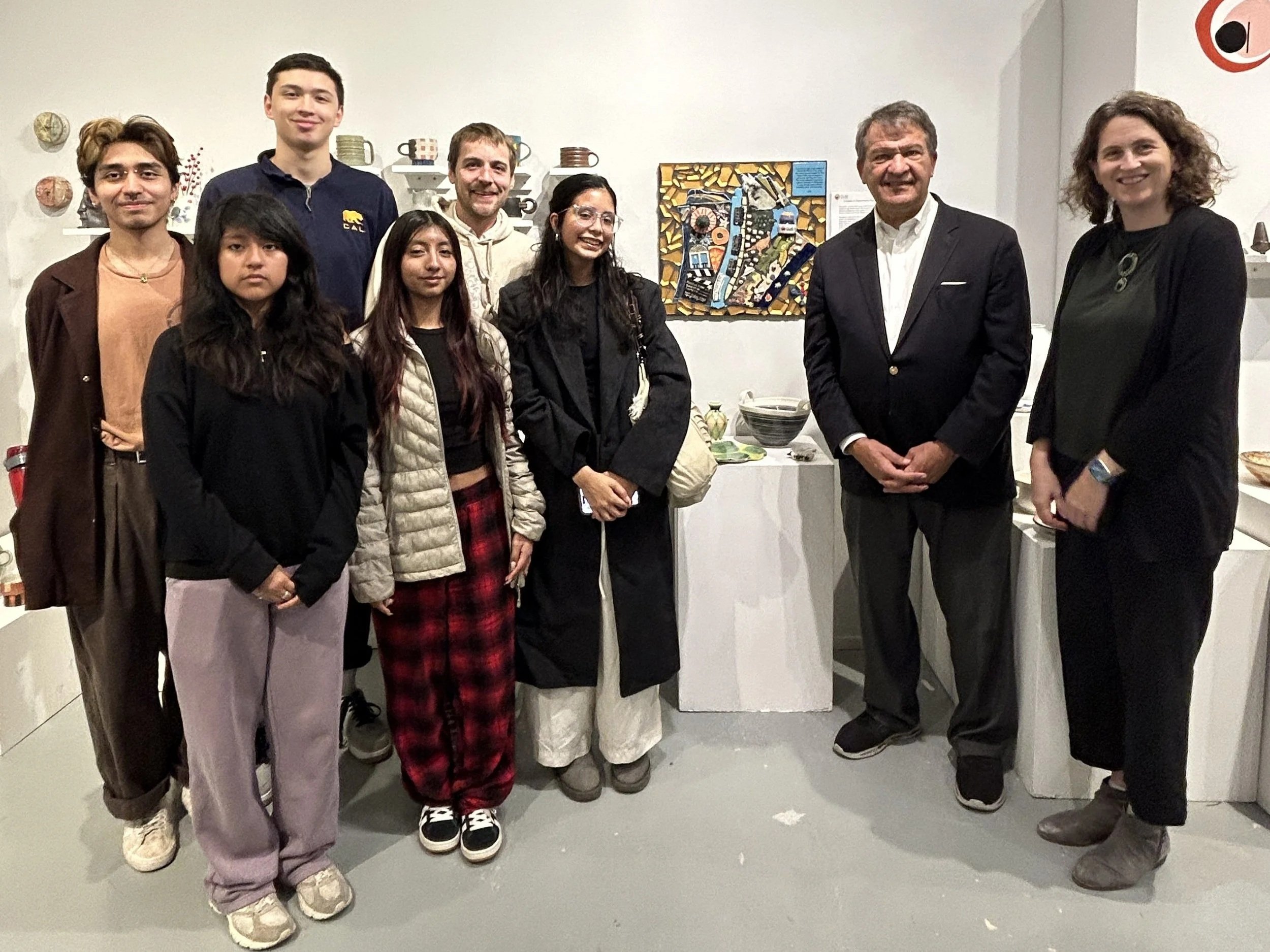
Over the years, the Common Sense Fund has also provided funding for a number of mosaics that now beautify our community and stand as a testament to the care and creativity that students of all ages have put into their work. Mosaic projects in particular leave a lasting mark on our physical spaces, reminding young makers that they have a voice and can impact the world around them. When high school Around the World in Clay students created the mosaic for Congressman George Latimer in the shape of Congressional District 16, which contains Southern Westchester and Northern Bronx, they had the opportunity to form a personal connection to their representative and the civic system that they live in. The students filled the mural with tiles that represented local landmarks like Hollywood on Hudson, the Armour-Stiner Octagon House, and the Temple of Love at Untermyer Gardens, as well as symbols of community and the environment, which can then serve as a reminder to Congressman Latimer of whom and what he represents in Washington, D.C.
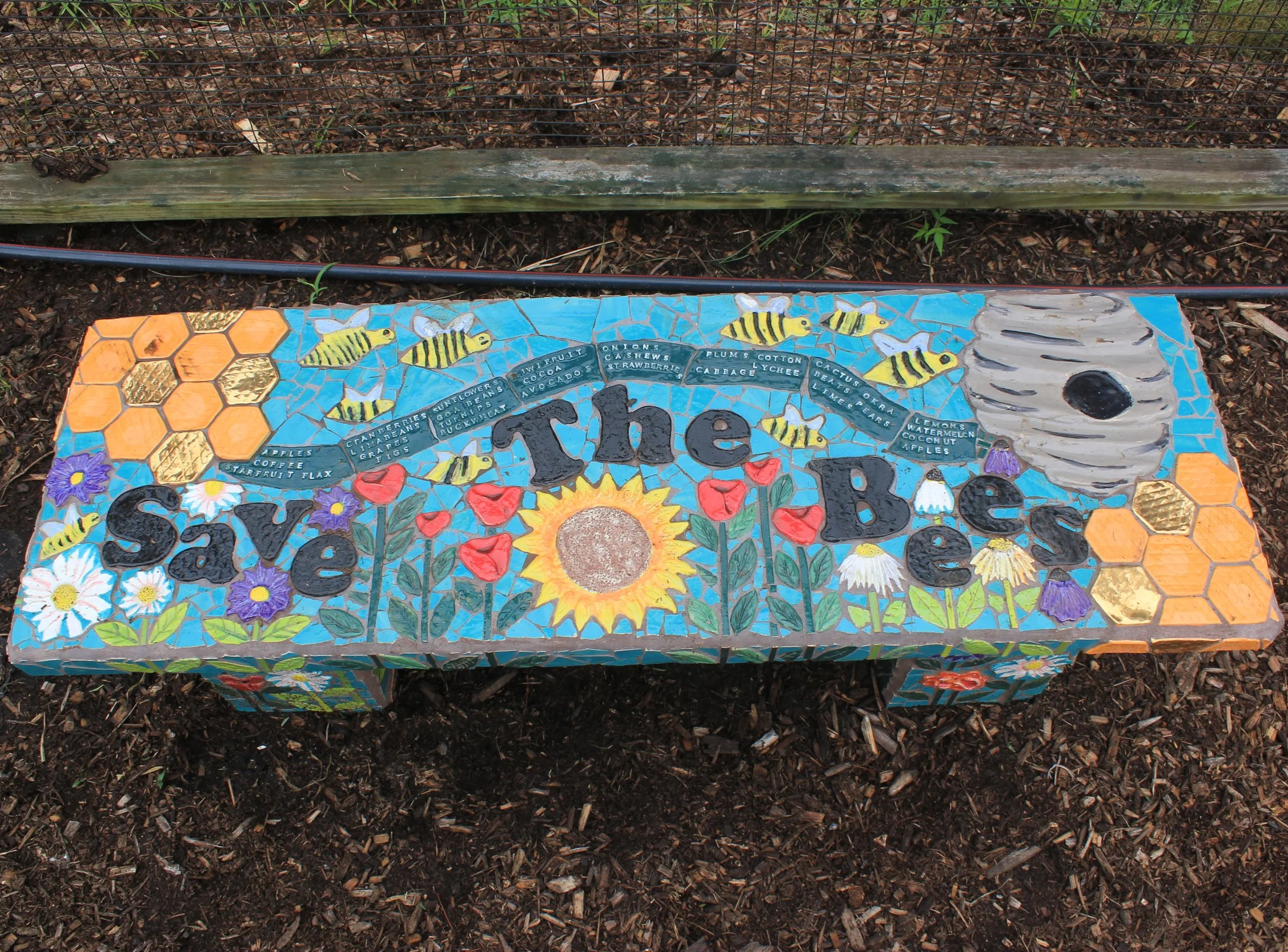
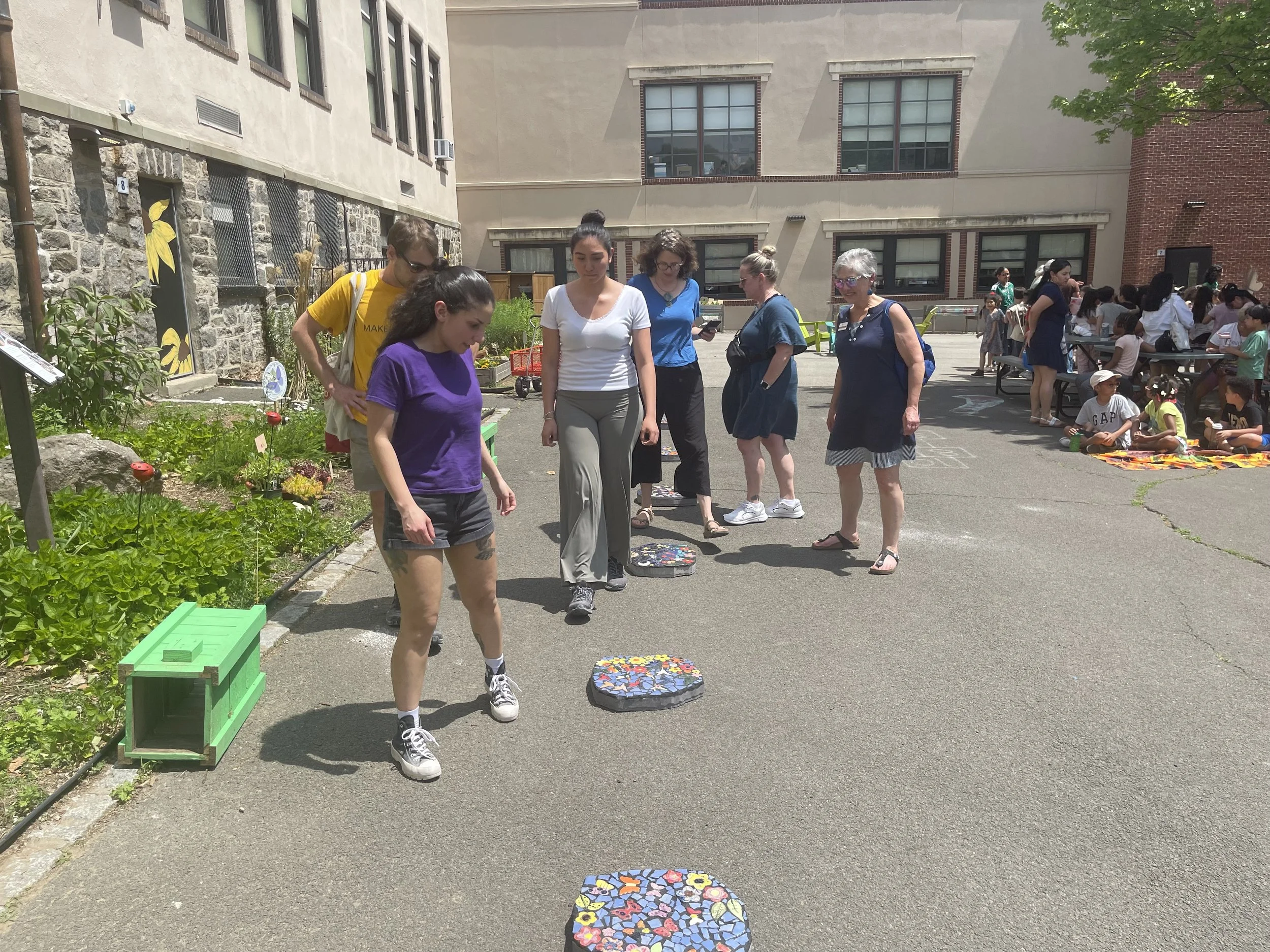
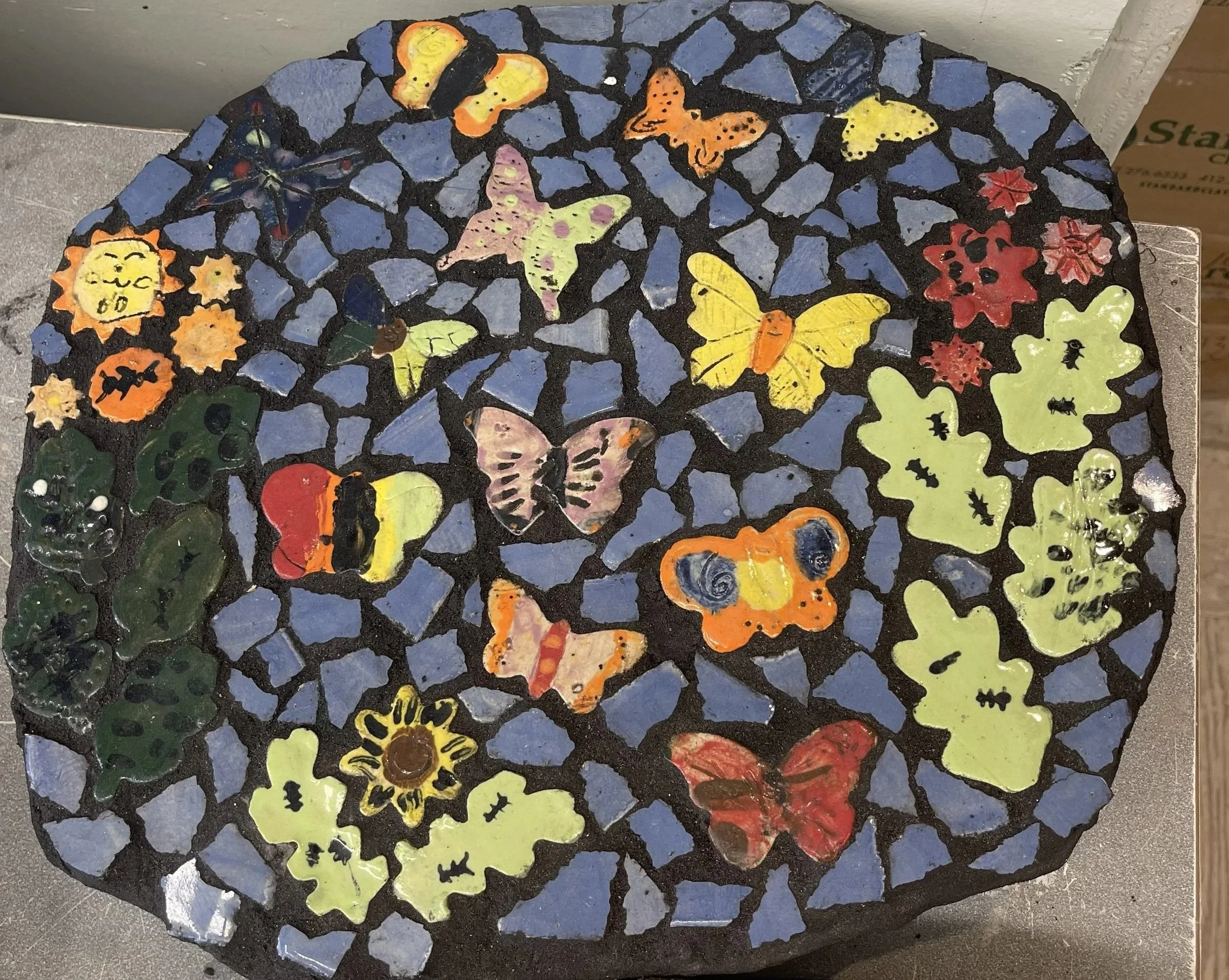
Other mosaic projects have also combined both aspects of the Common Sense Fund’s mission to provide arts education and to increase awareness of environmental needs. Both the Save The Bees Bench, installed in the Giving Garden at Port Chester Middles School, and the Pollinator Stepping Stones, installed in the Pollinator Garden at Thomas A. Edison School, highlight the importance of pollinating creatures like bees, butterflies, and hummingbirds. As the students crafted their mosaic tiles - which come alive with their individual artistry - they also learned about how pollinators function within the environment and impact the entire ecosystem. With all of these mosaic projects backed by the Common Sense Fund, participants learned vital lessons about the world, delved into their own imaginations, brought their creativity to life through the power of clay, and left a lasting legacy on the schools that have helped shape them.