Amazing Glazing
There has been some beautiful glazing happening at Clay Art Center. From the works on display in Rising Stars to glaze workshops, the ingenuity of students and teachers never ceases to amaze.
The Rising Stars annual student exhibition always surprises and delights with the breadth of what folks here at Clay Art Center can create. Working from a limited number of clay bodies and mostly the same glaze palette, students take their work in every different direction, letting their individual personalities and passions shine through. Below is a sneak peak of just some of the intricate glazing on display in the exhibition.
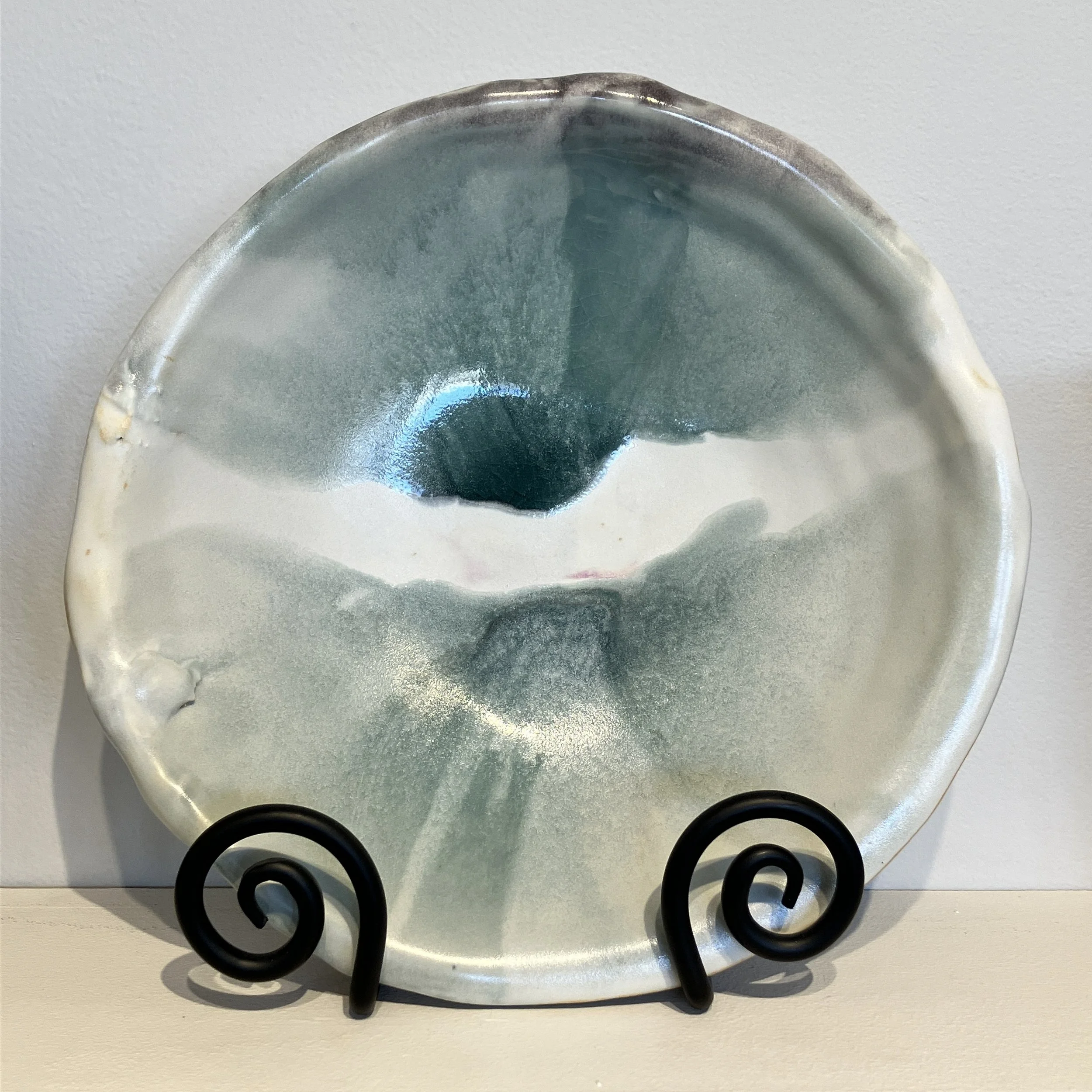
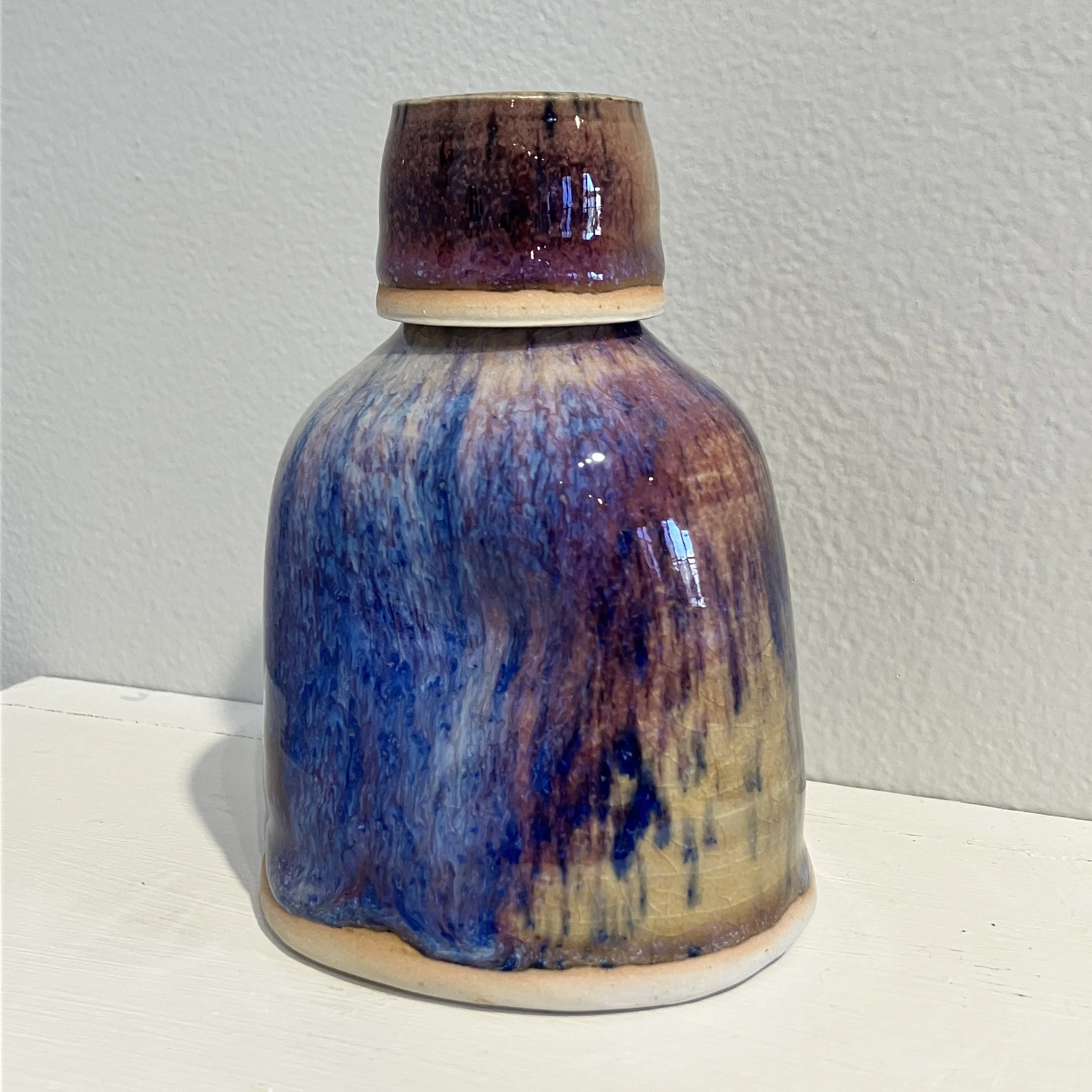
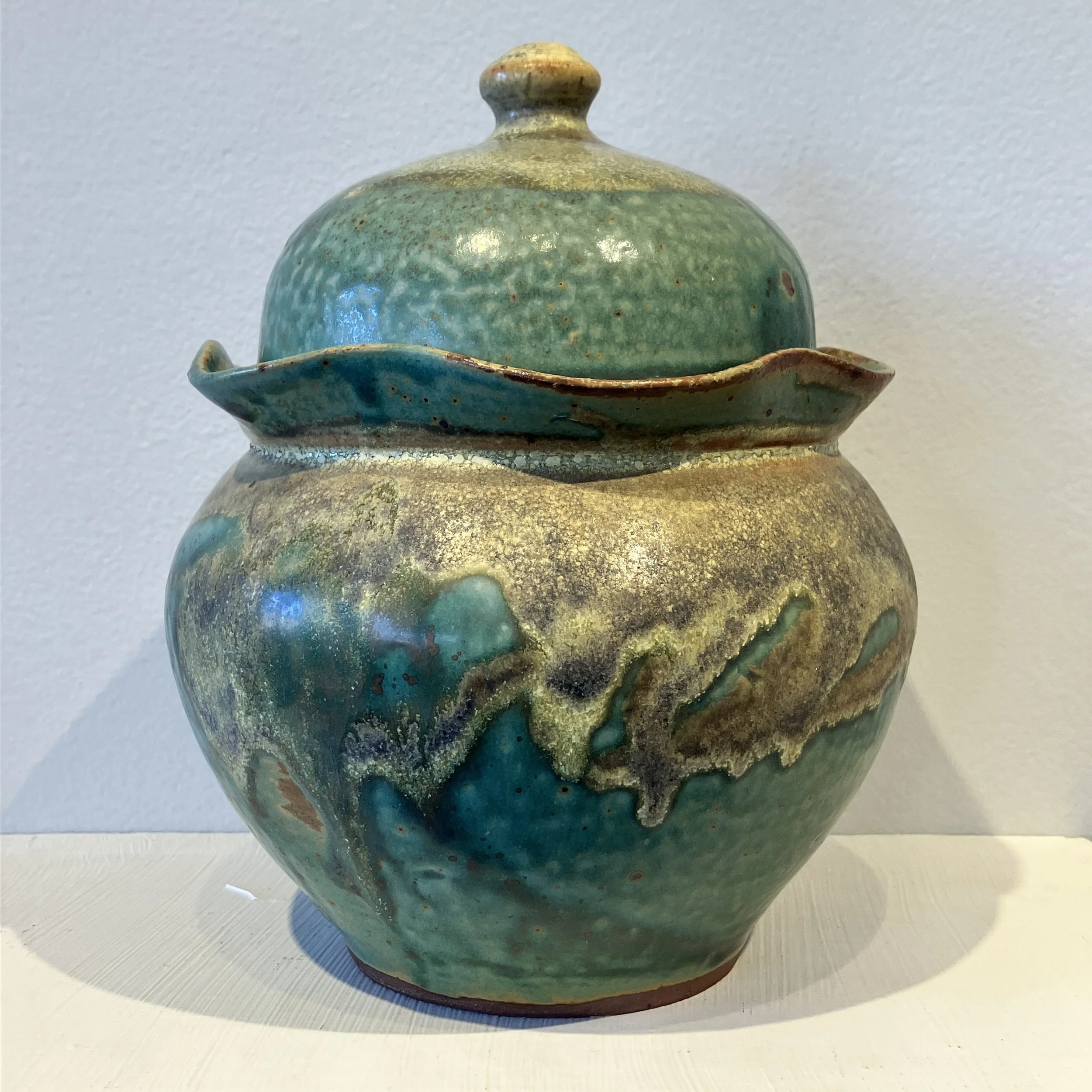
Aparna Krishnaswamy, a student in Jeanne Carreau’s Advanced Wheel Throwing class, created her Beach Blues bowl using Charlie D. White and Steel Blue glazes. Kyla Dolan glazed her Star-Fired Flask using Opalescence glaze and a cobalt splatter in Thrown and Altered with Carley Holzem. Louise Hagstrom's Lidded Pot features Mellow Yellow glaze over Satin Green glaze, and was also made in Jeanne Carreau’s Advanced Wheel Throwing class. Stop by the Gallery to see these pieces and so many more, and to get all the glazing details from the Rising Stars Exhibition Guide.
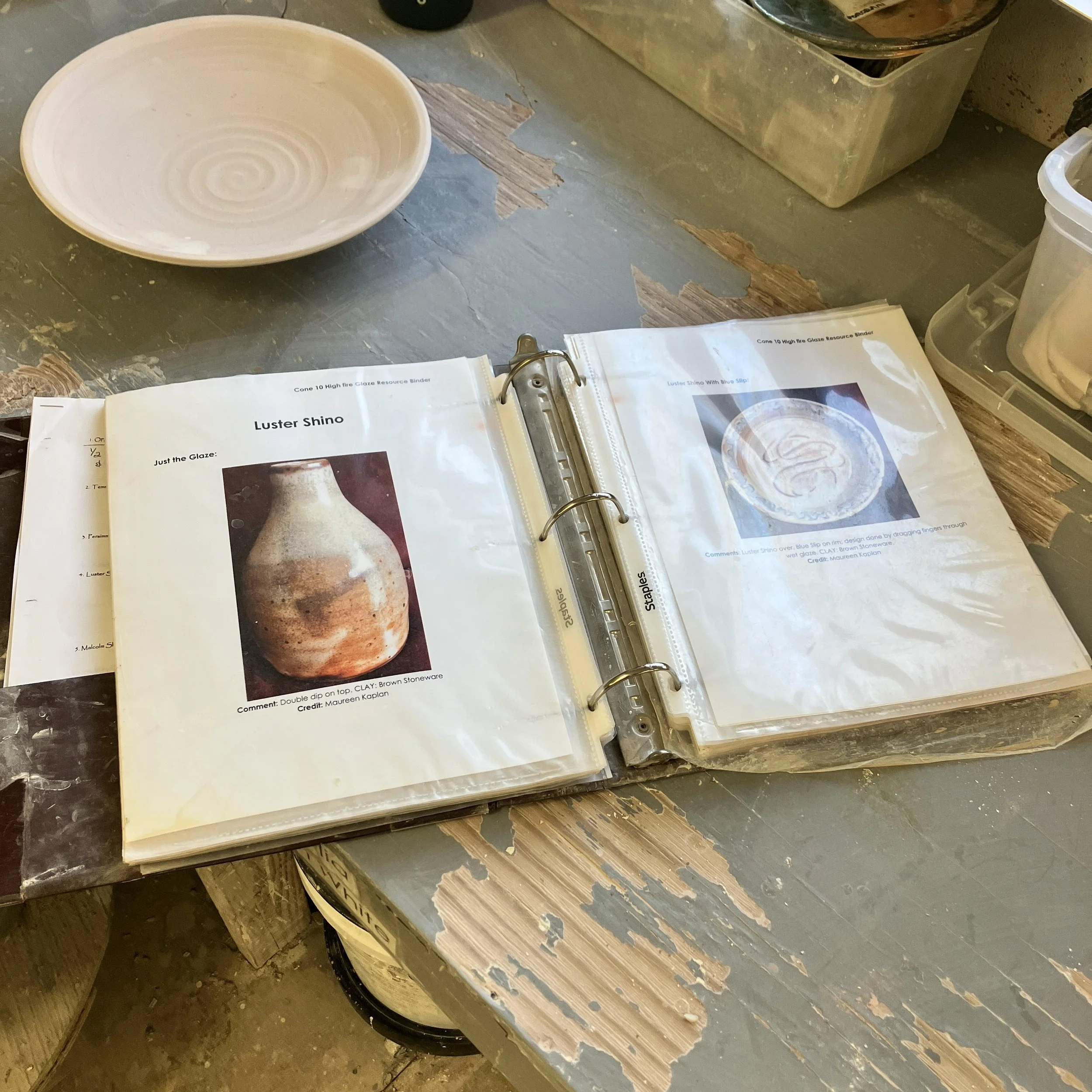
For those wishing to go deeper with their glazing skills, Clay Art Center has been offering glaze workshops that explore different techniques and combos using the classroom glazes. Ed Myder’s class on high-fire glazing covers the basic chemistry of Cone 10 reduction firing, expressive glaze application techniques, and tips and tricks for preventing run-off. The Cone 6 glaze workshop with Jamie Lee focuses on her highly effective method of glaze testing, which helps the artist get the most information possible out of each test. Both workshops consist of two studio sessions and a critique in the Gallery, where students have the opportunity to share results and gather even more glaze results from fellow students.
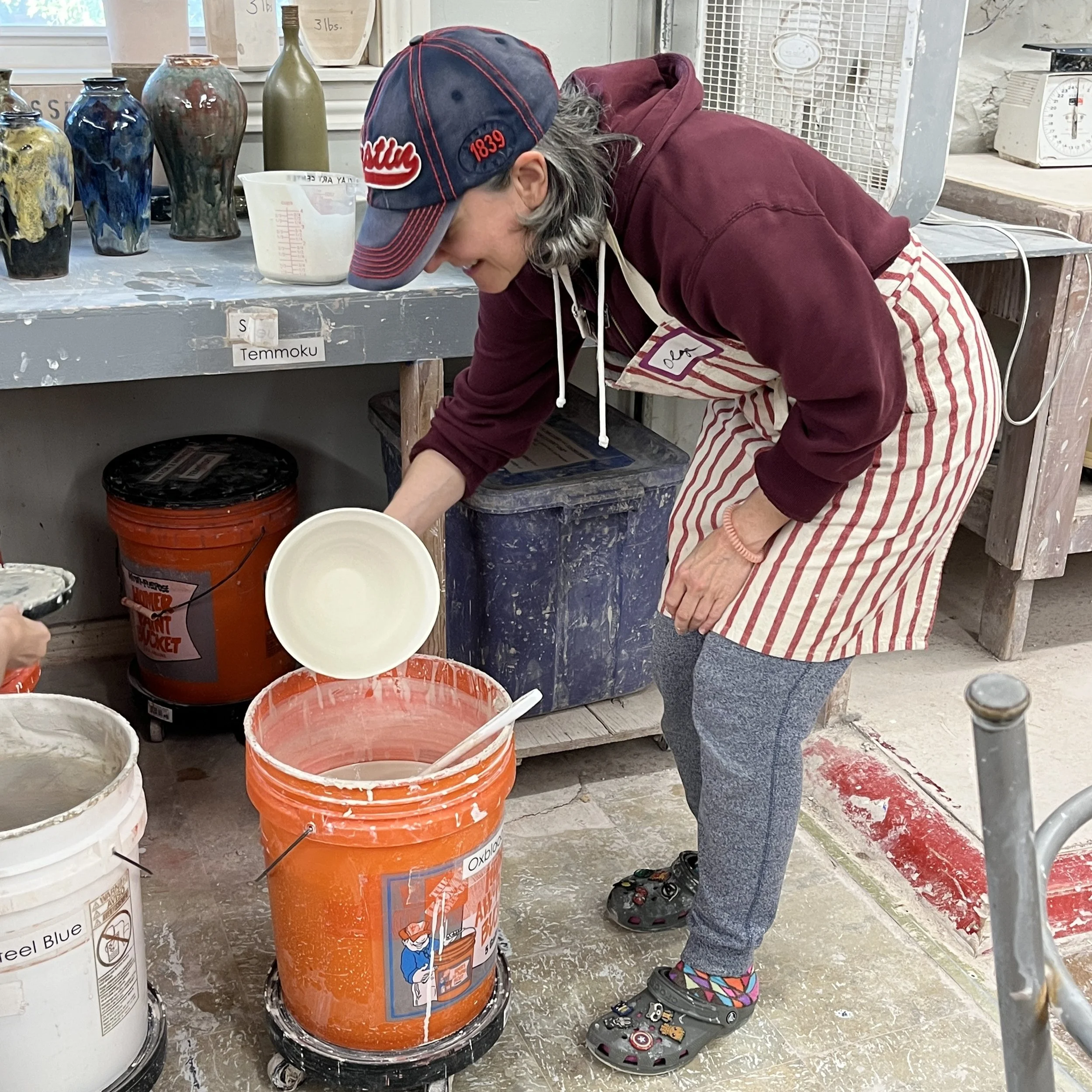
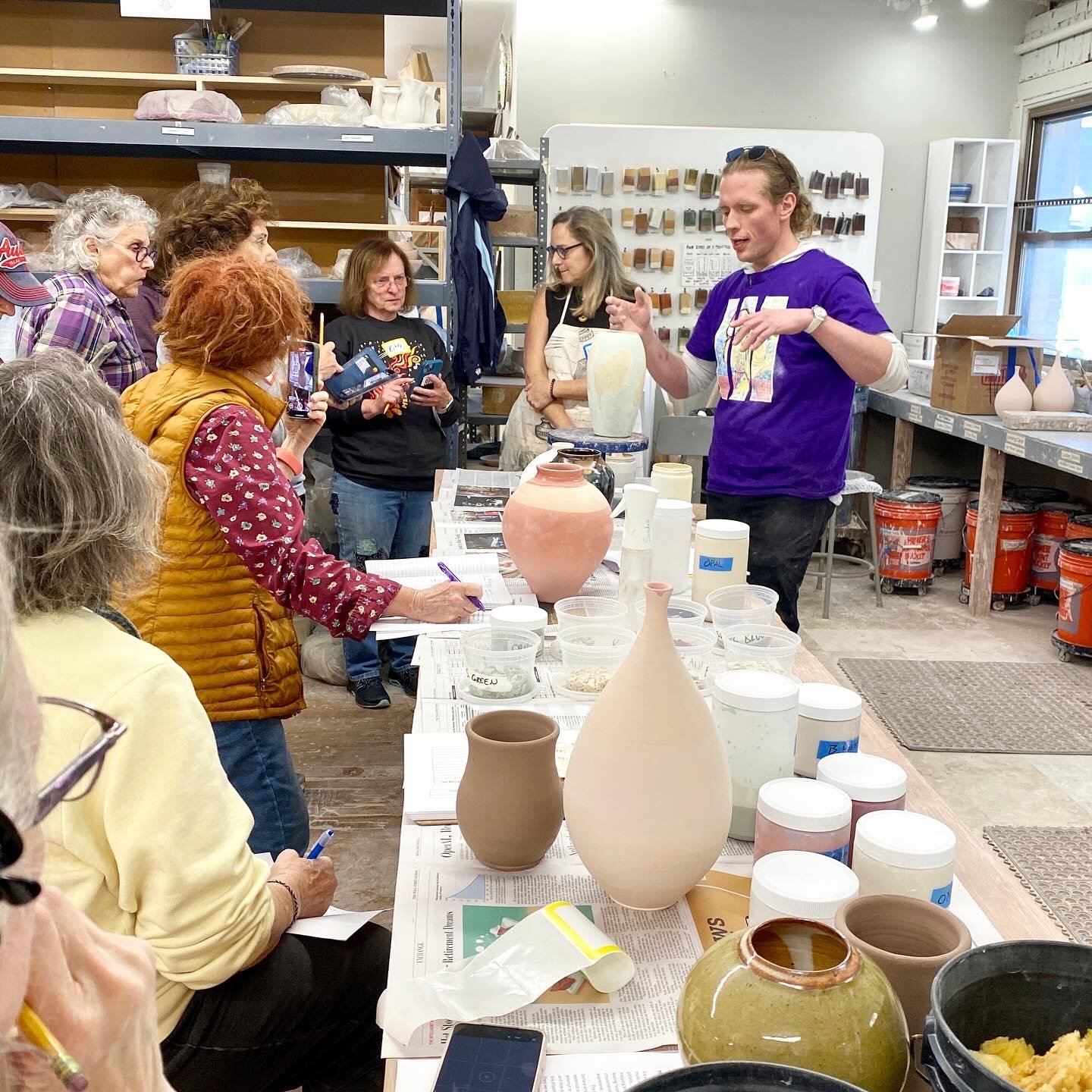
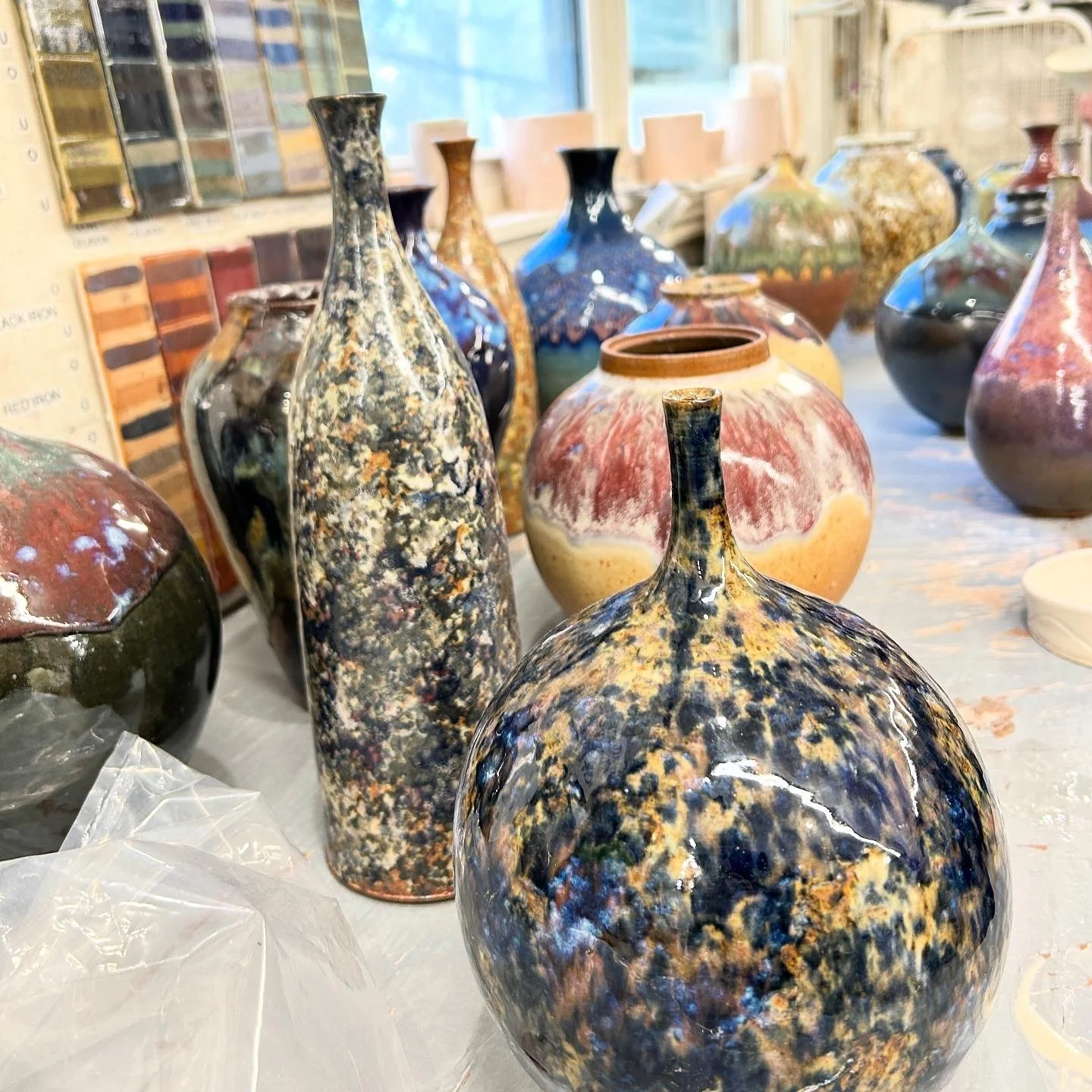
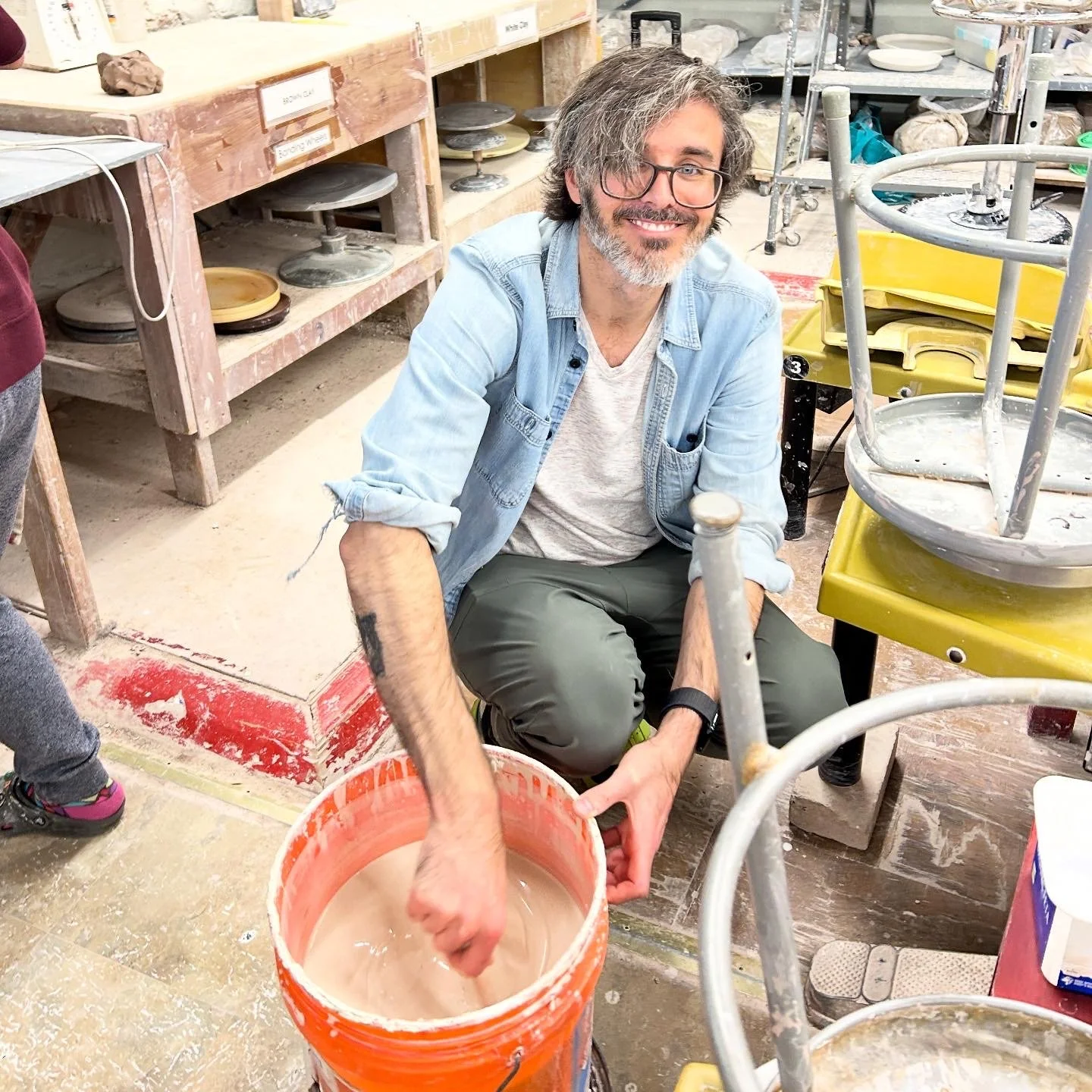
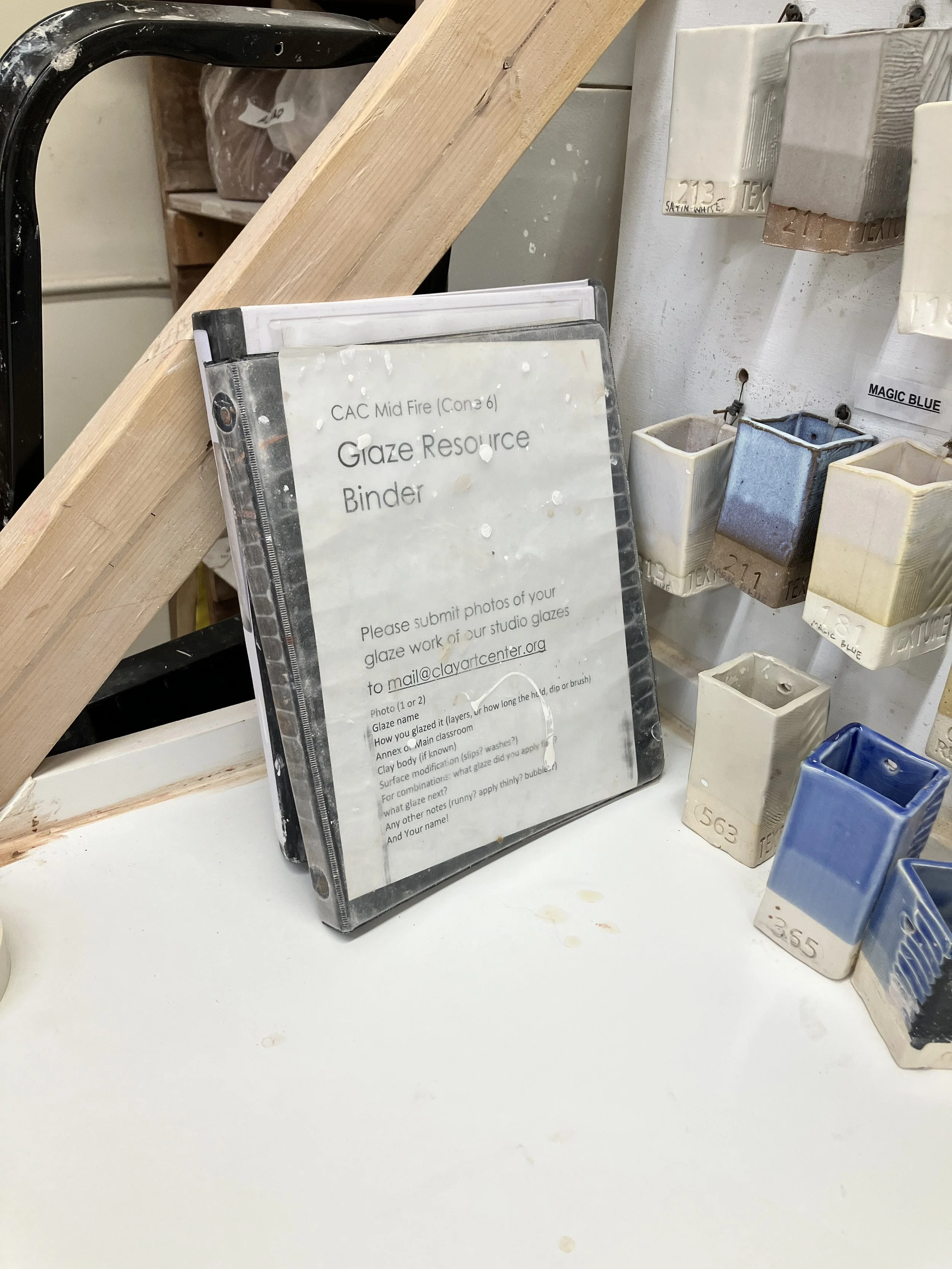
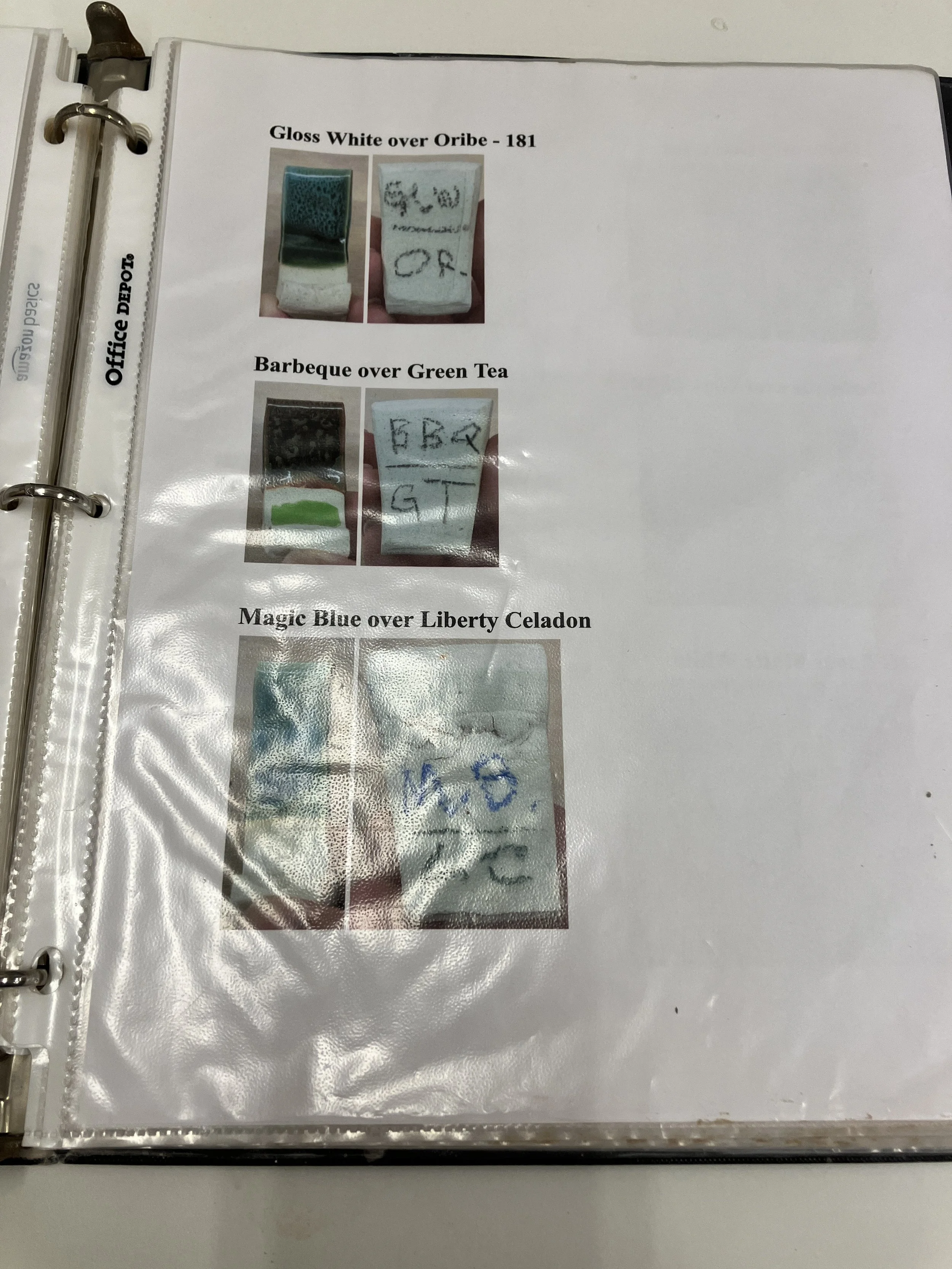
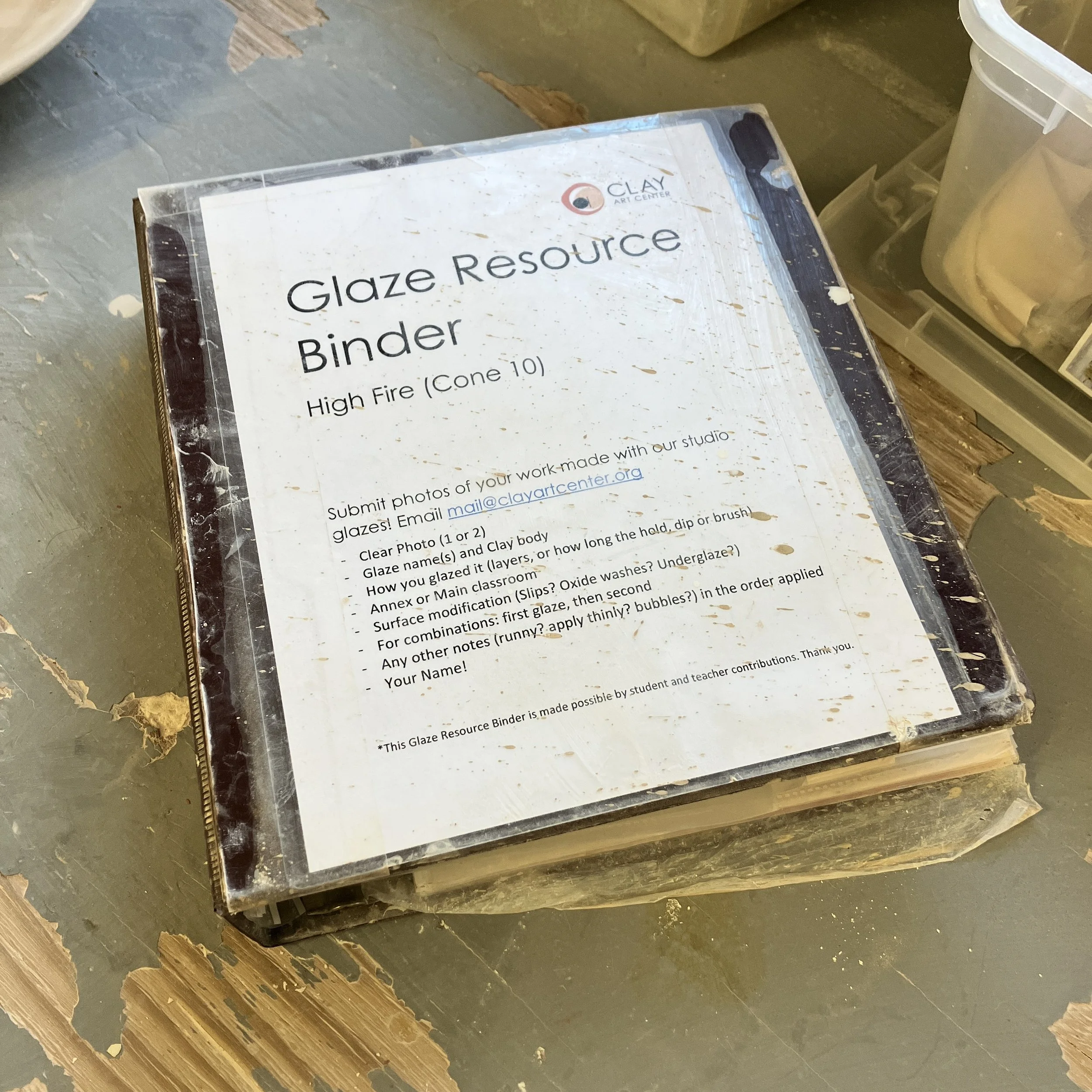
Interested in learning more about the wide world of glazing possibilities? Both the Annex and Main Classrooms are equipped with glaze binders, located by the buckets of glazes. These binders record the results of previous students’ and teachers’ experiments with the classroom glazes and show different glaze combinations and applications. They are great resources for finding new inspiration and escaping the glaze rut. The best part? These binders are living documents; if your own experimentation with the classroom glazes leads you to a new finish that you love, you can add it to the glaze binder. To contribute to the binders, simply email mail@clayartcenter.org with the following details:
- Annex or Main Classroom
- One or two clear photos of the piece
- Glaze names and clay body
- How you glazed it (Layers? How long was the hold? Dip or brush?)
- Surface modification (Slips? Oxide washes? Underglaze?)
- For glaze combinations: first glaze, then second
- Any other notes (Runny? Applied thinly? Bubbles?) in the order applied