Earth Month: Reducing Water Usage
Clay Art Center staff and artists share their tips for reducing water usage this Earth Month.
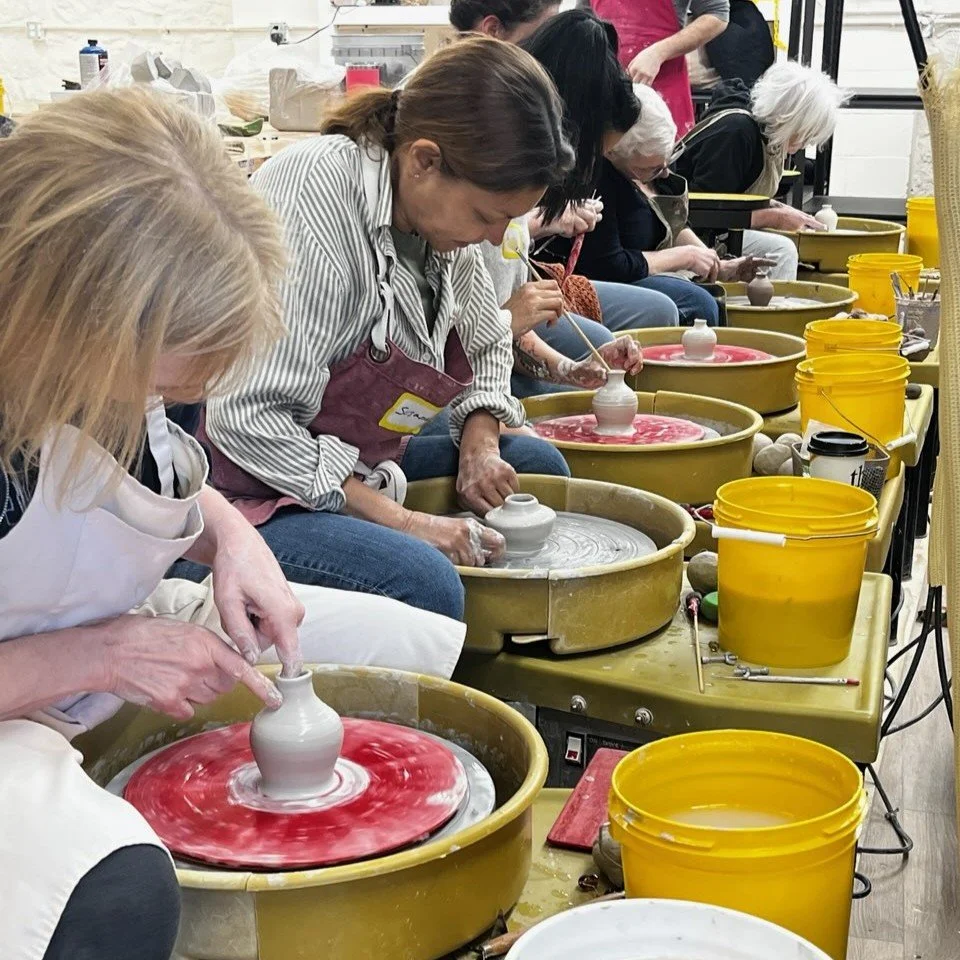
It’s always good to be conscious of water usage, so for Earth Month Clay Art Center staff and artists gathered their best tips for cutting back on the water needed for handbuilding, wheel-throwing, and cleaning up. While these practices are always good to keep in mind, they’ve also been particularly useful in the past few weeks when construction on Beech Street has disrupted water access. Together, we can all work to make a difference in our water consumption.
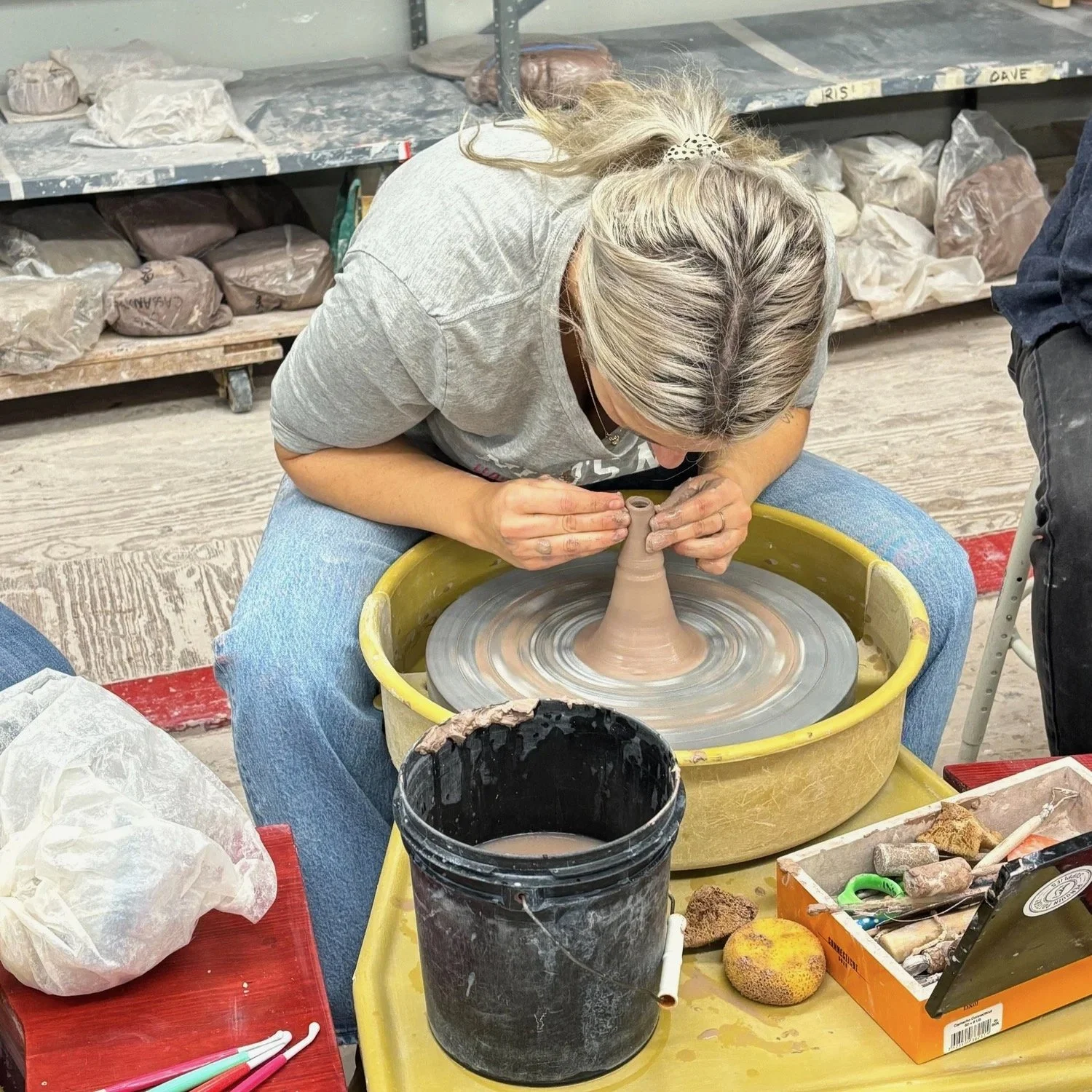
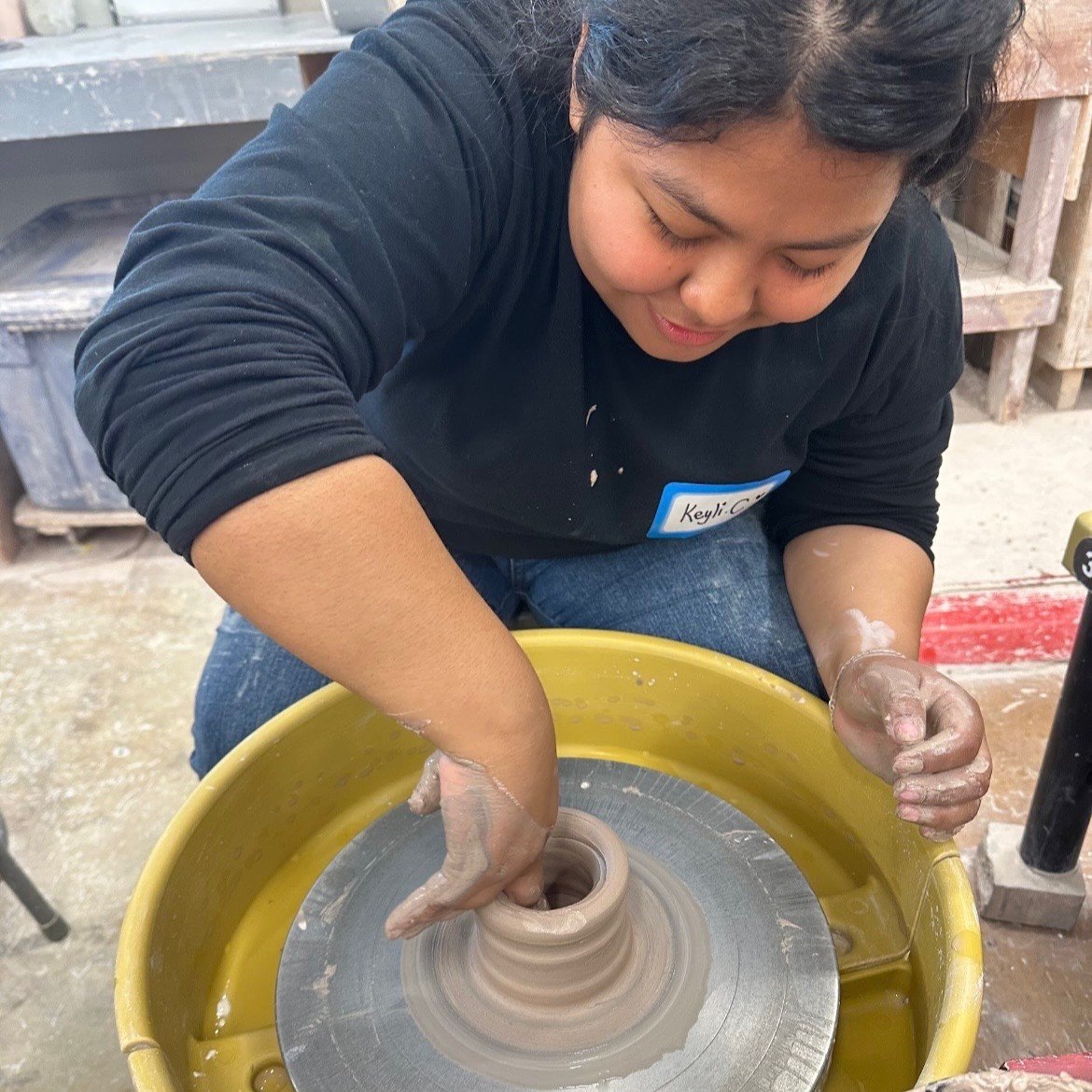
Wendy Weinstein, Development Director : “When filling my water bucket for throwing, I only fill about a third of the bucket, which is plenty. As I’m throwing and I need to rinse off my hands a bit, I dunk them in the bucket rather than squeezing the sponge over my hands. At the end of the throwing session, save that water! Add scraps and make your own slip from it.”
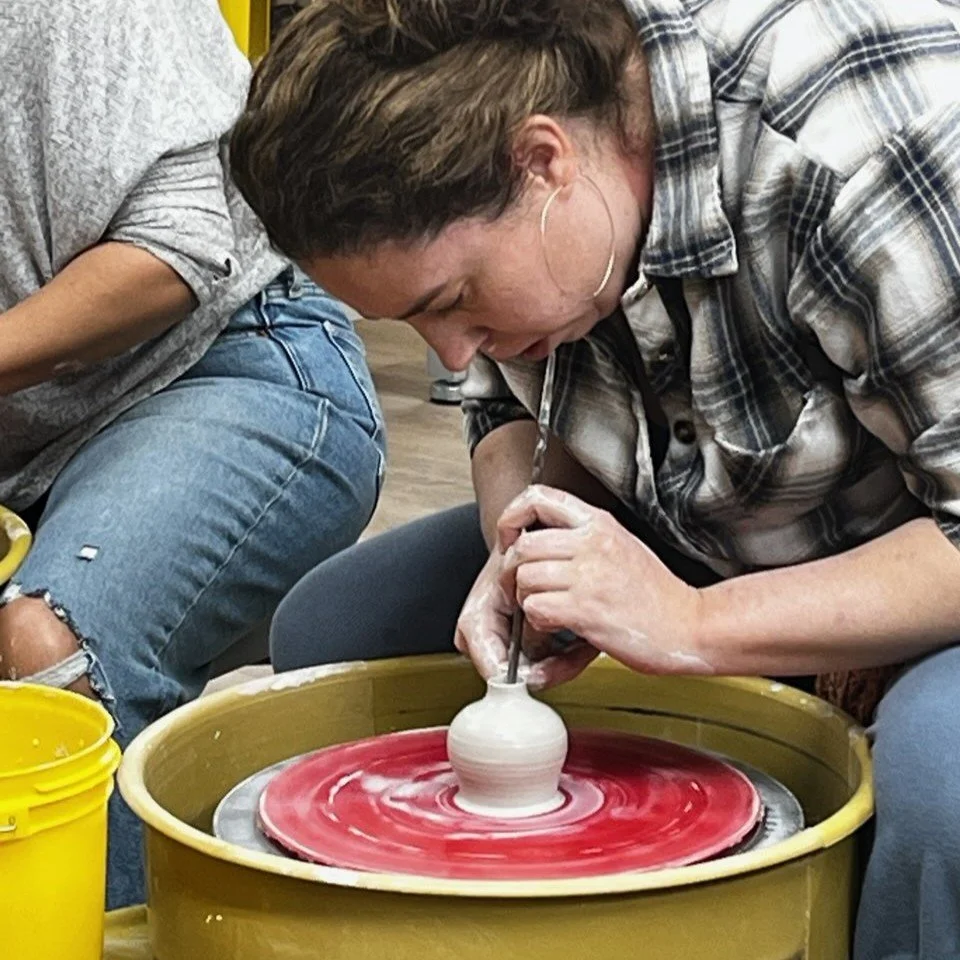
Robin Henschel, Artist: “The best place to start is to always use a bucket of water in your space when working and cleaning, rather than going back and running the sink. Beyond that, one of my throwing teachers would actually have us use a towel to dry off the outside of the clay after the first pull, and then throw dry and wipe our hands on our towel as needed. The tips of your fingers are enough to manipulate the clay, and using less water keeps the clay stronger.”
Brian Barry, Community Arts & Offsite Programs Manager: “Don't let the sink run continuously while cleaning your tools and splash pan! The splash pan can be effectively wiped out with a sponge first. Also, rinse the tools in the buckets in the sinks and then just do one quick rinse with clean water. “
Mara Gross, Artist: “Make sure you wrap your pieces really well! Then you don’t have to constantly add water to rehydrate the clay. If your piece is too wet to work on when you unwrap it, that’s easy to solve with a fan or a few minutes of exposure to the air. Keeping the piece well-wrapped and moist is better for working the piece, too!”
Emily Peck, Executive Director: “There are tons of resources available for the environmentally-conscious potter, and we are learning more all the time. You can access articles, educational materials, and community discussions through the NCECA Green Task Force.”
August Brosnahan, Studio Manager: “Reducing clay waste reduces water usage! While throwing, I scrape the clay that has built up on my piece or my hands off and into a small pile on the wheel. Then when I am done throwing, I wedge that pile of clay and put it back into my clay bag. Doing this reduces the amount of clay thrown into the reclaim bin, allows you to keep more of your clay, and helps you keep your throwing water clean. When I’m handbuilding, I follow the same basic principle and make sure to put any scraps back into my clay bag before they dry out so they don't have to be rehydrated later. This also helps with keeping my general area clean.”
Julie Buyon, Artist: “In general, you can use much less water than you think - just take less to begin with, and you can always get more. When throwing, you can also put a piece of newspaper over the table part at the head of the wheel. Then, after throwing, you simply pick up the newspaper and throw it away. This minimizes the water needed for cleanup, and reuses old newspaper.”
Jessica Zeng, Programs & Operations Manager: “When I need to clean up after handbuilding, I take a clean, damp sponge to wipe my tools - no bucket of water - and this gets the majority of the clay or material off the tools. Then I rinse with clean water in the sink afterward. I also like to rinse my clay-ed up tools in the sink's basin water, then do a final, quick rinse with clean water. “