Made In Earnest: Jon Townley's Inspiration & Process
Meet artist and instructor Jon Townley, and learn more about the processes behind the work in his solo exhibition, Made In Earnest.
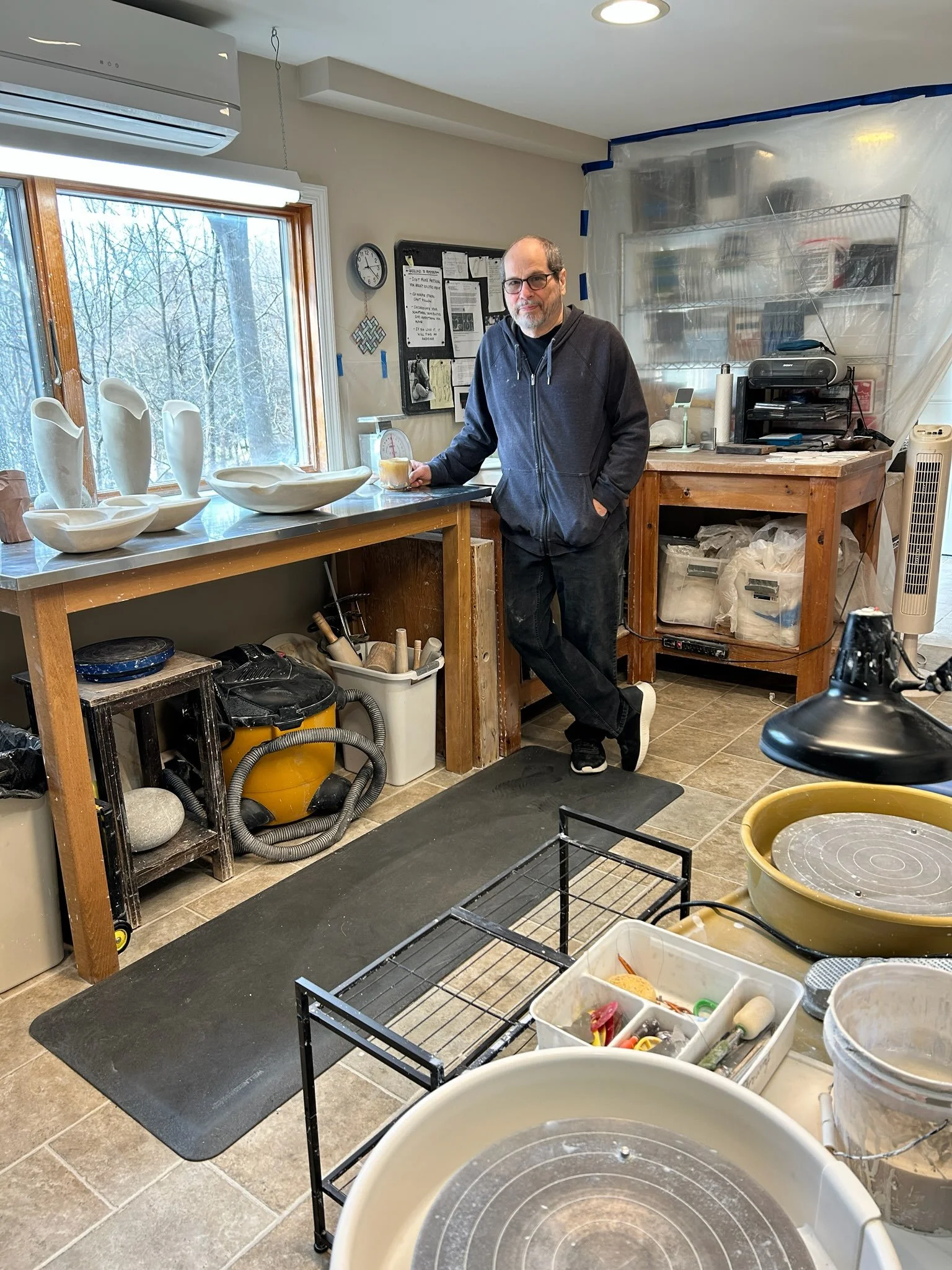
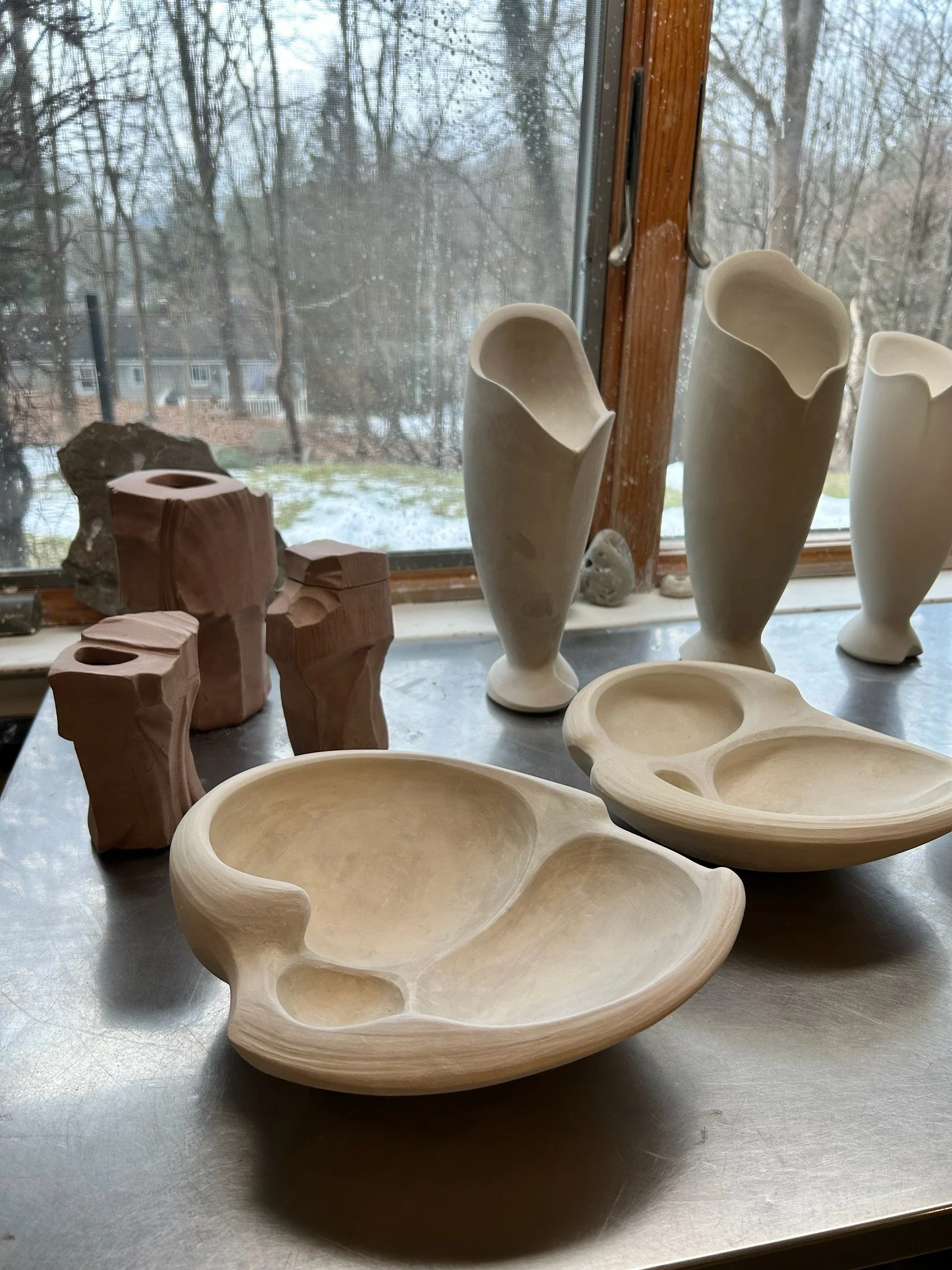
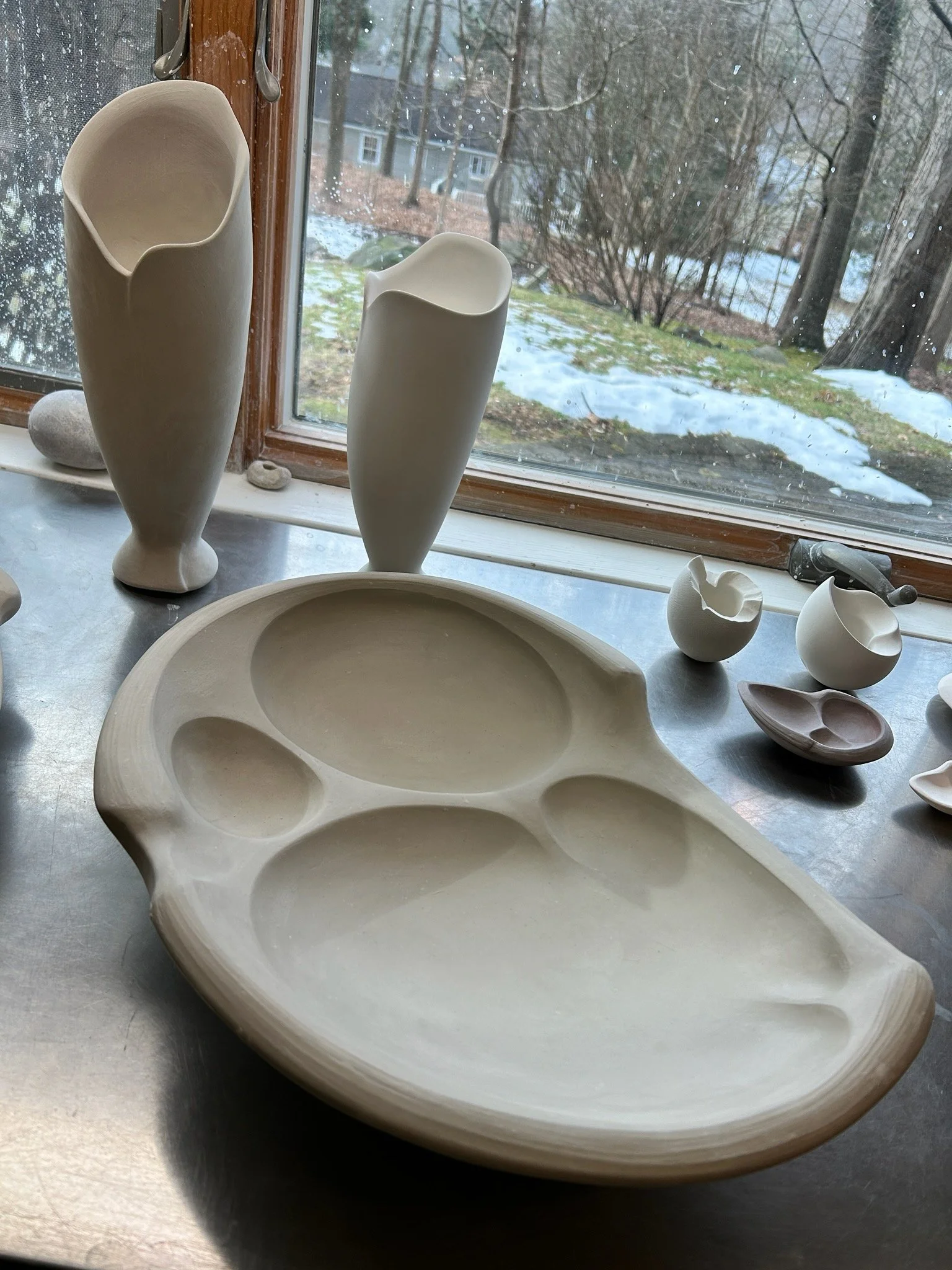
Visitors can now view Made in Earnest, a solo exhibition of work by Jon Townley and the inaugural exhibition in Clay Art Center’s Curator’s Choice series. Townley became interested in pottery at the age of fifteen, and he went on to receive his BFA in ceramics from Ohio State University. Since 2010, Townley has maintained a studio in Katonah, New York, where he has developed an original body of decorative and sculptural ceramics inspired by both Midcentury aesthetics and his fascination with the patterns and forces of the natural world. Townley also teaches handbuilding and advanced throwing classes at Clay Art Center, which also informs his work. Below, you can learn more about Townley’s process and where his work is going in the future.
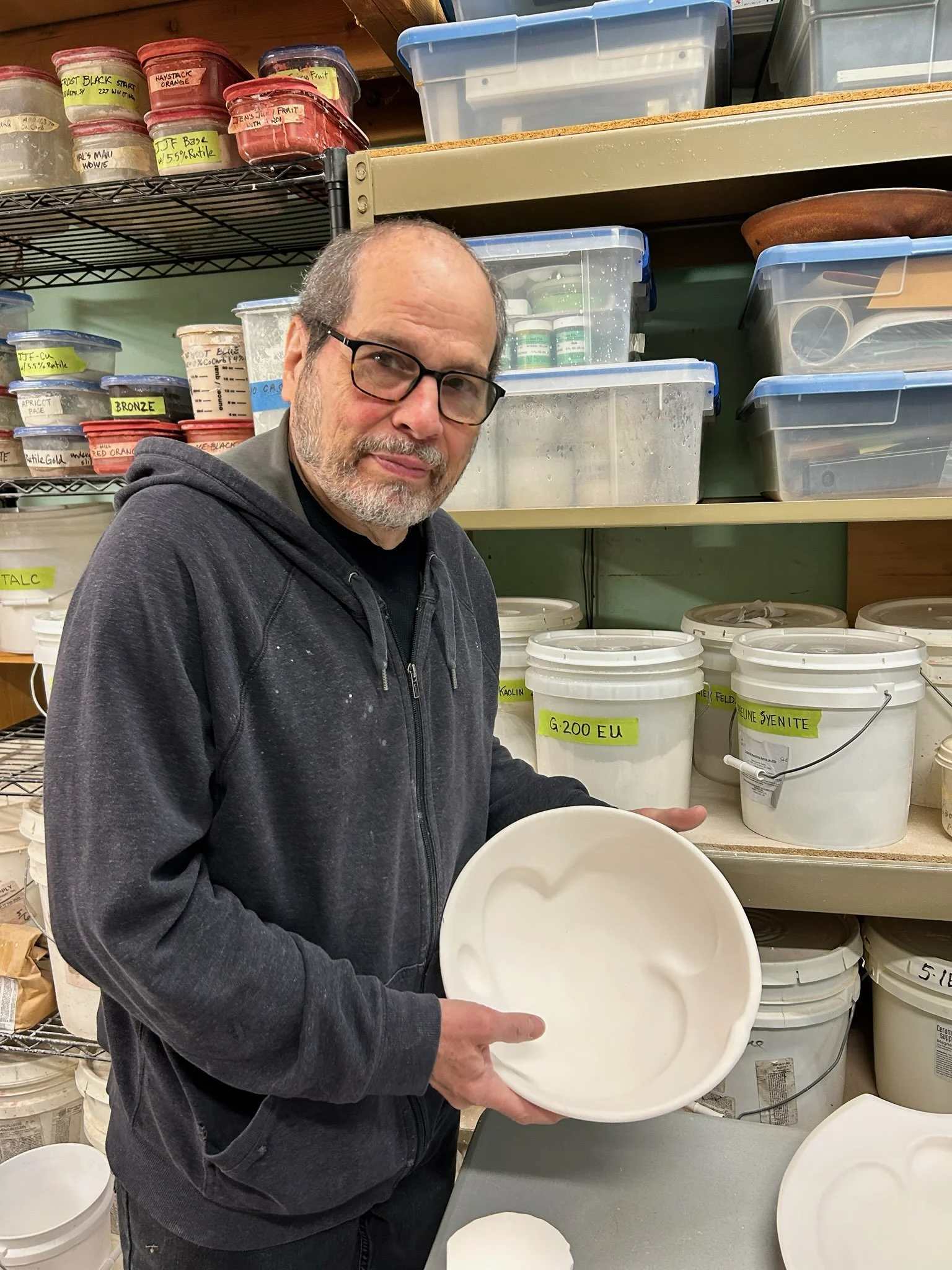
Q: What draws you to clay, as opposed to other mediums?
My artistic pursuits have not been limited to clay, as I’ve spent an entire career in design and illustration for commercial media of all types. But clay is the first material I can remember working with as a four year old kid, so I guess you could say it’s my first love. I’m drawn to clay’s incredible versatility as a material for creative expression. You can take so many different avenues with it. I think I’m also very attracted to the tactile nature of it, and it’s responsiveness to the human hand. When I work with clay I feel as though I’m literally in my element.”
Q: What is your initial approach to making a piece like? Are you arriving to the clay with fully formed ideas and a plan?
“I typically have a pretty clear idea of what I’m going to make before I sit down at the wheel or sidle up to the work table. I love the design process. I consider my ability to visualize something beforehand to be a huge advantage. - that and patience being my primary secret weapons. I work out my designs with extensive sketching. For my sculptural ideas I will often make small maquettes (miniature models) before I dive into the construction process. This type of planning helps me avoid at least some technical dead ends.”
Q: What was one aspect of your process that you maybe had to learn the hard way?
“For me, glazing has been perhaps my biggest technical challenge. I’m a slow learner, so even though I took the requisite glaze chemistry course at Ohio State, I never fully digested and became comfortable with the Unified Molecular Formula calculations. That said, even with deep technical knowledge of the chemistry behind glazing, I think everyone still struggles from time to time with the infinite variables in our process. We are artists, after all.”
Q: How did you first become interested in Midcentury aesthetics? For you, what is the defining feature of Midcentury ceramic that you carry forward in your work?
“I came to age as a ceramic artist in the late 60’s and early 70’s, a time when the influence of Leach and Hamada still reigned supreme over many university ceramics departments, and the iconoclastic influence of mid-century abstraction pioneered by Peter Voulkos, Don Reitz, Ruth Duckworth and many others was standard grist for the mill, so I was inescapably immersed in the aesthetics of great artists of the time in both ceramics and other disciplines, especially sculpture. While I’m always looking forward to find fresh ideas and influences, I still return regularly to drink from those earlier fountains of knowledge.”
Q: How does teaching influence your practice?
“Teaching has informed my creative practice in many important ways. First of all, having to stand in front of a group of inquisitive adults every week and present your ideas convincingly forces one to get clear on exactly what those ideas are and how to articulate them in a way that is both relatable and memorable. Also, just spending time in class with other artists who share a common goal to improve themselves is enormously inspiring. My students frequently ask questions that compel me to do deeper research on unfamiliar techniques, or to investigate the work of a new artist, so while I’m in teaching mode, I’m also in constant learning mode.”
Q: Do you have a next frontier that you're looking to explore in your work?
“This past year has been an especially fruitful time for my creative process. I have reems of design drawings and lists of technical investigation that lie before me, so I suspect my trajectory going forward won’t exactly be a straight line. That said, I intend to keep pushing further into the sculptural realm, possibly exploring much larger work in days to come. I also want to further expand my experimentations with alternate finishes beyond traditional glazing. At the same time I’m anxious to spread the word about my practice and reach a broader audience with my work. In truth, I’m feeling more potential right now than at any other time in my career.”
Q: What is one piece of advice that you would give another artist?
“One additional point I’d like to emphasize is that I believe every artist, whether a beginning student or a more seasoned practitioner, needs to cultivate within themselves a durable sense of adventure, play and experimentation, and to never allow the fear of failure to thwart attempting the unknown.”