Exploring the Archives at Clay Art Center
Clay Art Center’s nearly 70 years of history has produced a rich archival collection that opens a window on the past.
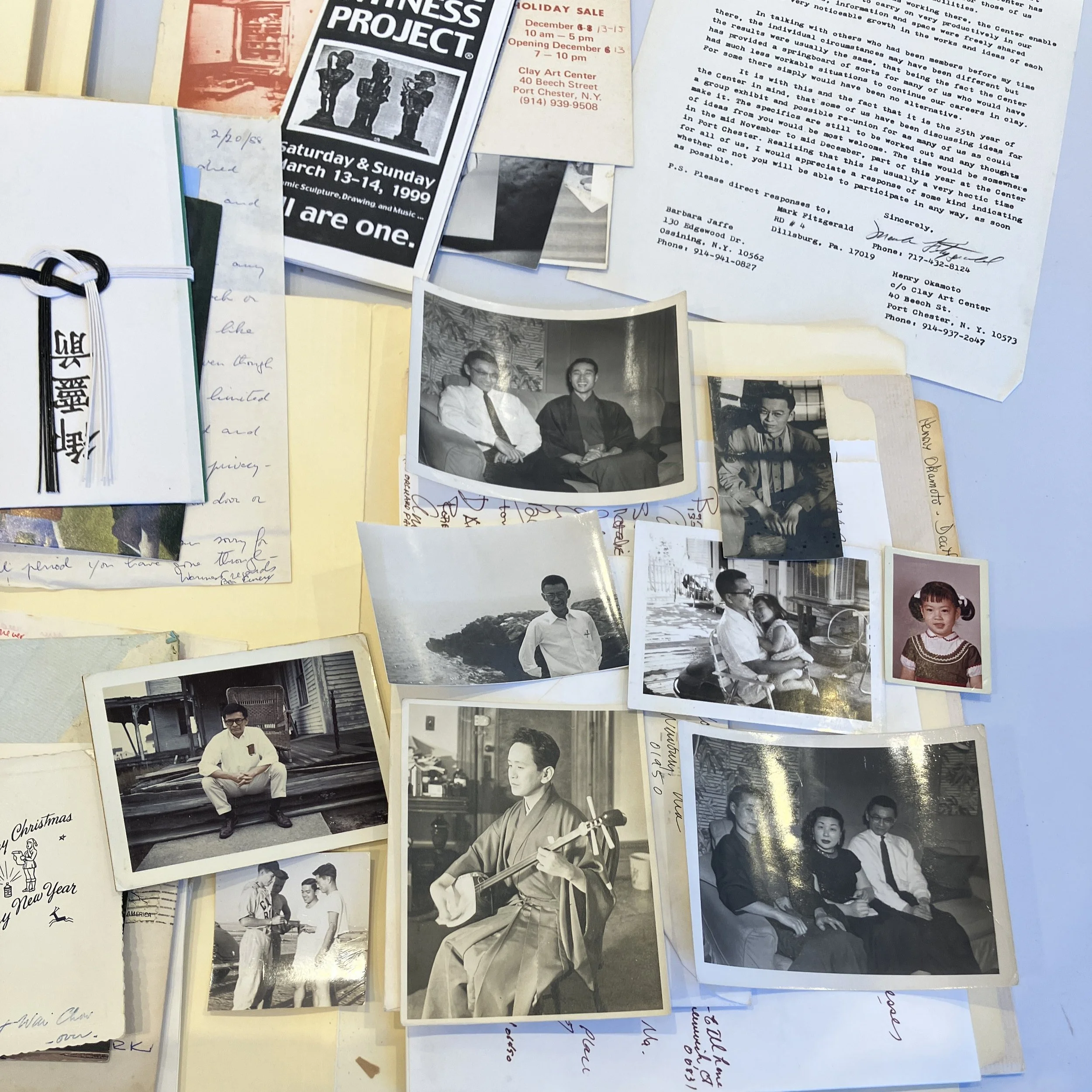
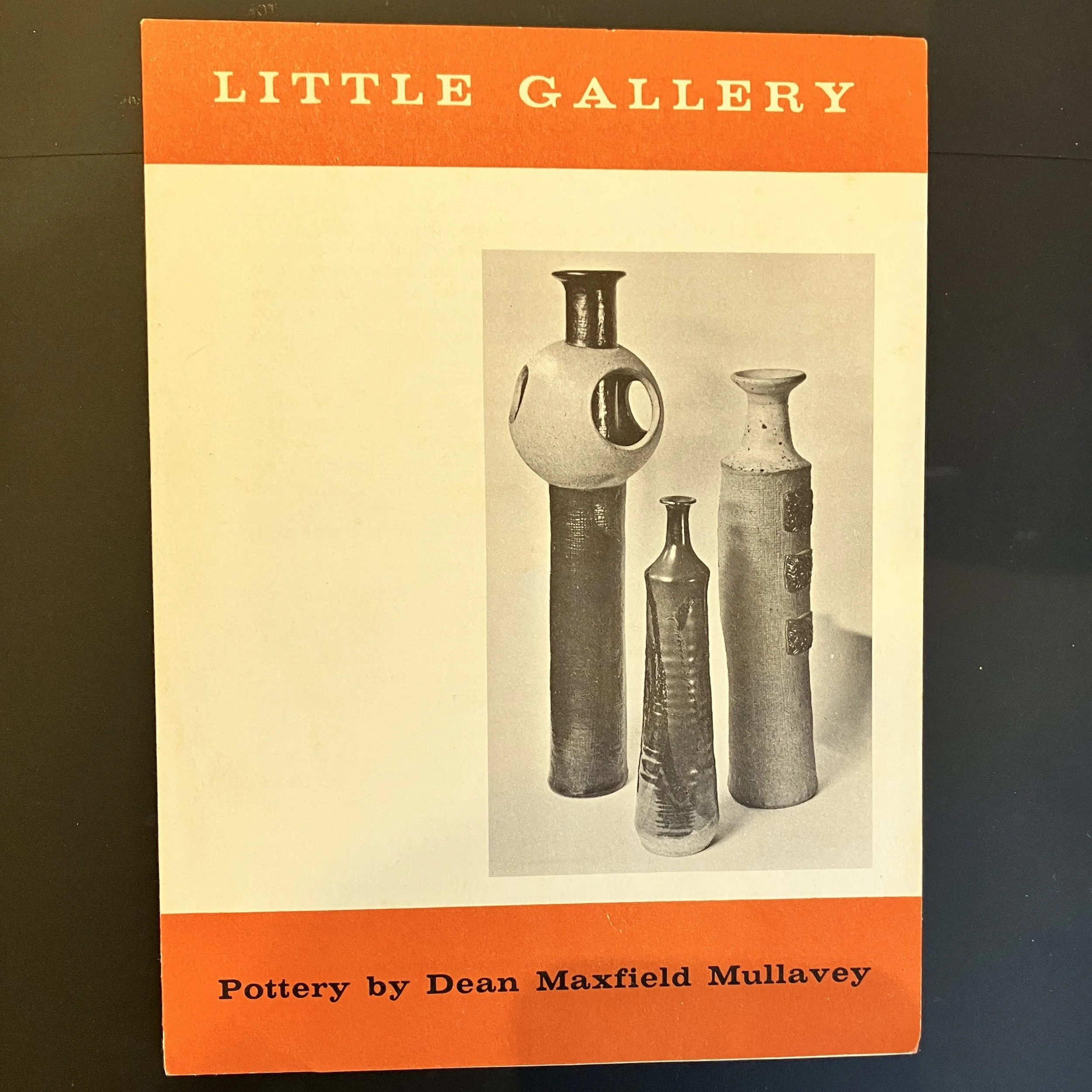
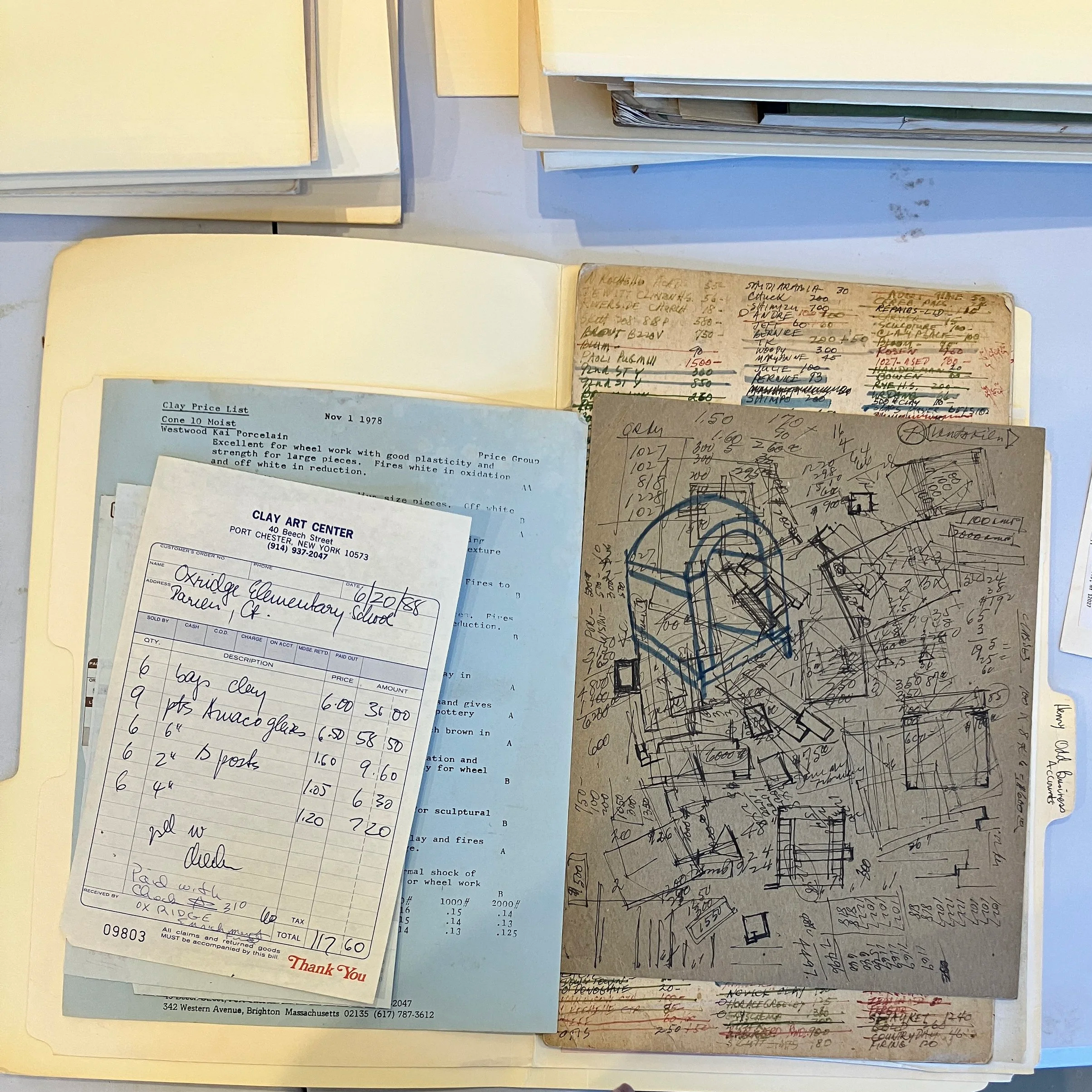
Archives preserve the records that document our collective past. Typically filled with letters, brochures, photographs, ticket stubs, notes, manuscripts, and all other manner of documentation, archival collections can bring light to the thoughts and intentions of people, and give us the context we need to understand our world today. Clay Art Center’s archive stretches back the nearly seven decades of its existence, and everything contained in it - from firing logs to exhibition brochures to the personal papers of founders Henry Okamoto and Katherine Choy - helps us to tell the story of the organization’s evolution. Archival materials like the examples below were integral for researching the Finding The Center exhibition, and contextualizing the historic pottery collection on display.
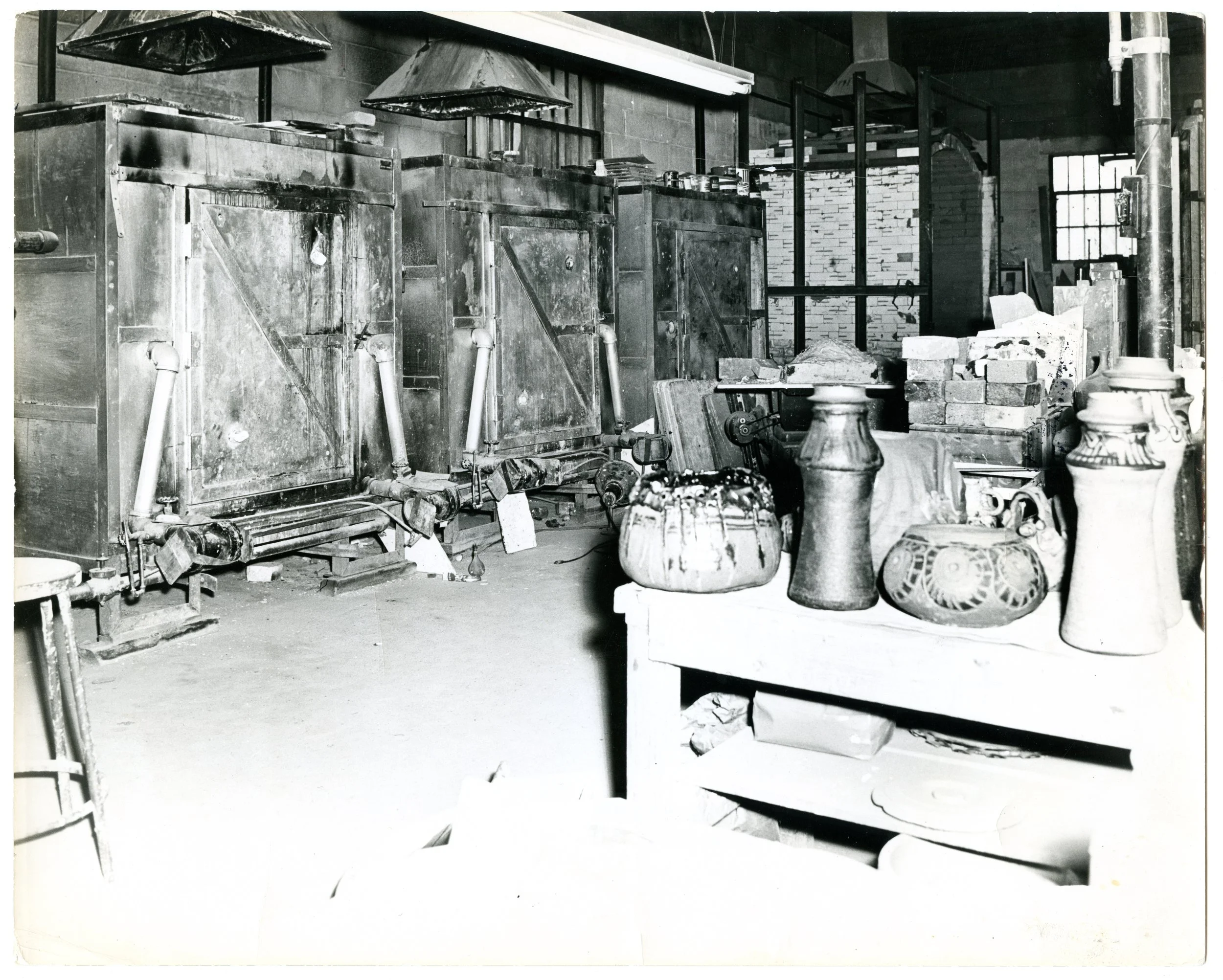
Three Original Alpine Kilns
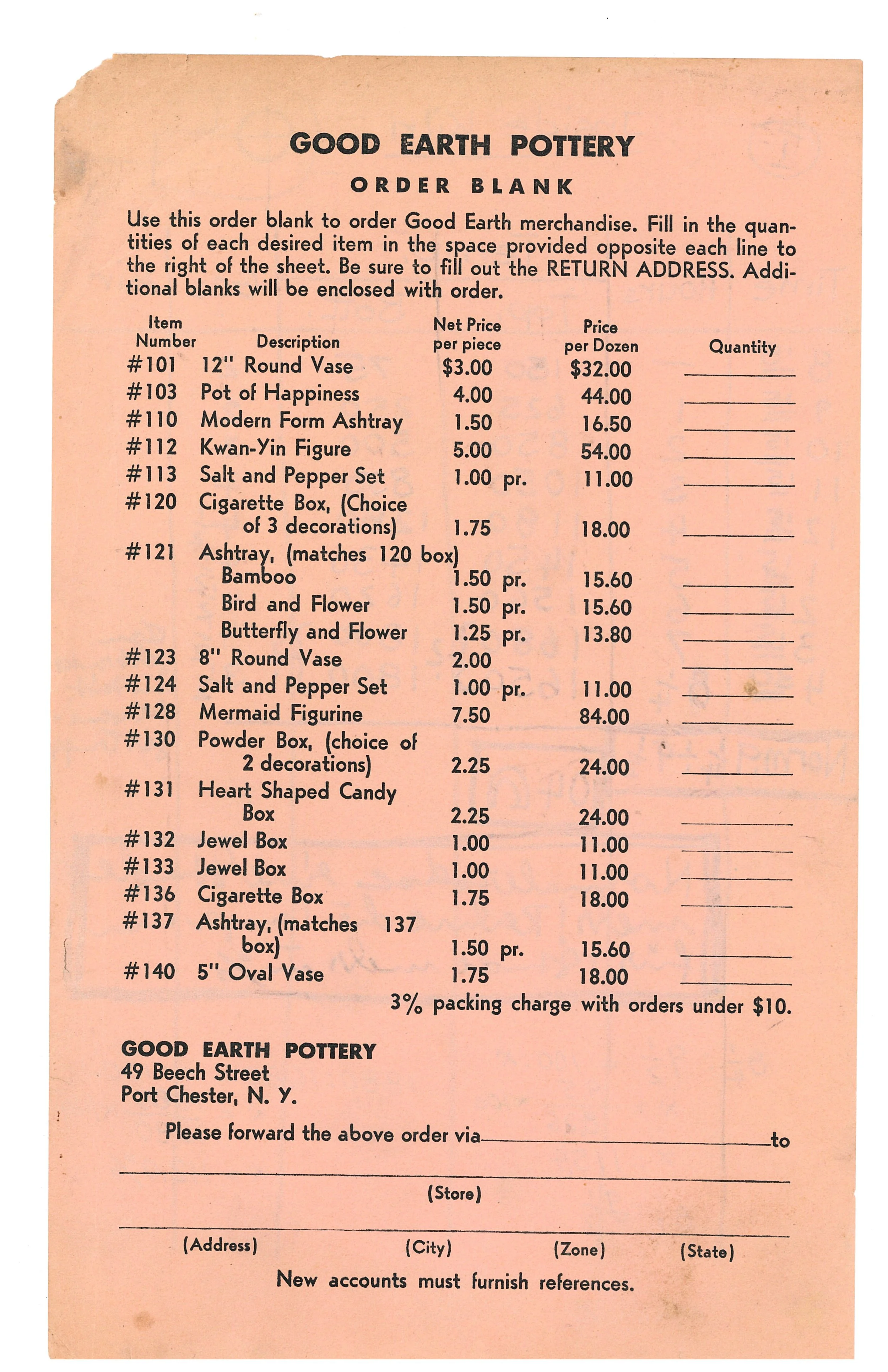
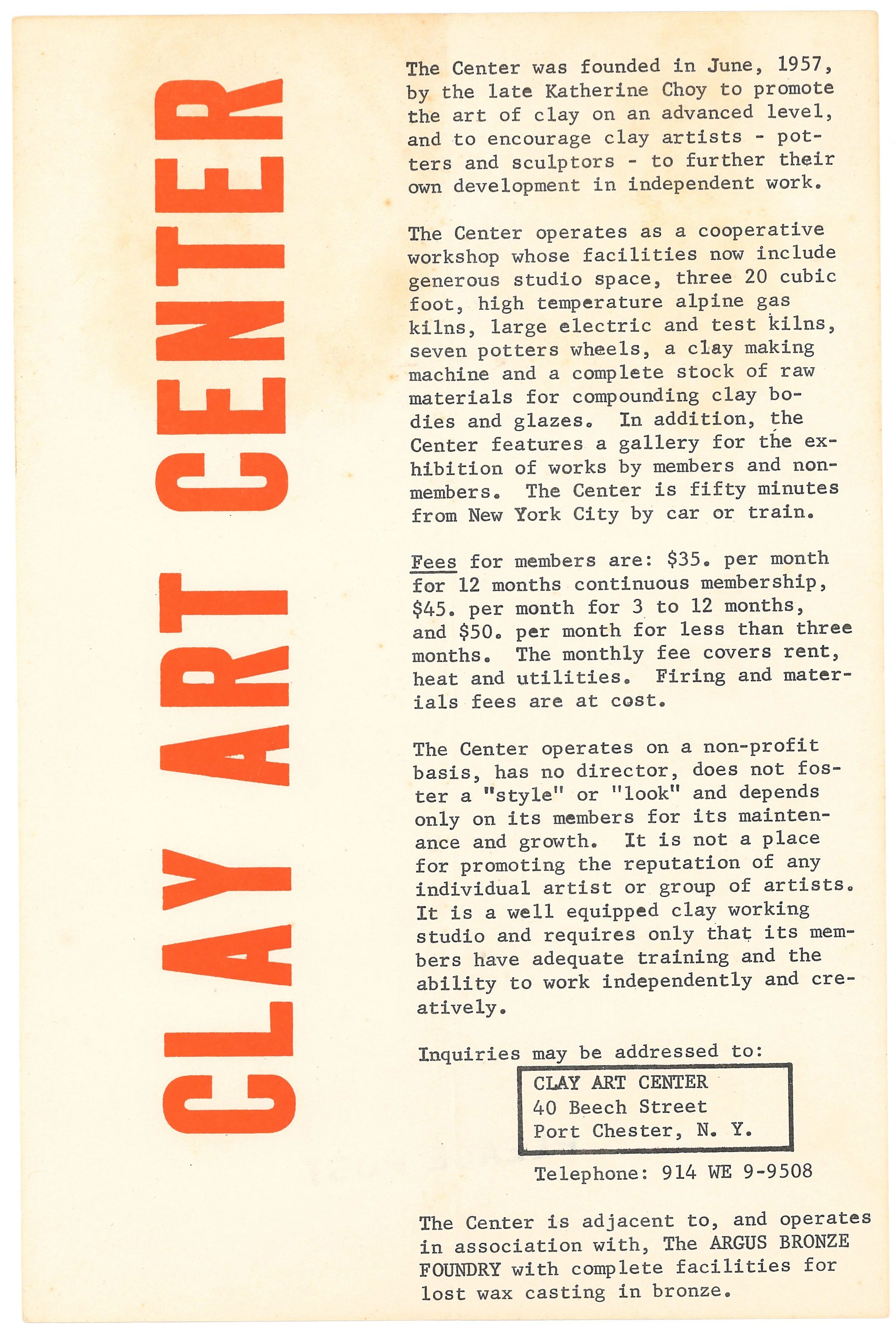
Katherine Choy and Henry Okamoto founded Clay Art Center at 49 Beech Street (just across the road from our current location) in 1957. The property they purchased was a former commercial ceramic manufacturer called Good Earth Pottery, which Choy had been working with to design a line of commercial ware. When the news reached Choy (then working as a professor at Newcomb College in New Orleans) that Good Earth would be going out of business, she wrote to her friend Okamoto to ask his help in securing the property. Choy worked to raise the funds, and Okamoto (who lived locally) negotiated the sale. These negotiations are preserved in letters between the pair that survive in the archive. The letters also seem to indicate that the owner of Good Earth was a little difficult to work with; Choy reminded Okamoto to change the locks as soon as the sale went through, to prevent any interference. The archive also contains photographs of the three Alpine kilns that Clay Art Center inherited from the commercial pottery and many notes and schedules written out on old Good Earth letterhead, which have a certain irony as depictions of a collaborative, cooperative studio built on the bones of an old production pottery factory.
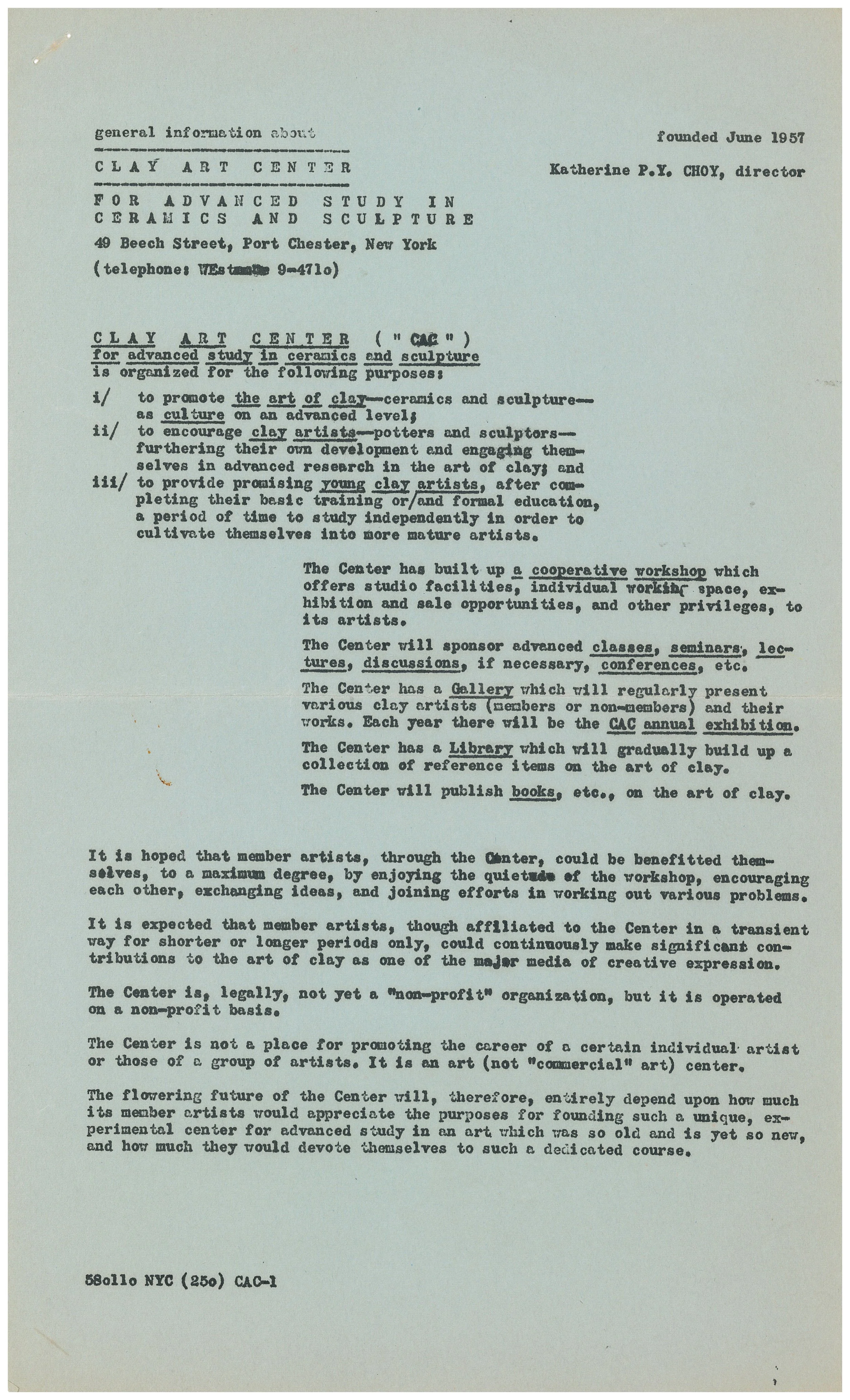
At the time Clay Art Center was founded, the idea of a collaborative shared studio where one could explore their own creative voice was a revolutionary one. Production potteries, where many people worked to bring a single design vision to life with exacting consistency, were the norm in the United States in the first half of the 20th century. These workshops and factories had become even more streamlined with the technologies and strategies of the Industrial Revolution. Cooperative ceramic studios, where artists gathered together to share resources but pursue their own creative impulses, did not exist on the east coast, and Clay Art Center was only the second one to be founded in the United States (the Archie Bray Foundation was established in 1951). Choy and Okamoto knew that the founding collective of Clay Art Center would have to be intrepid. In the Charter, laid out in June of 1957, the ideals of promoting clay as art and supporting established and emerging artists through a rigorous collaborative environment were enshrined. At it’s conclusion, the Charter states, “The flowering future of the Center will, therefore, entirely depend upon how much its member artists would appreciate the purposes for founding such a unique, experimental center for advanced study in an art which was so old and is yet so new, and how much they would devote themselves to such a dedicated course.” Nearly 70 years later, it is safe to say that our community has appreciated Clay Art Center’s founding purposes, and those principles remain at the heart of the organization.

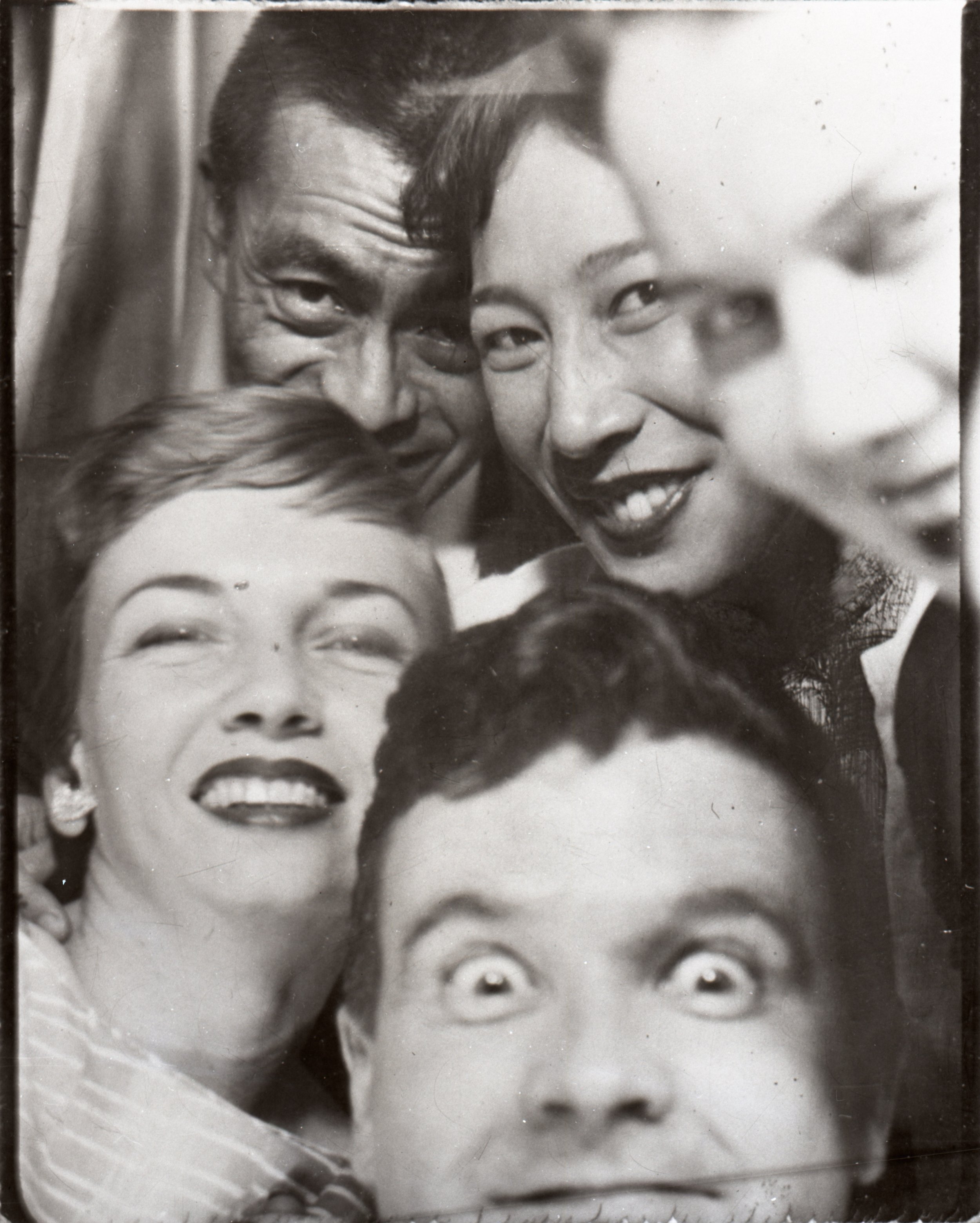
The archives at Clay Art Center hold many more treasures, and bring the history of the studio to life. For every picture of a potter bending seriously over their wheel, there is one of laughing faces, a poem, a letter describing heartbreak or thrilling new prospects. We are so excited to keep exploring them, and share the very human stories at Clay Art Center’s core.