"Existing loudly through art": Anika Major on Pride Month
Pride Month Featured Shop Artist Anika Major shares about how her queer identity and love for the rodeo shape her art.
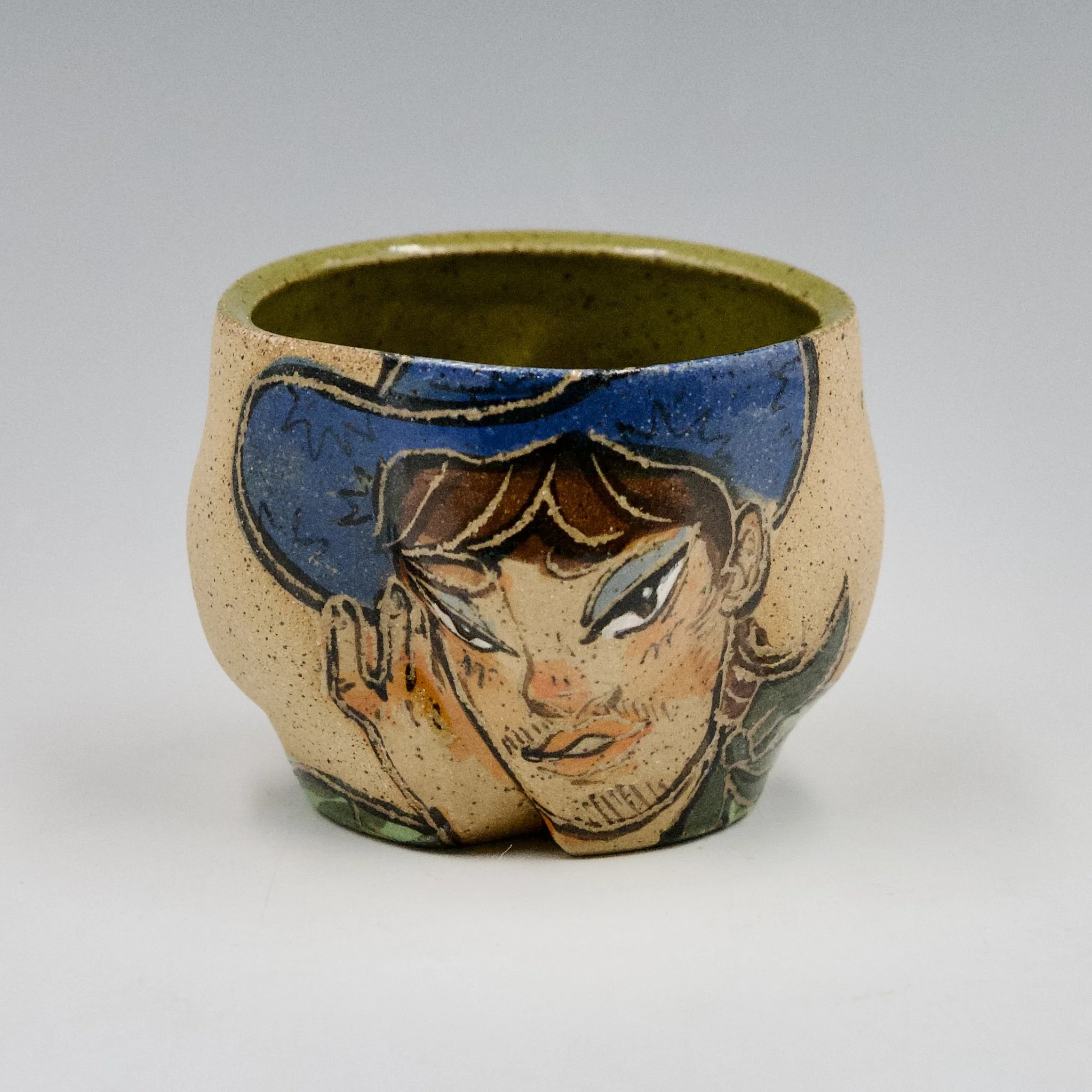
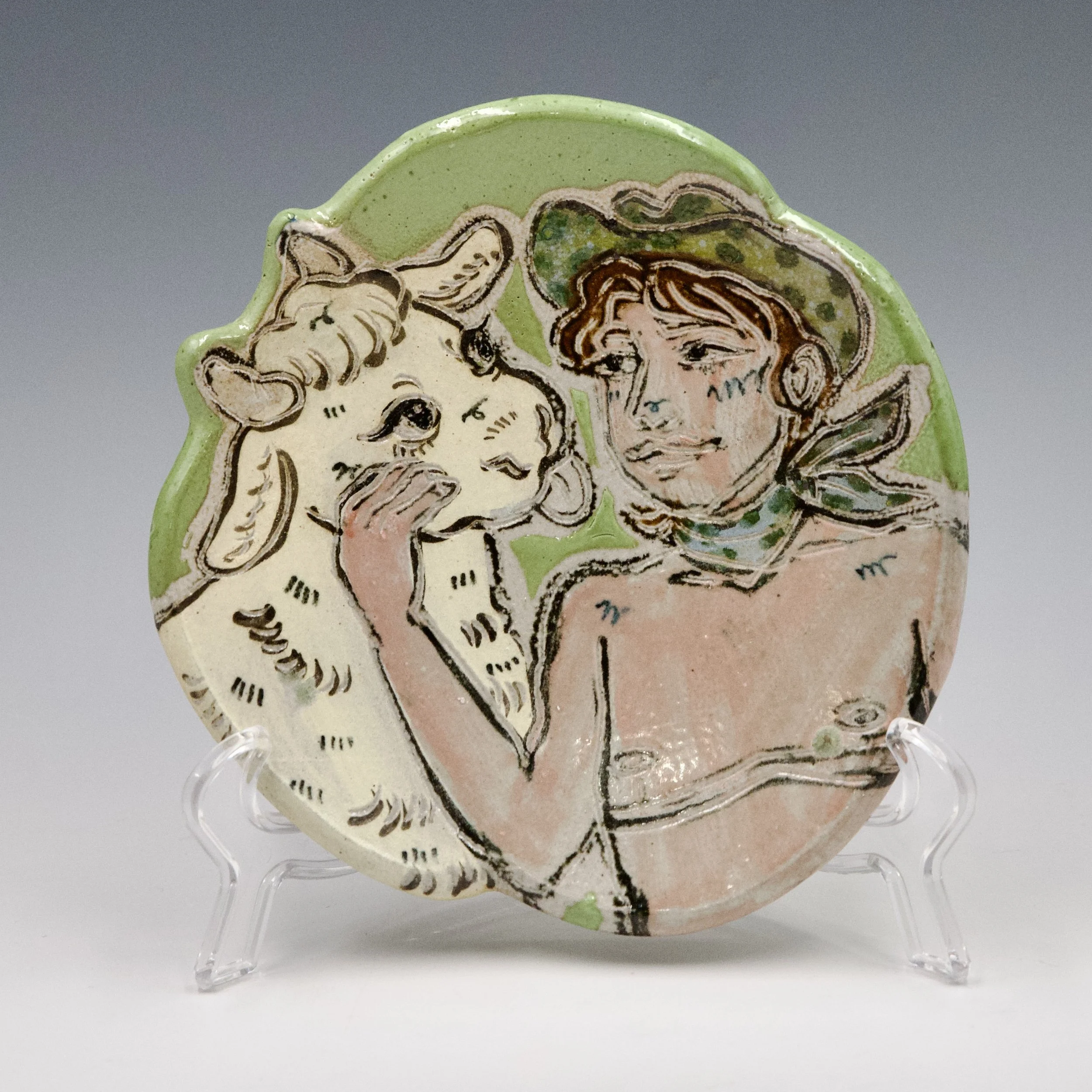
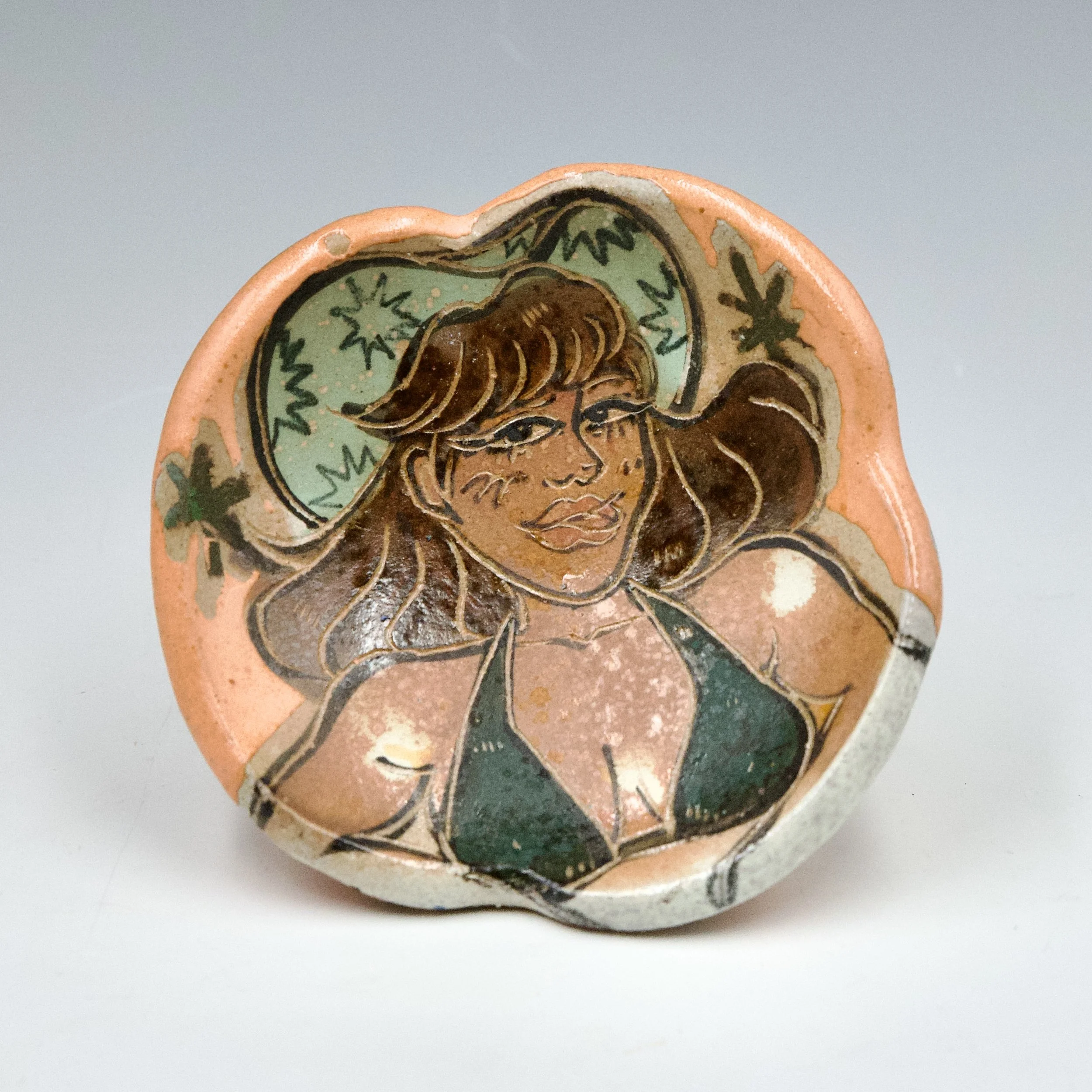
Clay Art Center is celebrating Pride Month with a Shop feature of work by Anika Major. A Texas-born ceramic artist, Anika now lives in Seattle, Washington, where she teaches clay classes and manages operations at Rain City Clay, while also maintaining full-time studio practice in Georgetown. Anika earned her BFA in ceramics and painting from the University of North Texas, and her expressive underglaze painted surfaces on voluptuous thrown-and-altered ceramic bodies reflect her dual passions for clay and figure painting. Her narratives incorporate both the glamorous pageantry of the romanticized American West and the everyday comfort of queer domestic life to create captivating pieces alive with warmth. Learn more about Anika and her work in the interview below.
Q: When did you first begin working with clay? Was clay your first love, or did you begin with a different medium?
I started working with clay in 2015, while working on my undergrad degree in drawing and painting. It was a second love that quickly moved to be an obsession! Learning to work with my hands in such a tactile material was exciting, as I’ve always been a 2D thinker. After a year or two learning the basics, I switched to a double major in clay and painting, and it was the best decision I could have made for myself. Drawing and painting is still an important feature of my work, but shape, feel, and functionality have become elements that feel essential to my being.
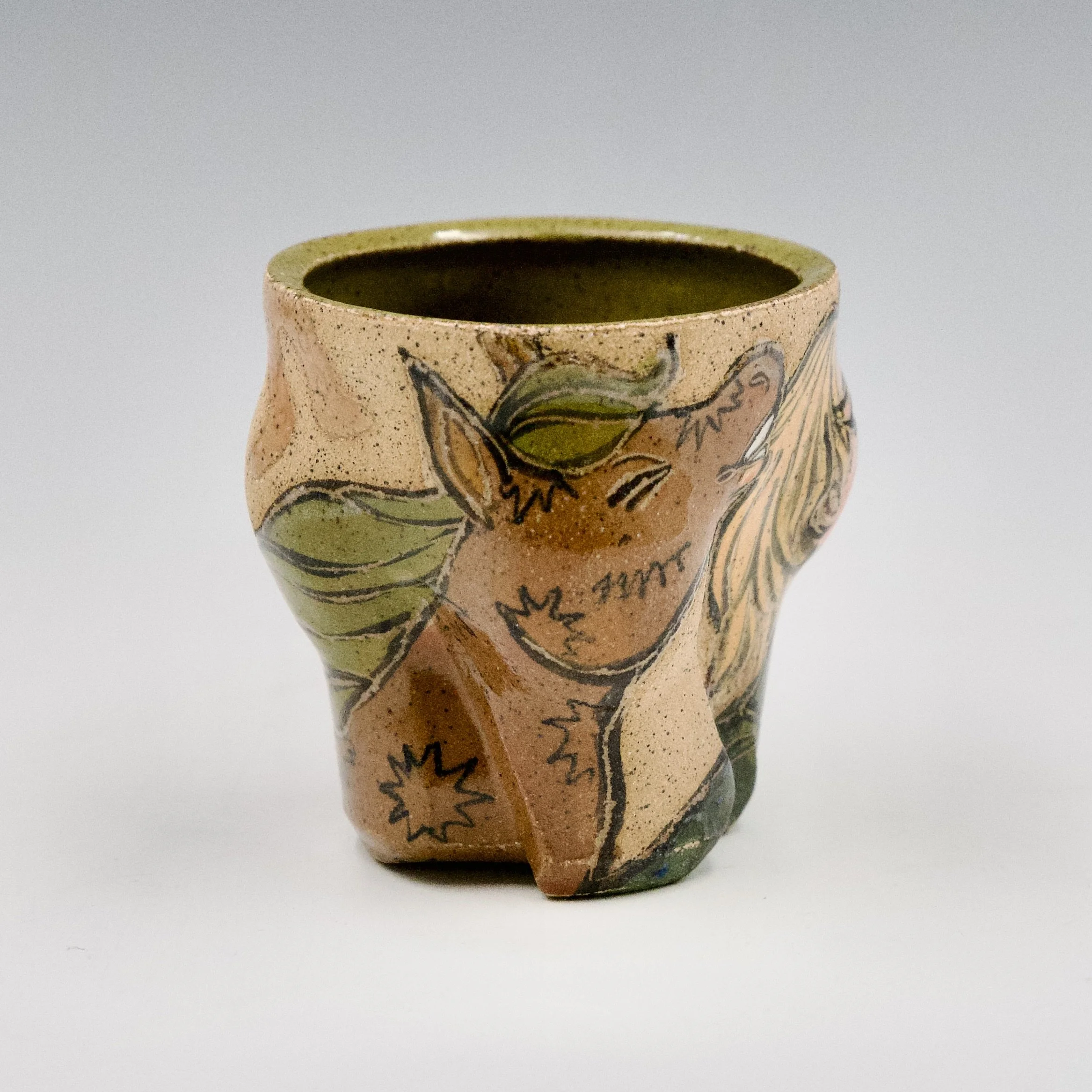
Q: How does your identity inform your work?
There’s a tenderness to queer identity that I love. Watching friends, loved ones, and strangers experience their own journeys of gender exploration feels like a gift. Making art, and pottery in particular, feels similar; each object is its own unique experience, and no two are identical by design. My identity as a queer person has evolved significantly over the years, yet existing loudly through art is a joy that has been constant. I love that my pottery serves as a vibrant, decorated form of self-expression from every angle, allowing me to share my experiences through my pots.
Q: How did you arrive at your signature style of plump forms reminiscent of the human body?
I’ve always been a figurative artist, so creating pots that imitate the people I see feels natural. I naturally ebb and flow between form and surface exploration, and found inspiration from old sketchbooks while developing the shapes I make. I want the forms to feel familiar and comforting; I think of the puffed out curves as a soft body, with rounded bellies and breasts; the angular bottoms, rims, and edges reminiscent of tucked knees, knocking elbows with friends, capturing that gentle experience of another person’s touch.
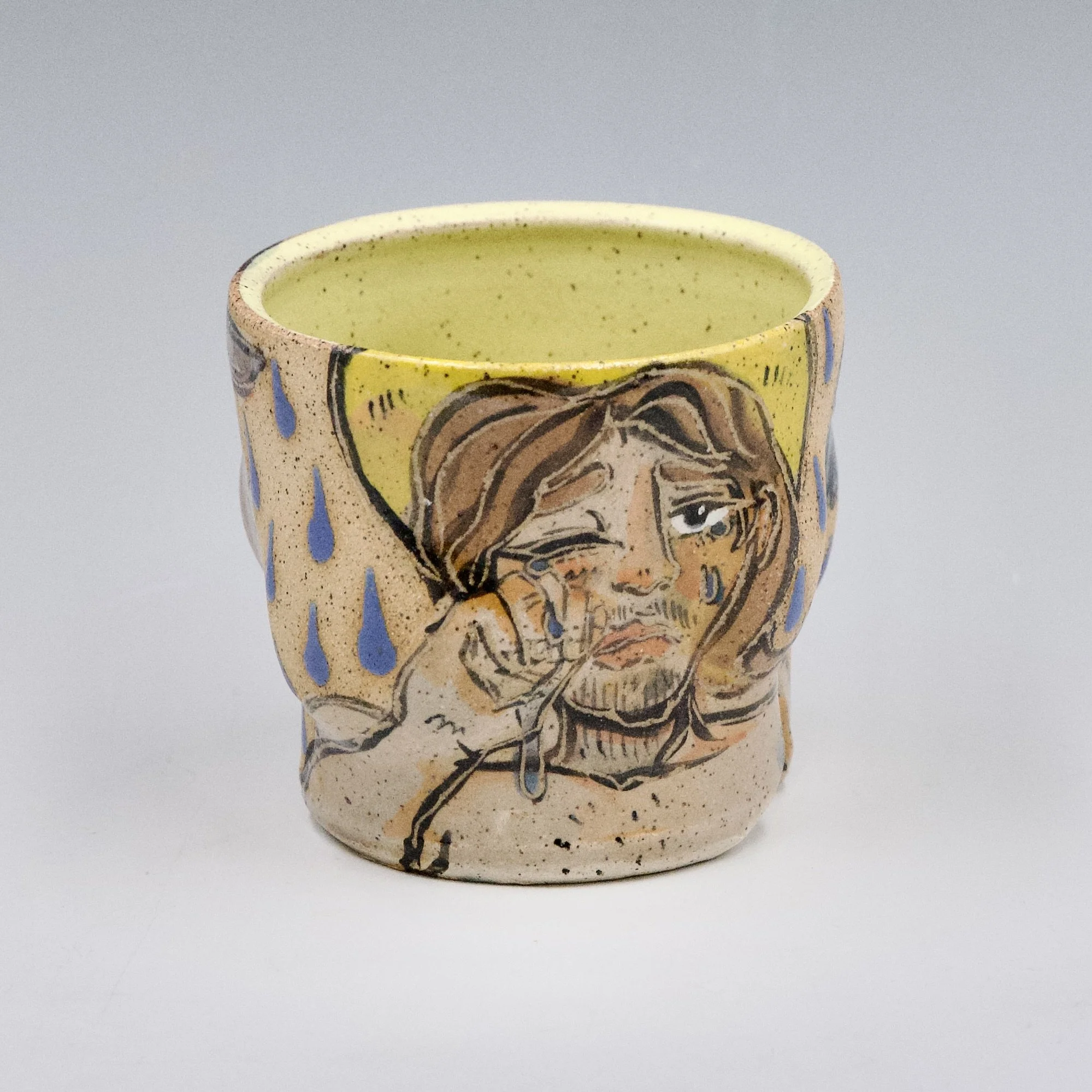
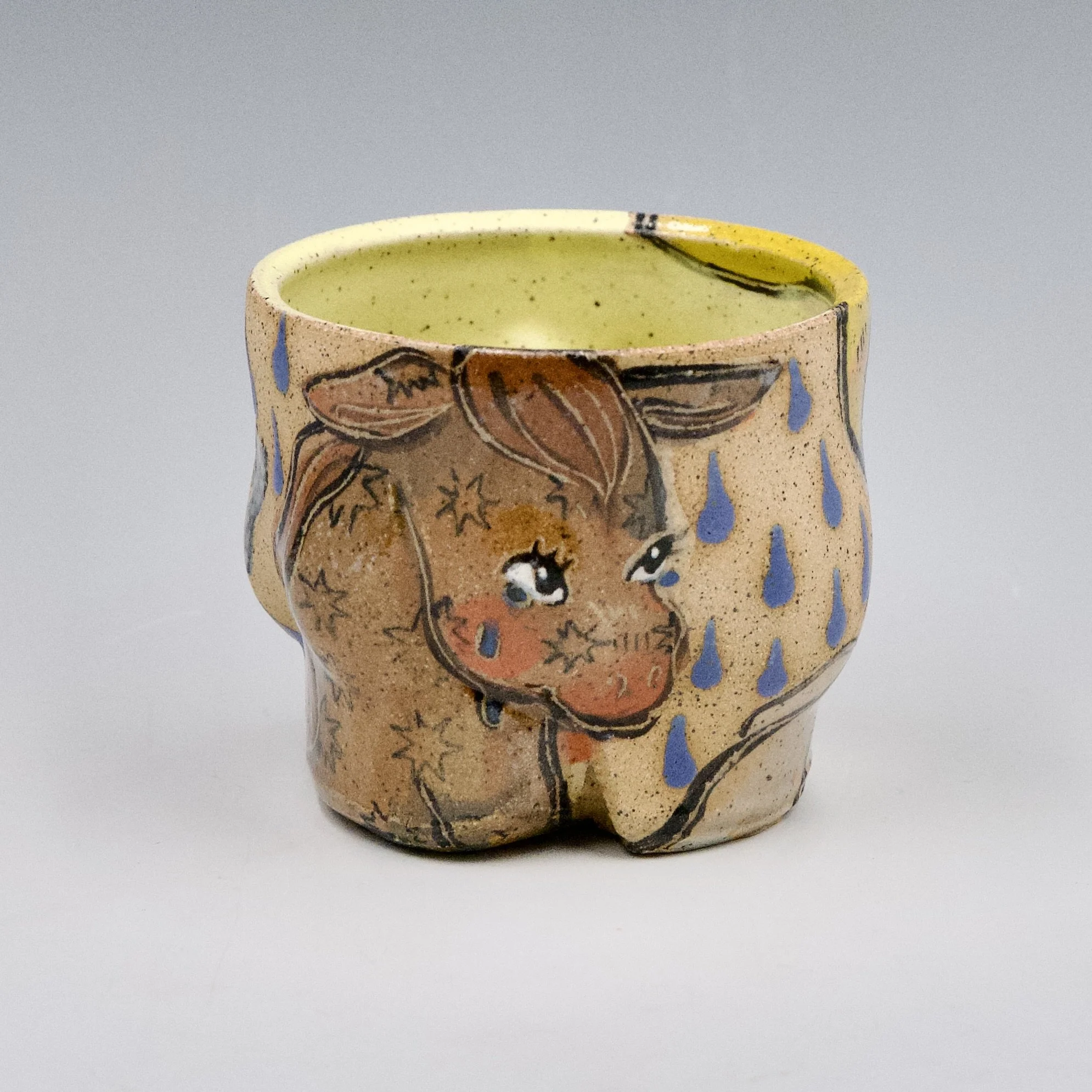
Q: What is the inspiration behind your Crybaby body of work?
Going back to that tenderness-being-queer feeling, I grew up feeling disconnected between my brain and body, or not understanding what I was feeling. I cried a lot for any and every reason; the tears were a quick way to pass the feeling, but I always felt ashamed for not just “cheering up”. Years of therapy taught me an appreciation for crying, and to have sympathy for my small self that was feeling all these feelings about gender, sexuality, and the world. This body of work makes me feel connected to the small and tender version of myself that still feels that overwhelm. I’ve also been told I have a very “boo-hoo” type of cry. It makes me laugh thinking about all the things I’ve cried over, so it feels appropriate to make that into art.
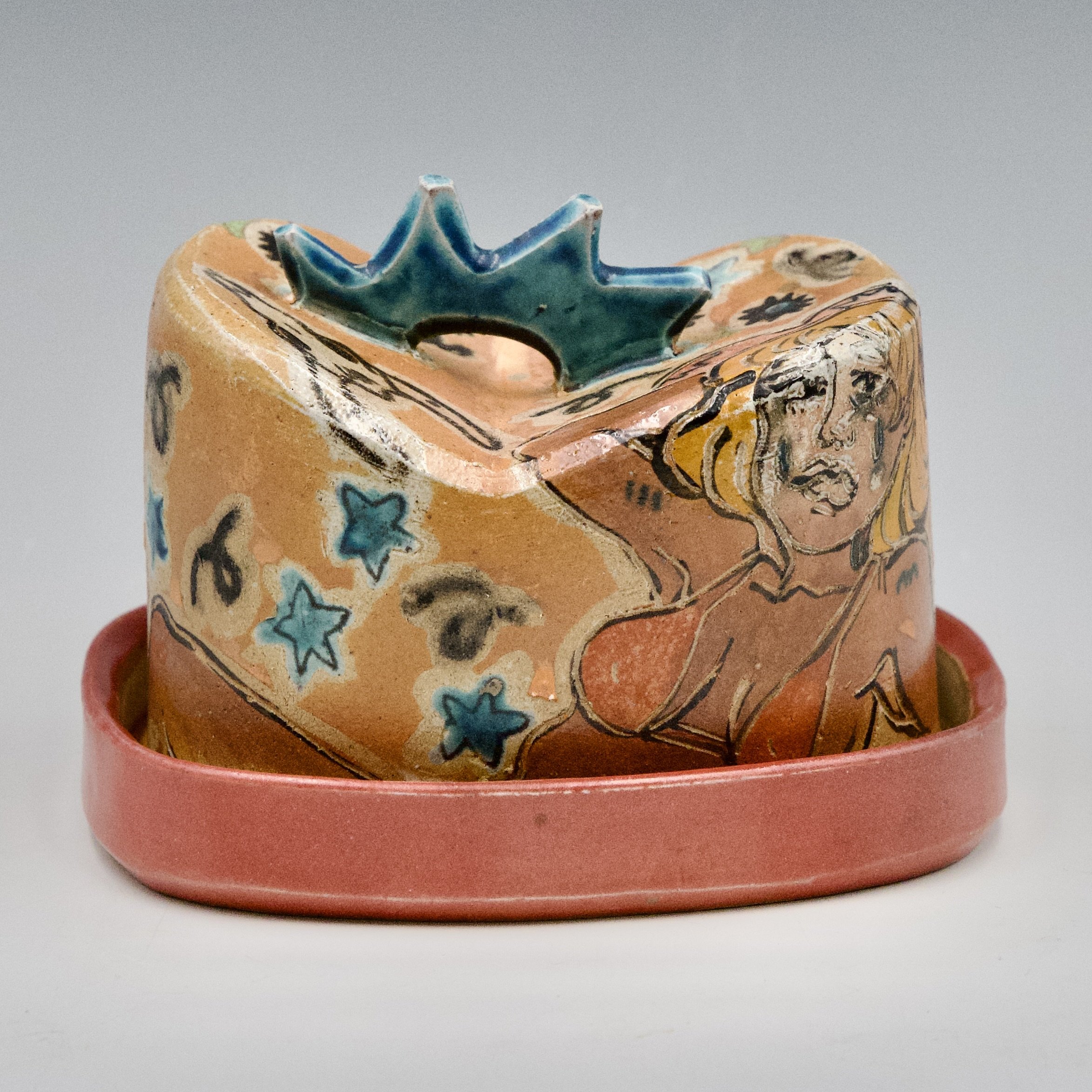
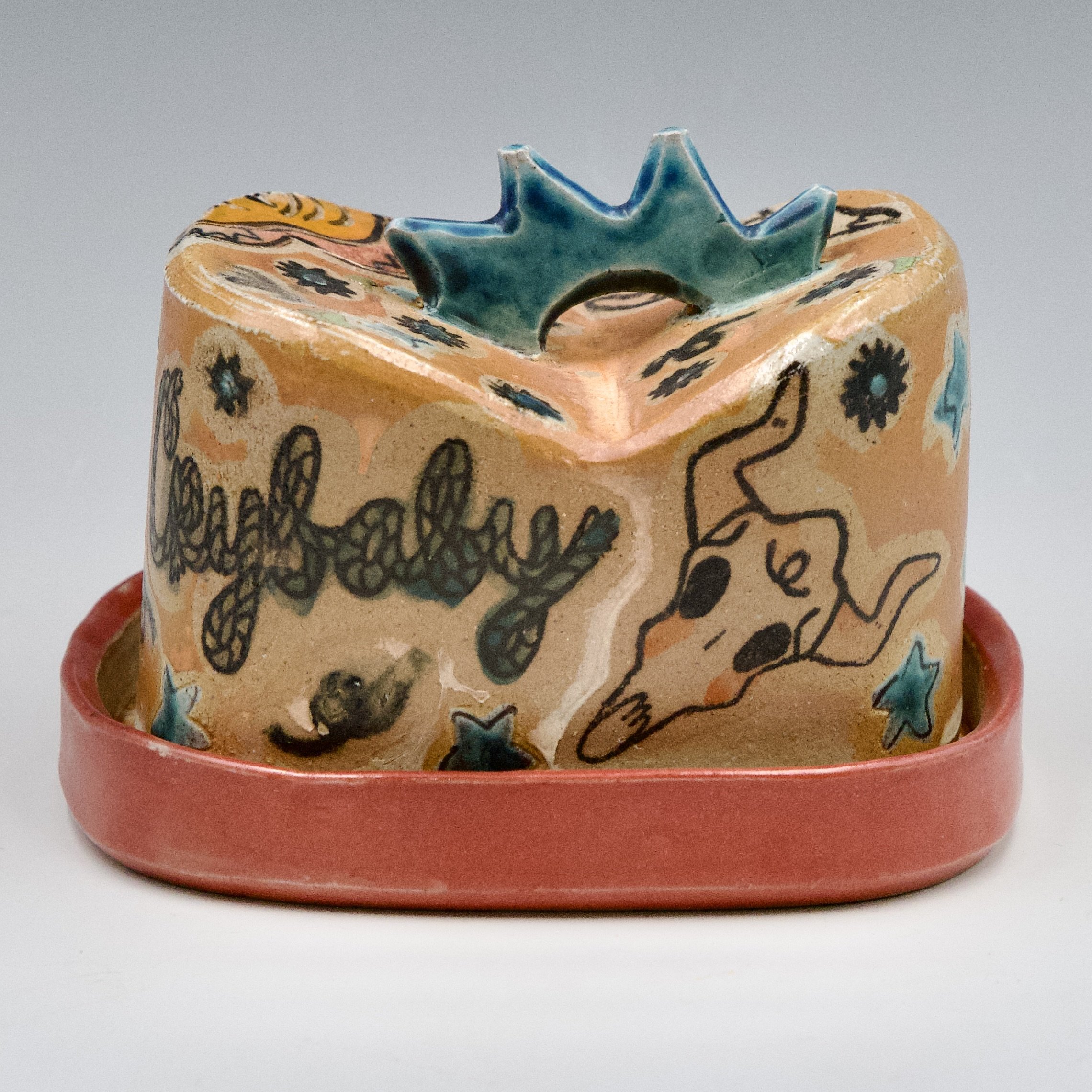
Q: Can you share more about what the rodeo means to you and how it finds its way into your work?
I grew up in San Antonio, Texas, and lived there until moving to Seattle in 2018. As the child of Eastern European immigrants, I often experienced the culture through my parents’ eyes, including our annual trips to the rodeo. I was particularly enamored with the pageantry and bravado of the American cowboy; each event showcased a blend of functional strength and theatrics that highlighted both the beauty and the temperament of the animals. While I wasn’t a “horse girl” in my youth, I’ve embraced the idea since living in Seattle, as a way to find comfort while adjusting to a new life. This narrative is very dear to my heart, and I see a lot of my younger self reflected in the vibrancy and joy of my characters and in my desire to create useful art.
Q: Is there a message or a piece of advice you would share with ceramic artists just starting out?
Draw. Make clay maquettes, make clay “sketches”. Even if you’re bad at it, or you don’t keep them, make that idea come to life in 2D or 3D. For me, having sketchbooks to go back to with notes, scribbles, and anecdotes is so refreshing. Even if I don’t resonate with the actual sketch anymore, the idea is there. It makes me reconnect with my curiosity and the emotions I was feeling, which helps me get a fresh perspective when I’m uninspired.