Stories from Rising Stars: Sticking With It
Rising Star Elise Margolin shares the ups and downs of making clay balloons.
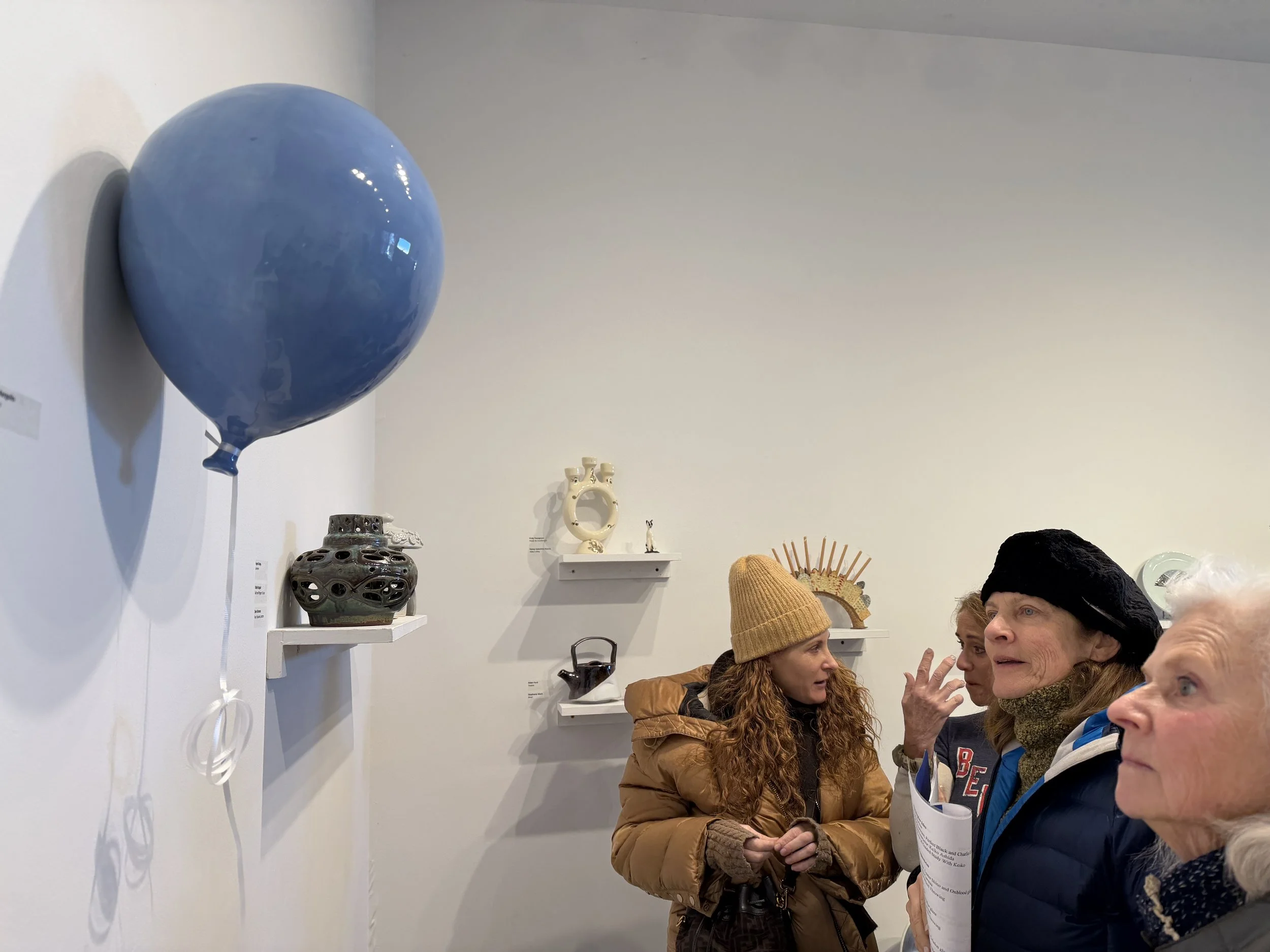
Clay class can be a roller coaster; the wild joy of a successful glaze experiment can be closely followed by the devastation of an unfixable crack. The roller coaster shows us what we’re made of, and how flexible and strong we can be, just like our clay. When we learn from the failures, we reap the rewards. That’s the story of Elise Margolin’s ceramic balloon, on view in the annual Rising Stars student exhibition. Below, you can learn about the strategies and obstacles behind the projects, and how she overcame failed attempts.
Elise was first inspired to create the balloons after seeing them on artist Sivan Sternbach’s Instagram page (@sivansternbach). Sternbach is an Israel-based artist known for her balloon sculptures, which have been shown in museums all over the world and featured in the shop windows of Bergdorf Goodman. Elise became fixated on the balloons and Sternbach’s process, and decided to attempt the challenge of making one. The camaraderie of the ceramics world was on Elise’s side: she was able to learn more directly from Sternbach about the process. “Sivan is extremely open about her process and shares every part of it through videos on her page,” Elise said, “I reached out to her several times through direct messages, and she always responded with advice and helpful tips.”
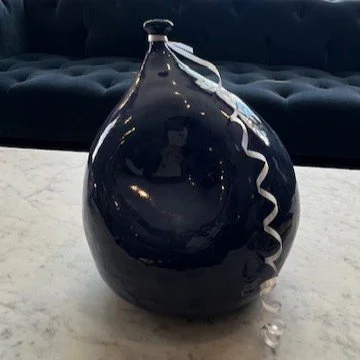
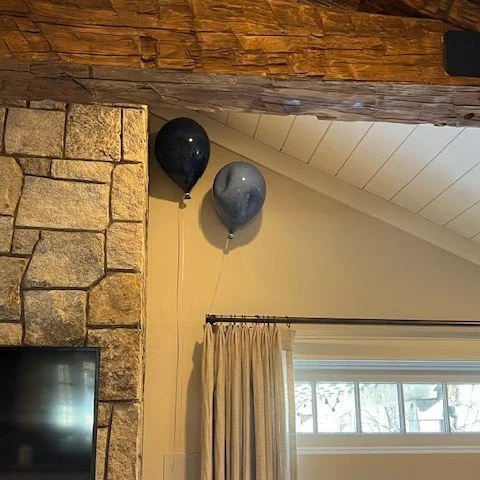
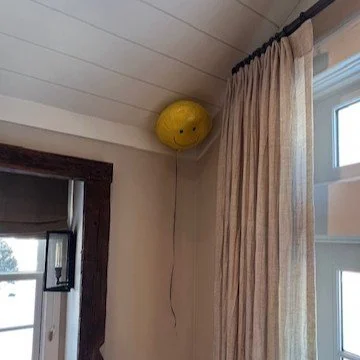
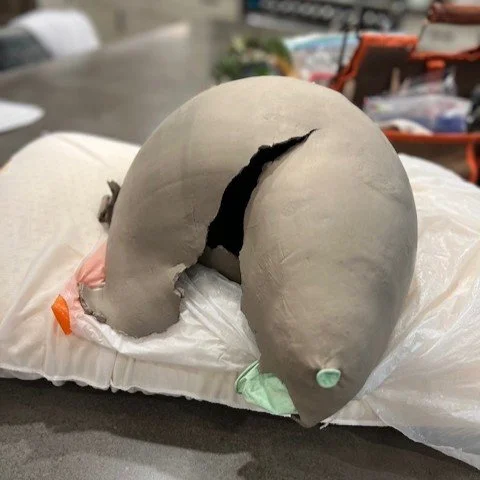
Even with the expert help, there were still plenty of hurdles. Making the balloons meant covering real Mylar and latex balloons with large, even slabs of clay, and then carefully smoothing all of the seams. Elise noted that, “The most challenging aspect was learning how the clay dries and shrinks around the inflated balloon. If it dries too quickly, the balloon can crack the clay.” When the clay reached the leather-hard stage, it was time to pop the balloon with a pin tool through the clay, allowing for a slow release of air, and then to remove the balloon. Elise share that there were early trials where she removed the real balloon too early, and the entire piece collapsed inward. With the body of the balloon completed, Elise would then form the balloon knot out of clay and attach it with magic water, and finally carve a hole in the back of the balloon for air release and as a hanging mechanism.
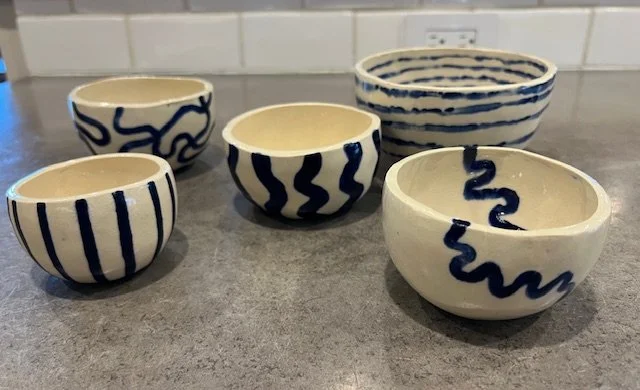
All this brought the balloon through the bisque stage, but then, as Elise said, “Glazing was another process I had to master.” Elise would paint the pieces with five five coats of Mayco Stroke & Coat to achieve the depth and evenness of color. After a few failures, she also ordered special stilts from England to hold the balloons in place in the kiln so that they wouldn’t roll. Elise said it took about 20 attempts before she was happy with her resulting balloons, and since then she has experimented with variations on the theme: “I’ve created Mylar balloons, heart-shaped Mylar balloons, and latex balloons. Some appear fully inflated, others slightly smushed to look deflated, and some look as though they’ve deflated completely and landed on a table.” After working with the balloons for over a year, Elise is comfortable with the process and even incorporates it into other projects, such as a series of small bowls made using mini balloons as molds.
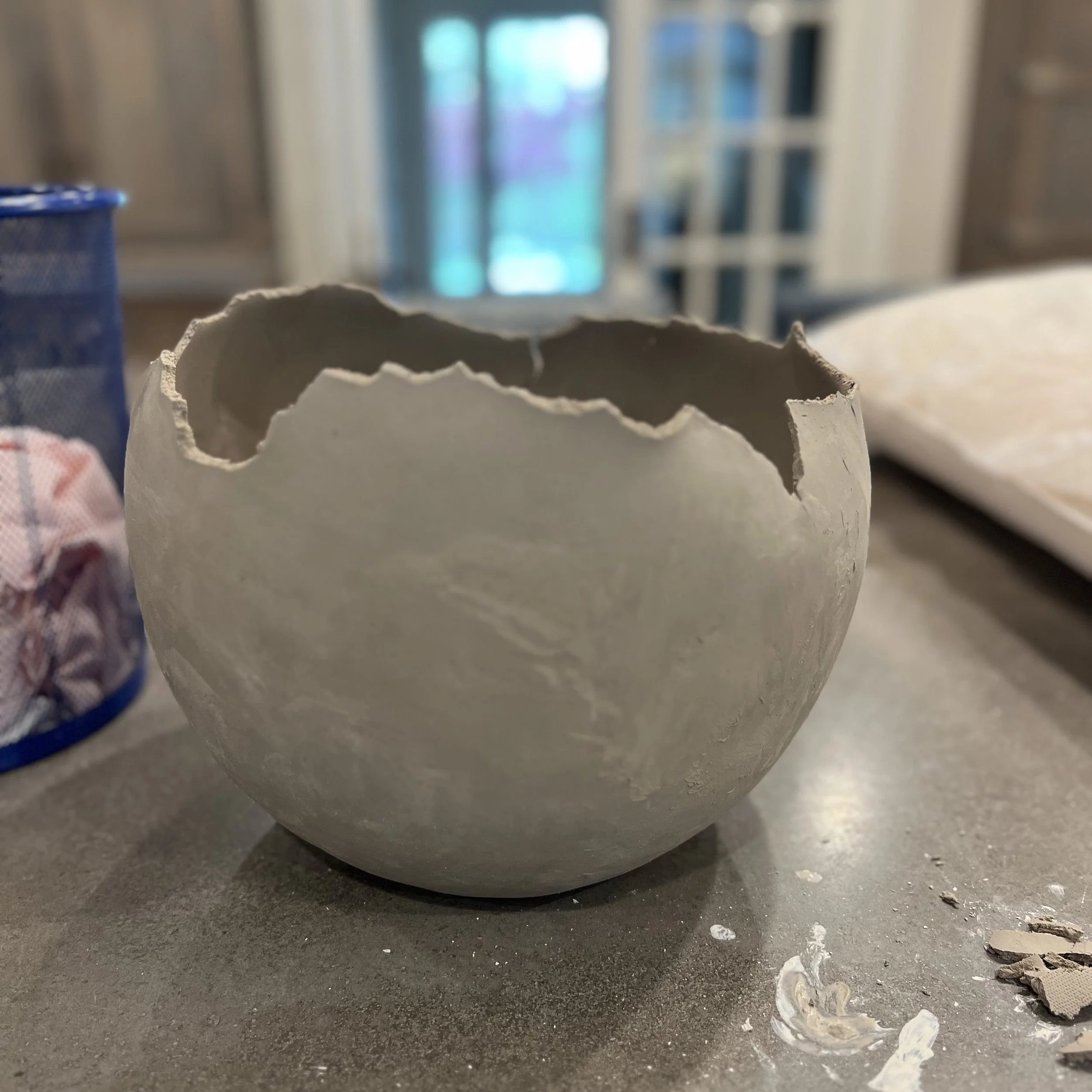
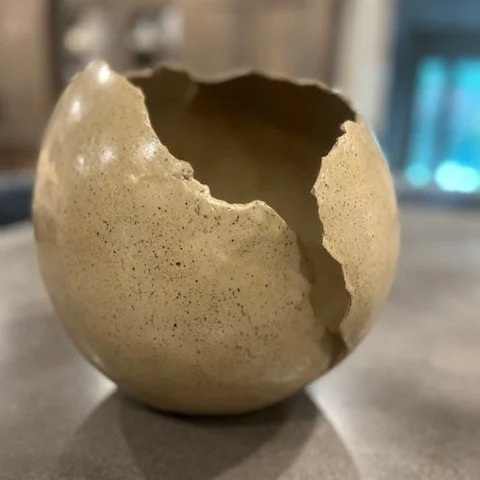
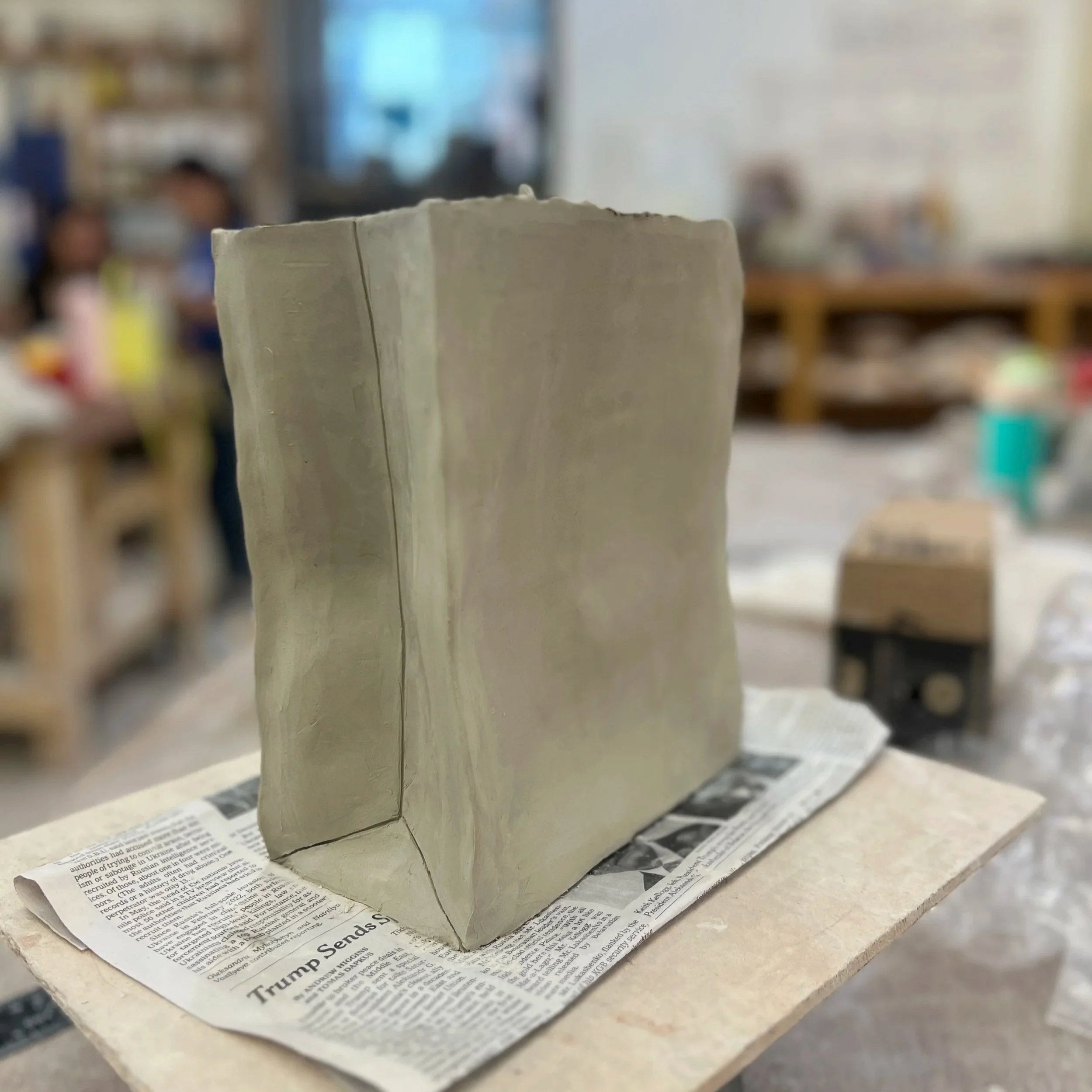
Elise stayed the course, even when the clay did not run smooth. Despite frustrating setbacks, she never gave up, and even found ways to repurpose failed attempts (often into planters). Elise shared that, “I was determined to learn how Sivan does it and I really wanted to hang them in my house.” Now, she continues to look for everyday objects that she can transform into ceramics. Brown paper lunch bags and loose-leaf paper notes are the next projects on her horizon. As Elise pursues new work, the balloons and all they taught her go with her.
You can view Elise’s Balloon, and so many other wonderful pieces, in the Rising Stars annual student exhibition, on view in the Gallery through February 14th, 2026.